
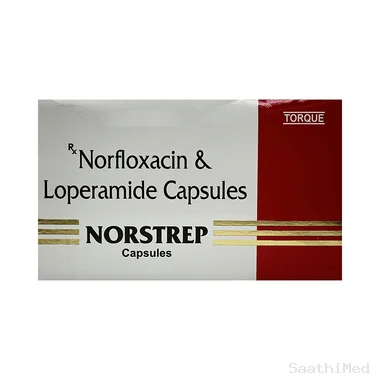
Dr-stop 200mg/2mg Capsule: Complete Medicine Guide
Clinical Reference Standards: CDSCO (Central Drugs Standard Control Organisation), Indian Pharmacopoeia (IP) & WHO | Last Updated: September 2026
When to Call Your Doctor IMMEDIATELY
- Blood in stool or vomit
- Severe abdominal pain or bloating
- High fever with chills and sweating
- Signs of dehydration such as dry mouth, reduced urine, or dizziness on standing
- Sudden swelling of the face, lips, tongue, or throat
- Difficulty breathing or chest pain
- Irregular or racing heartbeat
- Seizure or loss of consciousness
- Yellowing of the skin or eyes
- Severe rash, blistering, or peeling skin
- Sudden tendon pain or inability to move a joint
- Numbness, tingling, or weakness in the hands or feet
If experiencing severe symptoms, call emergency services immediately.
What is norstrep capsule used for?
This medicine is a prescription combination of Norfloxacin 200 mg and Loperamide 2 mg used in adults for acute bacterial diarrhoea. Norfloxacin kills susceptible bacteria, while Loperamide slows intestinal movement and reduces stool frequency. It is not for viral diarrhoea, children, pregnancy, or bloody stools. Always take it under medical supervision and avoid alcohol.
- Generic Name: Norfloxacin (200mg) + Loperamide (2mg)
- Manufacturer: Torque Pharmaceuticals Pvt Ltd
- Form: Allopathy
- Pregnancy Category: Consult doctor
- Prescription Required: Yes
🇮🇳 norstrep capsule के बारे में (Hindi Summary)
उपयोग: यह दवा नॉरफ्लोक्सासिन 200 मिलीग्राम और लोपेरामाइड 2 मिलीग्राम का संयोजन है, जिसका उपयोग वयस्कों में जीवाणुजनित दस्त के इलाज के लिए किया जाता है। नॉरफ्लोक्सासिन संक्रमण पैदा करने वाले बैक्टीरिया को मारता है, जबकि लोपेरामाइड आंतों की गति को धीमा करके दस्त की frequency और मात्रा को कम करता है। यह दवा केवल डॉक्टर की सलाह पर लेनी चाहिए और बिना पर्चे के नहीं। यह वायरल दस्त, खूनी दस्त, तेज बुखार, या 18 वर्ष से कम उम्र के बच्चों के लिए नहीं है। गर्भवती और स्तनपान कराने वाली महिलाओं को यह दवा नहीं लेनी चाहिए। इस दवा को लेते समय शराब का सेवन पूरी तरह बंद कर दें और पर्याप्त पानी पिएं।
साइड इफेक्ट्स: इस दवा के सामान्य दुष्प्रभावों में जी मिचलाना, पेट में ऐंठन, चक्कर आना, सिरदर्द, मुंह सूखना और कब्ज शामिल हैं। गंभीर दुष्प्रभावों में तेज एलर्जी, टेंडन टूटना, नसों में झनझनाहट, गंभीर त्वचा प्रतिक्रियाएं, और क्लोस्ट्रीडियम डिफिसाइल से जुड़े दस्त शामिल हैं। दुर्लभ दुष्प्रभावों में दौरे, अनियमित दिल की धड़कन, कम रक्त शर्करा और रक्त विकार शामिल हैं। अगर आपको खूनी दस्त, तेज बुखार, गंभीर पेट दर्द, सांस लेने में कठिनाई, चेहरे या गले में सूजन, या दिल की धड़कन में गड़बड़ी महसूस हो, तो तुरंत डॉक्टर से मिलें।
सुरक्षा सलाह: इस दवा को केवल डॉक्टर के पर्चे पर ही लें। वायरल दस्त, खूनी दस्त, या 48 घंटे से अधिक चलने वाले दस्त के लिए इसका इस्तेमाल न करें। इस दवा को लेते समय शराब का सेवन बिल्कुल न करें क्योंकि इससे चक्कर और नींद आ सकती है। जब तक आपको पता न चले कि यह दवा आप पर कैसा असर करती है, तब तक गाड़ी न चलाएं और मशीनरी न चलाएं। दूध, दही, एंटासिड, आयरन या जिंक सप्लीमेंट के साथ इस दवा को लेने से कम से कम 2 घंटे का अंतर रखें। पर्याप्त पानी और इलेक्ट्रोलाइट्स लें ताकि डिहाइड्रेशन न हो। दवा का पूरा कोर्स पूरा करें, भले ही आप बेहतर महसूस करें। बच्चों और गर्भवती महिलाओं को यह दवा न दें।
💊 norstrep capsule Uses & Benefits
[{"condition":"Acute bacterial diarrhoea","description":"Used in adults when diarrhoea is suspected to be caused by susceptible bacteria such as Escherichia coli, and symptomatic control of frequent loose stools is needed.","evidence":"Established for norfloxacin in susceptible bacterial enteritis; combination with loperamide is used for symptomatic relief under medical supervision."},{"condition":"Traveller's diarrhoea","description":"May be prescribed for moderate to severe traveller's diarrhoea when bacterial cause is likely and the patient is an adult without contraindications.","evidence":"Limited to specific clinical settings; routine use is discouraged because of resistance and safety concerns."}]
Off-label uses: [{"condition":"Not established from the available information.","description":"No well-established off-label uses are recognised for this fixed-dose combination.","evidence":"Not established from the available information."}]
Primary treatment for: Acute bacterial diarrhoea
Also treats: Traveller's diarrhoea, Bacterial enteritis caused by susceptible organisms
📋 Drug Information
| Generic Name(s) | Norfloxacin (200mg) + Loperamide (2mg) |
| Brand Name | norstrep capsule |
| Manufacturer | Torque Pharmaceuticals Pvt Ltd |
| Packaging / Form | Varies by brand (Allopathy) |
| Therapeutic Class | GASTRO INTESTINAL |
| Action Class | |
| Route of Administration | Oral |
| Storage | Store at room temperature between 15°C and 30°C in a dry place. Protect from direct sunlight, moisture, and heat. Keep the capsules in the original blister pack or container until it is time to take them. Do not store in the bathroom or near the kitchen sink. Keep out of reach of children and pets. |
| Shelf Life | The shelf life is typically 24 months from the date of manufacture, but the exact expiry date is printed on the pack. Do not use the medicine after the expiry date. Discard expired or unused capsules safely according to local guidelines. |
| WHO Guideline | Not established from the available information. The World Health Organization does not recommend routine use of antibiotic-antimotility combinations for all cases of diarrhoea. Antibiotics should be reserved for specific indications such as bloody diarrhoea, cholera, or severe traveller's diarrhoea, and must be guided by local resistance patterns and clinical judgment. |
| ICMR Guideline | Not established from the available information. The Indian Council of Medical Research recommends judicious use of antibiotics for diarrhoea and discourages empirical antibiotic therapy for uncomplicated acute diarrhoea. Fluoroquinolones should be used only when indicated and based on culture and sensitivity results where possible. |
👨⚕️ Doctor's Practical Tips
Evidence-based practical advice from experienced clinicians
🔍 Is This Medicine Right for Your Symptom?
Educational reference. Always consult a doctor for diagnosis.
🔬 How This Medicine Works (Pharmacology)
Pharmacokinetics
How It Works
This medicine combines two active ingredients with different mechanisms. Norfloxacin is a fluoroquinolone antibiotic that inhibits bacterial DNA gyrase and topoisomerase IV, enzymes needed for DNA replication, repair, and transcription, leading to bacterial cell death. Loperamide is a synthetic opioid-receptor agonist that acts on the myenteric plexus of the gut wall to slow intestinal motility, increase anal sphincter tone, and reduce fluid and electrolyte secretion, thereby decreasing stool frequency and volume. The combination provides antibacterial action against susceptible enteric bacteria while rapidly reducing diarrhoeal symptoms.
Mechanism Steps
💡 How to Take norstrep capsule
Strength: Capsule containing Norfloxacin 200 mg and Loperamide 2 mg, immediate-release, for oral administration.
Dosage Information
| Adult Dosage | The usual adult dose of this medicine is one capsule taken orally twice daily for a short duration, typically 3 to 5 days, depending on the severity of infection and clinical response. The exact dose and duration must be individualized by a qualified clinician based on the indication, age, weight, renal and hepatic function, and the causative organism. Do not exceed the prescribed dose. Take the capsule with a full glass of water, and separate it from antacids, dairy products, or mineral supplements by at least 2 hours. Always complete the full course as advised by your doctor. |
| Pediatric Dosage | Pediatric dosing is not established from available information. This medicine is contraindicated in children and adolescents under 18 years of age because fluoroquinolones may affect cartilage development and loperamide is not recommended in young children. Consult a pediatrician for appropriate treatment of diarrhoea in children. |
| Elderly Dosage | Elderly patients above 65 years of age may be more sensitive to the side effects of this medicine, especially dizziness, drowsiness, tendon rupture, and cardiac arrhythmias. Renal function often declines with age, which can increase norfloxacin levels and the risk of toxicity. The dose must be individualized by a qualified clinician based on renal function and overall health. Elderly patients should avoid driving or operating machinery until they know how the medicine affects them, and they should report any tendon pain or palpitations immediately. |
| Renal Impairment | In patients with renal impairment, norfloxacin clearance is reduced, and dose adjustment is required. For creatinine clearance between 30 and 60 mL/min, a reduced dose or increased dosing interval may be advised. For creatinine clearance below 30 mL/min, norfloxacin is generally not recommended or requires significantly reduced dosing under specialist supervision. Loperamide does not require renal dose adjustment, but dehydration from diarrhoea can worsen kidney function. The exact dose must be individualized by a qualified clinician based on measured renal function. |
| Hepatic Impairment | In patients with mild to moderate hepatic impairment, no specific dose adjustment is usually required for norfloxacin, but loperamide metabolism may be reduced, leading to increased levels and side effects. In severe hepatic impairment, this medicine should be avoided or used with extreme caution under specialist supervision. The dose must be individualized by a qualified clinician based on liver function tests and clinical status. |
| Maximum Daily Dose | The maximum daily dose of this medicine is generally two capsules per day, providing norfloxacin 400 mg and loperamide 4 mg per day. Do not exceed this dose unless specifically instructed by a qualified clinician. Higher doses of loperamide can cause serious cardiac and central nervous system toxicity. The exact maximum dose must be individualized by a qualified clinician based on the patient's condition and renal and hepatic function. |
Dosage Timeline
🍽️ Food Timing Guide
⏰ What to Do If You Miss a Dose
⚠️ Side Effects of norstrep capsule
✅ Common Side Effects
🚨 Serious Side Effects
⚠️ Rare Side Effects
Consult your doctor if you experience any unusual symptoms.
🔬 Drug Interactions
| Drug | Severity | Effect |
|---|---|---|
| Warfarin | Major | |
| Amiodarone | Major | |
| Ketoconazole | Major | |
| Antacids | Major | |
| Rifampicin | Major | |
| Methotrexate | Major | |
| Theophylline | Moderate | |
| Ibuprofen | Moderate | |
| Corticosteroids | Moderate | |
| Oral antidiabetics | Moderate |
🚨 Major Interactions
- QT-prolonging drugs (e.g., amiodarone, sotalol, haloperidol, methadone)
- CYP3A4 inhibitors (e.g., ketoconazole, itraconazole, ritonavir, clarithromycin)
- CYP3A4 inducers (e.g., rifampicin, carbamazepine, phenytoin, St John's wort)
- Antacids, sucralfate, iron salts, zinc salts, multivitamins with minerals
- Warfarin and other anticoagulants
- Methotrexate
⚡ Moderate Interactions
- Theophylline
- Caffeine
- NSAIDs (e.g., ibuprofen, diclofenac)
- Oral antidiabetic agents
- Corticosteroids
- Other antibiotics (e.g., tetracyclines, chloramphenicol)
🍷 Alcohol Interaction
Alcohol should be completely avoided while taking this medicine. Alcohol increases the risk of dizziness, drowsiness, and central nervous system depression caused by loperamide, and it can worsen dehydration and stomach irritation caused by diarrhoea. Alcohol may also interfere with the body's ability to fight infection and can increase the risk of liver-related side effects. If you have consumed alcohol, do not drive or operate machinery, and inform your doctor before taking the next dose.
🔎 Check Your Other Medicines
Educational tool. Always confirm with your doctor or pharmacist.
🛡️ Safety & Warnings
🚫 Contraindications
["Known allergy or hypersensitivity to norfloxacin, loperamide, or any other fluoroquinolone or opioid-related compound","Children and adolescents under 18 years of age","Pregnancy and breastfeeding","Bloody diarrhoea or diarrhoea with high fever and systemic toxicity","Suspected invasive bacterial infection or toxic megacolon","Acute ulcerative colitis or antibiotic-associated colitis","Severe liver impairment","Severe kidney impairment without dose adjustment","Known QT interval prolongation or congenital long QT syndrome","Concurrent use of strong CYP3A4 inhibitors or QT-prolonging drugs","Myasthenia gravis","History of tendon disorders related to fluoroquinolone use"]
⚠️ Warnings & Precautions
["This medicine should only be used for bacterial diarrhoea and not for viral or parasitic causes.","Stop the medicine and seek medical help if diarrhoea persists beyond 48 hours or worsens.","Do not use this medicine for self-treatment of simple traveller's diarrhoea without medical advice.","Avoid alcohol and other central nervous system depressants during treatment.","Do not drive or operate machinery until you know how this medicine affects you.","Maintain adequate fluid and electrolyte intake to prevent dehydration.","Inform your doctor if you have kidney disease, liver disease, heart disease, or diabetes.","Report any tendon pain, numbness, tingling, or vision changes immediately.","Avoid excessive sunlight and use sunscreen because norfloxacin can cause photosensitivity.","Do not share this medicine with others, even if they have similar symptoms.","Complete the full prescribed course unless your doctor advises otherwise.","Keep out of reach of children and store in the original container."]
🤱 Lactation Safety
Not established from the available information. Norfloxacin is excreted in breast milk and may affect the infant's developing joints and gut flora. Loperamide may also pass into breast milk in small amounts. Breastfeeding is not recommended while taking this medicine unless advised by a doctor. If treatment is essential, discuss alternative options or temporary interruption of breastfeeding with your clinician.
💊 Overdose Management
Overdose of this medicine can cause severe central nervous system depression, respiratory depression, constipation, paralytic ileus, and cardiac arrhythmias due to loperamide, and acute kidney injury or neurological effects due to norfloxacin. If overdose is suspected, seek emergency medical care immediately. Treatment is supportive and may include activated charcoal if taken recently, intravenous fluids, electrolyte correction, and ECG monitoring. Naloxone may be used for opioid-related central nervous system depression, but it may not fully reverse loperamide effects. Do not induce vomiting unless instructed by a healthcare professional.
⏰ Missed Dose
If you miss a dose of this medicine, take it as soon as you remember if less than half the dosing interval has passed. If more than half the dosing interval has passed, skip the missed dose and continue with your regular schedule. Do not take two doses at the same time to make up for a missed dose. If you are unsure, contact your doctor or pharmacist for guidance.
Additional Safety Advice
Take this medicine only when prescribed by a doctor for a confirmed or strongly suspected bacterial diarrhoea. Do not use it for viral stomach flu, food poisoning with bloody stools, or diarrhoea lasting more than 48 hours without improvement. Stop the medicine and seek urgent care if you develop bloody diarrhoea, high fever, severe abdominal pain, or signs of dehydration. Avoid alcohol completely while taking this medicine because it increases dizziness and drowsiness. Do not drive or operate heavy machinery until you know how this medicine affects you. Do not share this medicine with anyone else. Complete the full prescribed course even if you feel better, unless your doctor tells you to stop. Keep out of reach of children. Inform your doctor about all other medicines, especially blood thinners, antacids, and other antibiotics.
👴 Special Considerations for Elderly
💡 For Patients Above 65
Elderly patients above 65 years are at higher risk of serious side effects from this medicine, including tendon rupture, peripheral neuropathy, cardiac arrhythmias, dizziness, and falls. Renal function declines with age, which can increase norfloxacin levels and toxicity. The dose must be individualized by a qualified clinician based on renal function and overall health. Elderly patients should avoid driving or operating machinery until they know how the medicine affects them, maintain good hydration, and report any unusual symptoms immediately. Avoid this combination in frail elderly patients with multiple comorbidities unless clearly necessary.
🤰 Pregnancy Planning (TTC)
This medicine is not recommended for women who are trying to conceive or who are pregnant. Norfloxacin may affect fetal cartilage development, and loperamide safety in pregnancy is not well established. If you are planning pregnancy, discuss alternative treatments for diarrhoea with your doctor. Use effective contraception while taking this medicine if there is a risk of pregnancy. If you become pregnant while taking this medicine, stop it and contact your doctor immediately for further advice.
🏥 Post-Surgery Considerations
This medicine should be used with caution after surgery. Diarrhoea after surgery can be caused by antibiotics, bowel preparation, or hospital-acquired infections, and the cause should be evaluated before starting this combination. Loperamide can slow gut motility and may worsen postoperative ileus or mask complications such as anastomotic leak. Norfloxacin may interact with other postoperative medications and can affect wound healing if there is an undiagnosed infection. Always consult the surgical team before using this medicine after any operation.
🦷 Dental Procedures
Inform your dentist that you are taking this medicine before any dental procedure. Norfloxacin can interact with other antibiotics or medications used during dental treatment, and loperamide can cause dry mouth and dizziness. If you need dental work while taking this medicine, maintain good hydration and avoid alcohol-containing mouthwashes. Your dentist may advise postponing elective procedures until you have completed the course and recovered from diarrhoea.
💚 Lifestyle Tips for Better Results
🏋️ Exercise Considerations
Avoid strenuous exercise while you have diarrhoea because your body is already losing fluids and electrolytes. Light activity such as walking is acceptable if you feel well, but stop immediately if you feel dizzy, weak, or dehydrated. Do not exercise in hot weather without adequate hydration. Wait until diarrhoea has completely resolved and you are well hydrated before returning to your normal exercise routine.
🥗 Diet Recommendations
💼 Impact on Daily Work & Life
This medicine can cause dizziness, drowsiness, and fatigue, which may affect your ability to drive, operate machinery, or perform tasks requiring mental alertness. Avoid driving or operating heavy machinery until you know how the medicine affects you. Diarrhoea itself can cause weakness and dehydration, so take rest and stay home until symptoms improve. Inform your employer if you work in food handling, healthcare, or childcare, because you may need to stay away from work until diarrhoea has resolved to prevent spreading infection.
🛑 When to Stop This Medicine
Stop this medicine and seek immediate medical advice if you develop bloody diarrhoea, severe abdominal pain, high fever, signs of an allergic reaction, tendon pain, numbness or tingling in the hands or feet, irregular heartbeat, or severe skin rash. Do not stop the medicine early just because you feel better, unless your doctor advises you to do so. If you experience persistent vomiting or cannot keep fluids down, contact your doctor because you may need intravenous fluids. Always consult your doctor before stopping or changing the dose.
📅 Long-Term Use Effects
This medicine is intended for short-term use only, typically 3 to 5 days. Long-term use is not recommended because it can lead to antibiotic resistance, Clostridioides difficile infection, tendon damage, peripheral neuropathy, and cardiac arrhythmias. Prolonged use of loperamide can cause dependence, severe constipation, paralytic ileus, and central nervous system effects. If diarrhoea persists beyond 48 hours of treatment or recurs frequently, further medical evaluation is needed to identify the underlying cause. Regular monitoring of kidney and liver function may be required if the medicine is used for longer than advised.
🌿 Non-Medicine Approaches
These can complement medicine but do not replace prescribed treatment.
Replaces lost fluids and electrolytes and is the cornerstone of diarrhoea management.
Evidence: Well-establishedRecommended in children with diarrhoea to reduce duration and severity, but not a substitute for antibiotics in adults with bacterial infection.
Evidence: Well-established in childrenMay help restore gut flora and reduce duration of diarrhoea, especially after antibiotic use.
Evidence: ModerateBland, easily digestible foods and avoidance of irritants can help symptoms settle.
Evidence: SupportiveWhen possible, stool culture and sensitivity testing can guide the choice of a specific antibiotic instead of empirical combination therapy.
Evidence: Well-established💉 Vaccination Considerations
💉 If You're Getting Vaccinated
There are no known interactions between this medicine and routine vaccines. However, if you are due for an oral typhoid vaccine or other live oral vaccines, consult your doctor because antibiotics can inactivate live bacterial vaccines. Avoid taking live oral vaccines during and for at least 3 days after completing this antibiotic course. Inactivated vaccines can be given safely. If you are travelling, ensure you are up to date with routine vaccinations and discuss travel-specific vaccines with your doctor.
📦 Storage Guide
✅ DO
Store at room temperature between 15°C and 30°C
❌ DON'T
Do not refrigerate unless specified on the pack
✅ DO
Keep in the original blister pack or container
❌ DON'T
Do not transfer to unmarked containers
✅ DO
Keep away from direct sunlight and moisture
❌ DON'T
Do not store in the bathroom cabinet
✅ DO
Keep out of reach of children and pets
❌ DON'T
Do not leave capsules within easy reach of children
✅ DO
Check the expiry date before use
❌ DON'T
Do not use expired or damaged capsules
✈️ Traveling with This Medicine
When travelling, carry this medicine in its original packaging with the prescription label clearly visible. Keep a copy of your prescription and a letter from your doctor if you are carrying more than a personal supply. Store the capsules in a cool, dry place away from direct sunlight and moisture. If crossing time zones, continue taking the medicine at approximately 12-hour intervals; adjust the timing gradually to local time. Do not pack it in checked luggage because extreme temperatures can affect stability. Check the customs regulations of your destination country for prescription medicines. If you develop diarrhoea during travel, maintain hydration with oral rehydration salts and seek medical advice before using this medicine.
💰 Cost Analysis & Savings
👥 Real Patient Stories
Educational, anonymized scenarios. Individual results may vary.
💬 Questions Patients Often Ask
A: Loperamide starts reducing diarrhoea within 1 to 2 hours, while norfloxacin begins killing bacteria within a few hours. Most people notice significant improvement within 24 to 48 hours.
A: No, milk and dairy products reduce the absorption of norfloxacin. Take this medicine at least 2 hours before or 4 hours after milk or dairy products.
A: No, this medicine is contraindicated in children and adolescents under 18 years because of the risk of joint and tendon damage from norfloxacin and serious side effects from loperamide.
A: No, alcohol should be completely avoided because it increases dizziness, drowsiness, and central nervous system side effects.
A: If less than 6 hours have passed, take the missed dose as soon as you remember. If more than 6 hours have passed, skip it and continue with your regular schedule. Do not double the dose.
A: The usual duration is 3 to 5 days, but the exact duration must be decided by your doctor based on your condition and response to treatment.
A: No, you should complete the full prescribed course unless your doctor tells you to stop, to ensure the infection is fully treated and to reduce the risk of resistance.
A: Yes, constipation is a common side effect because loperamide slows intestinal movement. It usually resolves after stopping the medicine.
🤔 Common Patient Concerns
🔄 Substitutes for norstrep capsule
View AllAlternative brands with exact same active ingredient:
Medical Note: Always consult your doctor before switching medications.
🛑 Myths vs. Facts
- Myth: This medicine can be used for any type of diarrhoea.
Fact: This medicine is only for suspected bacterial diarrhoea. It is not effective for viral diarrhoea and can be harmful in bloody diarrhoea or invasive infections. - Myth: This medicine is safe for children with diarrhoea.
Fact: This medicine is contraindicated in children and adolescents under 18 years because of the risk of joint and tendon damage from norfloxacin and serious side effects from loperamide. - Myth: You can stop this medicine as soon as diarrhoea stops.
Fact: You should complete the full prescribed course unless your doctor advises otherwise, to ensure the bacterial infection is fully treated and to reduce the risk of resistance. - Myth: This medicine can be taken with milk or antacids without any problem.
Fact: Milk, antacids, and mineral supplements reduce the absorption of norfloxacin. They should be separated by at least 2 hours before or 4 hours after this medicine. - Myth: Taking more capsules will make diarrhoea stop faster.
Fact: Taking more than the prescribed dose increases the risk of serious heart rhythm problems, central nervous system depression, and other toxicities. Never exceed the prescribed dose.
🔄 Alternative Options
Generic Alternatives
- Norfloxacin 200 mg + Loperamide 2 mg capsule
Brand Alternatives
- dr-stop 200mg/2mg capsule