
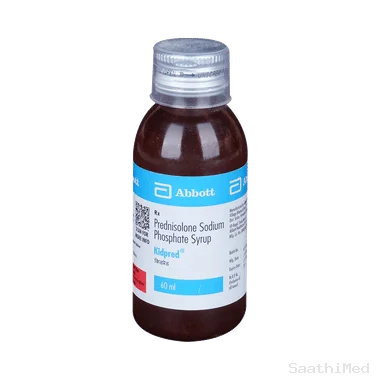
Kidpred Syrup (Prednisolone 5mg/5ml): Complete Medicine Guide
Clinical Reference Standards: CDSCO (Central Drugs Standard Control Organisation), Indian Pharmacopoeia (IP) & WHO | Last Updated: September 2026
When to Call Your Doctor IMMEDIATELY
- Vomiting blood or passing black tarry stools
- Severe stomach pain that spreads to the back
- High fever with drowsiness, confusion, or difficulty breathing
- Sudden swelling of the face, lips, or throat
- Severe weakness, dizziness, or fainting after stopping the medicine
- Blurred vision, eye pain, or seeing halos around lights
- Sudden leg swelling, chest pain, or shortness of breath
- Yellowing of the skin or eyes
- Very low urine output or swelling of the whole body
- Unusual bruising or bleeding that does not stop
If experiencing severe symptoms, call emergency services immediately.
What is kidpred syrup used for?
This medicine is an oral prednisolone syrup used to treat inflammation and immune-related conditions in children and adults who cannot swallow tablets. It is given by mouth, usually once daily in the morning with food, and the dose must always be set by a doctor. It should never be stopped suddenly after long use.
- Generic Name: Prednisolone (5mg/5ml)
- Manufacturer: Abbott
- Form: Allopathy
- Pregnancy Category: Consult doctor
- Prescription Required: Yes
🇮🇳 kidpred syrup के बारे में (Hindi Summary)
उपयोग: यह दवा प्रेडनिसोलोन सिरप है, जो एक कॉर्टिकोस्टेरॉयड दवा है। इसका उपयोग शरीर में सूजन और इम्यून सिस्टम की अत्यधिक प्रतिक्रिया को कम करने के लिए किया जाता है। यह बच्चों और उन बड़ों के लिए दी जाती है जो गोली निगल नहीं पाते। इसका उपयोग अस्थमा के दौरे, गंभीर एलर्जी, जोड़ों की सूजन, नेफ्रोटिक सिंड्रोम, आंतों की सूजन वाली बीमारियों और कुछ खून व कैंसर संबंधी बीमारियों में किया जाता है। यह दवा दर्द निवारक या बुखार कम करने वाली दवा नहीं है, इसलिए इसे केवल डॉक्टर की सलाह से ही देना चाहिए।
साइड इफेक्ट्स: इस दवा के कुछ सामान्य दुष्प्रभाव हो सकते हैं, जैसे भूख बढ़ना, चिड़चिड़ापन, नींद न आना, पेट में हल्की तकलीफ, वजन बढ़ना और चेहरे का गोल होना। लंबे समय तक उपयोग करने पर हड्डियों का कमजोर होना, शुगर और ब्लड प्रेशर बढ़ना, आंखों की समस्या और संक्रमण का खतरा बढ़ सकता है। अगर बच्चे को तेज बुखार, सांस लेने में तकलीफ, बहुत ज्यादा सुस्ती, पेट में तेज दर्द, काला मल या खून की उल्टी हो, तो तुरंत डॉक्टर से मिलें।
सुरक्षा सलाह: इस दवा को हमेशा डॉक्टर द्वारा बताई गई मात्रा में ही दें और साथ में दी गई मापने वाली चम्मच या सिरिंज का उपयोग करें। इसे दूध या भोजन के साथ दें ताकि पेट में जलन न हो। अचानक दवा बंद न करें, क्योंकि इससे कमजोरी, लो ब्लड प्रेशर और गंभीर समस्या हो सकती है। चेचक, खसरा या टीबी वाले लोगों से बच्चे को दूर रखें। टीकाकरण से पहले डॉक्टर को इस दवा के बारे में जरूर बताएं। शुगर और ब्लड प्रेशर की नियमित जांच कराएं। दवा को ठंडी और सूखी जगह पर, धूप से दूर और बच्चों की पहुंच से बाहर रखें।
💊 kidpred syrup Uses & Benefits
[{"condition":"Severe allergic reactions and anaphylaxis adjunct","description":"Used together with adrenaline and antihistamines to reduce inflammation" class="semantic-link" title="Medicines for swelling">swelling and prevent a late-phase allergic response.","evidence":"Well-established"},{"condition":"Acute asthma exacerbation","description":"Short courses reduce airway inflammation and speed recovery during asthma attacks in children and adults.","evidence":"Well-established"},{"condition":"Juvenile idiopathic arthritis","description":"Controls joint inflammation and preserves mobility in children with persistent arthritis.","evidence":"Well-established"},{"condition":"Nephrotic syndrome","description":"Induces remission of protein loss in the urine in children with minimal change disease and other steroid-sensitive forms.","evidence":"Well-established"},{"condition":"Inflammatory bowel disease","description":"Induces remission during moderate to severe flares of ulcerative colitis and Crohn's disease.","evidence":"Well-established"},{"condition":"Haematological and oncological conditions","description":"Used as part of treatment regimens for acute lymphoblastic leukaemia, lymphoma, and immune thrombocytopenia.","evidence":"Well-established"},{"condition":"Severe skin disorders","description":"Controls inflammation in conditions such as pemphigus, severe eczema, and drug rashes.","evidence":"Well-established"},{"condition":"Respiratory and autoimmune conditions","description":"Used in sarcoidosis, systemic lupus erythematosus, and other autoimmune diseases to suppress disease activity.","evidence":"Well-established"}]
Off-label uses: [{"condition":"Croup in children","description":"A single dose of oral prednisolone is sometimes used to reduce airway swelling in mild to moderate croup.","evidence":"Limited"},{"condition":"Bell's palsy","description":"Short courses are sometimes prescribed to reduce facial nerve inflammation and improve recovery.","evidence":"Limited"},{"condition":"Post-infectious cough","description":"Occasionally used for persistent cough after a respiratory infection when other causes have been excluded.","evidence":"Limited"}]
Primary treatment for: Inflammatory and autoimmune conditions, including severe allergic reactions, asthma flare-ups, juvenile idiopathic arthritis, nephrotic syndrome, and inflammatory bowel disease.
Also treats: Leukaemia and lymphoma, Immune thrombocytopenia, Systemic lupus erythematosus, Sarcoidosis, Severe eczema and pemphigus, Post-infectious inflammatory conditions
📋 Drug Information
| Generic Name(s) | Prednisolone (5mg/5ml) |
| Brand Name | kidpred syrup |
| Manufacturer | Abbott |
| Packaging / Form | Varies by brand (Allopathy) |
| Therapeutic Class | OPHTHAL OTOLOGICALS |
| Action Class | Glucocorticoids |
| Route of Administration | Oral |
| Storage | Store the bottle upright at room temperature between 15°C and 30°C, away from direct sunlight, heat, and moisture. Do not freeze the syrup. Keep the bottle tightly closed and use the measuring cup or oral syringe supplied with the pack. |
| Shelf Life | The shelf life is usually 24 to 36 months from the date of manufacture when stored as directed. Always check the expiry date printed on the bottle and discard the syrup if it has expired or if the liquid looks cloudy or has particles. |
| WHO Guideline | The World Health Organization includes oral prednisolone in its essential medicines list and in guidelines for conditions such as asthma and croup, but the exact dose and duration must follow the treating clinician's advice. |
| ICMR Guideline | The Indian Council of Medical Research and Indian Academy of Pediatrics recommend oral prednisolone for conditions such as asthma exacerbations, croup, and nephrotic syndrome, with doses and duration based on the specific condition and the child's weight. |
👨⚕️ Doctor's Practical Tips
Evidence-based practical advice from experienced clinicians
🔍 Is This Medicine Right for Your Symptom?
Educational reference. Always consult a doctor for diagnosis.
🔬 How This Medicine Works (Pharmacology)
Pharmacokinetics
How It Works
This medicine works by binding to glucocorticoid receptors inside the cytoplasm of immune and inflammatory cells. Once bound, the receptor moves into the nucleus and changes the way genes are read. It increases the production of proteins such as lipocortin-1 and I-kappa-B that block the inflammatory cascade, and it decreases the production of many pro-inflammatory cytokines, chemokines, and enzymes including interleukin-1, interleukin-6, tumour necrosis factor alpha, and phospholipase A2. This reduces the movement of white blood cells into inflamed tissue, stabilises lysosomal membranes, and lowers the release of histamine and other mediators from mast cells. At higher doses, this medicine also suppresses the immune system by reducing the number and function of T lymphocytes and by lowering antibody production. These actions together explain why the syrup is effective in allergic, inflammatory, and autoimmune conditions, but also why it can increase the risk of infection and why it must be tapered slowly after long use.
Mechanism Steps
💡 How to Take kidpred syrup
Strength: Oral syrup containing prednisolone 5 mg in every 5 ml of liquid, supplied in a bottle with a measuring cup or oral syringe.
Dosage Information
| Adult Dosage | The adult dose of this medicine is not fixed and must be individualized by a qualified clinician based on the indication, age, weight, renal and hepatic function, and the severity of the condition. For many inflammatory and allergic conditions, a starting dose of 5 to 60 mg of prednisolone per day is used, given as a single morning dose or in divided doses. The dose is then reduced gradually to the lowest effective amount. Short courses of 3 to 10 days are common for asthma flares, while autoimmune and haematological conditions may need months of treatment with a slow taper. Never change the dose without medical advice. |
| Pediatric Dosage | Pediatric dosing of this medicine must be individualized by a pediatrician based on the child's weight, age, and the condition being treated. Common starting doses range from 0.5 to 2 mg per kg per day, but the exact dose and duration depend on the indication. The syrup strength of 5 mg per 5 ml makes it easy to measure small doses accurately. Do not use this medicine in children without a doctor's prescription, and do not adjust the dose on your own. |
| Elderly Dosage | Older adults are more sensitive to the side effects of this medicine, especially high blood sugar, high blood pressure, fluid retention, bone loss, confusion, and infection. The lowest effective dose should be used for the shortest possible time, and blood sugar, blood pressure, electrolytes, and bone health should be checked regularly. A slow taper is especially important in this age group. |
| Renal Impairment | Prednisolone is mainly metabolised in the liver, so mild to moderate kidney disease usually does not require a dose change. However, people with severe kidney disease or those on dialysis may need careful monitoring because fluid retention and electrolyte changes can worsen. The dose should be individualized by a clinician based on kidney function and the underlying condition. |
| Hepatic Impairment | People with liver disease may break down prednisolone more slowly, so the dose may need to be reduced and liver function should be checked regularly. In severe liver disease, the doctor may choose a different steroid or adjust the dose carefully. Do not start or change the dose without medical advice. |
| Maximum Daily Dose | The maximum daily dose depends on the condition being treated and must be decided by a qualified clinician. For most inflammatory and allergic conditions, doses above 60 mg per day are rarely used outside specialist care. In some severe conditions such as leukaemia or organ rejection, much higher doses may be used under close hospital supervision. Never exceed the dose prescribed by the doctor. |
Dosage Timeline
🍽️ Food Timing Guide
⏰ What to Do If You Miss a Dose
⚠️ Side Effects of kidpred syrup
✅ Common Side Effects
🚨 Serious Side Effects
⚠️ Rare Side Effects
Consult your doctor if you experience any unusual symptoms.
🔬 Drug Interactions
| Drug | Severity | Effect |
|---|---|---|
| Live vaccines | Major | |
| Ketoconazole | Major | |
| Rifampicin | Major | |
| Ibuprofen | Major | |
| Insulin | Major | |
| Warfarin | Moderate | |
| Furosemide | Moderate | |
| Carbamazepine | Moderate | |
| Antacids | Minor | |
| Grapefruit juice | Minor |
🚨 Major Interactions
- Live vaccines (MMR, varicella, oral polio, BCG)
- CYP3A4 inhibitors such as ketoconazole, itraconazole, clarithromycin, and ritonavir
- CYP3A4 inducers such as rifampicin, carbamazepine, phenytoin, and St John's wort
- Non-steroidal anti-inflammatory drugs (NSAIDs) including ibuprofen and aspirin
- Antidiabetic medicines including insulin and metformin
⚡ Moderate Interactions
- Diuretics such as furosemide and hydrochlorothiazide
- Anticoagulants such as warfarin
- Antihypertensives
- Carbamazepine and phenytoin
🍷 Alcohol Interaction
Alcohol should be avoided while taking this medicine. Alcohol can increase the risk of stomach irritation and bleeding, can worsen mood changes and sleep problems, and can add to the rise in blood sugar and blood pressure caused by prednisolone. In children and adolescents, alcohol is not appropriate at any time.
🔎 Check Your Other Medicines
Educational tool. Always confirm with your doctor or pharmacist.
🛡️ Safety & Warnings
🚫 Contraindications
["Known allergy to prednisolone or any other ingredient in the syrup","Systemic fungal infection that is not being treated","Live vaccine given during or shortly after treatment","Untreated active tuberculosis","Active peptic ulcer disease or recent gastrointestinal bleeding","Uncontrolled diabetes mellitus or uncontrolled hypertension","Severe untreated osteoporosis","Acute psychosis or severe uncontrolled psychiatric illness"]
⚠️ Warnings & Precautions
["Do not stop this medicine suddenly after more than a few days of treatment, because the body's own cortisol production may be suppressed.","This medicine can hide the signs of infection, so a fever may not appear even when a serious infection is present.","Avoid contact with people who have chickenpox, measles, shingles, or tuberculosis.","Check blood sugar regularly if the child has diabetes or if the course is long.","Monitor blood pressure and weight during long courses.","Use with caution in children who have not yet finished growing, because growth may slow down.","Tell the doctor about any history of stomach ulcers, heart disease, kidney disease, liver disease, or mental health problems.","Do not give live vaccines during treatment without specialist approval.","Use the measuring device supplied with the bottle to avoid dosing errors.","Keep the bottle out of reach of children to prevent accidental overdose."]
🤱 Lactation Safety
Prednisolone passes into breast milk in small amounts. At usual doses, it is generally considered compatible with breastfeeding, but high doses or long courses should be discussed with the doctor. If a high dose is needed, some clinicians advise waiting about 4 hours after the dose before feeding.
💊 Overdose Management
An accidental overdose of this medicine should be treated as a medical emergency. Take the bottle to the nearest hospital and tell the medical team exactly how much was taken and when. Treatment is supportive and may include monitoring of blood sugar, blood pressure, and electrolytes. There is no specific antidote. Repeated large doses over time can cause the serious effects of long-term steroid use, so any suspected repeated overdose must be reviewed by a doctor.
⏰ Missed Dose
If a dose is missed, give it as soon as you remember, provided that less than half of the usual dosing interval has passed. If more than half of the interval has passed, skip the missed dose and continue with the next scheduled dose. Never give two doses at the same time to make up for a missed dose. If several doses have been missed, contact the doctor for advice rather than restarting on your own.
Additional Safety Advice
Always give this medicine exactly as prescribed by the doctor, using the measuring cup or oral syringe supplied with the bottle so that the dose is accurate. Do not increase, decrease, or stop the dose on your own, because sudden withdrawal after more than a few days of treatment can cause weakness, low blood pressure, and a dangerous condition called adrenal crisis. Give this medicine with food or milk to reduce stomach upset, and try to give it in the morning to match the body's natural cortisol rhythm. Keep the child away from people who have chickenpox, measles, shingles, or tuberculosis, because this medicine weakens the body's ability to fight these infections. Tell every doctor, dentist, or nurse who treats the child that this medicine is being taken, especially before any surgery, vaccination, or dental work. Do not give live vaccines while this medicine is being taken unless a specialist has clearly approved it. Check blood sugar, blood pressure, and growth regularly if the syrup is used for more than a few weeks. Store the bottle upright at room temperature, away from direct sunlight and out of reach of children, and check the expiry date before each use.
👴 Special Considerations for Elderly
💡 For Patients Above 65
Older adults are more likely to develop high blood sugar, high blood pressure, fluid retention, confusion, bone loss, and infections while taking this medicine. The lowest effective dose should be used for the shortest possible time, and blood sugar, blood pressure, electrolytes, and bone health should be checked regularly. A slow taper is especially important to avoid adrenal crisis.
🤰 Pregnancy Planning (TTC)
If you are planning a pregnancy, tell your doctor before starting or continuing this medicine. Oral prednisolone is generally considered acceptable when needed, but the dose should be kept as low as possible and the condition should be well controlled. Do not stop the medicine suddenly on your own, because uncontrolled disease can also harm the pregnancy. Your doctor will weigh the benefits and risks for you and your baby.
🏥 Post-Surgery Considerations
Tell the surgical team that this medicine is being taken before any operation. Long-term use can suppress the body's stress response, so extra steroid cover may be needed during and after surgery. The dose may need to be adjusted, and blood sugar and blood pressure should be monitored closely in the recovery period.
🦷 Dental Procedures
Inform the dentist that this medicine is being taken before any dental work, especially if a procedure may cause bleeding or infection. Long-term use can increase the risk of infection and slow healing, and extra steroid cover may be needed for major dental surgery. Good oral hygiene and regular dental check-ups are important during treatment.
💚 Lifestyle Tips for Better Results
🏋️ Exercise Considerations
Regular gentle exercise is helpful, but children on this medicine should avoid contact sports or activities with a high risk of falls, because the medicine can weaken bones and muscles. If the child feels very tired, dizzy, or has muscle weakness, reduce activity and speak to the doctor. Swimming and walking are usually safe and well tolerated.
🥗 Diet Recommendations
💼 Impact on Daily Work & Life
This medicine can cause mood changes, trouble sleeping, and tiredness, which may affect school, play, and daily routines. Most children can continue school and normal activities, but contact sports should be avoided. If the child feels very drowsy, dizzy, or unwell, keep them at home and inform the doctor. Adults taking this medicine should be cautious while driving or operating machinery if they feel dizzy or sleepy.
🛑 When to Stop This Medicine
Do not stop this medicine on your own. Short courses of a few days can usually be stopped as advised by the doctor, but courses lasting more than a few days must be reduced slowly over days or weeks. If a serious side effect occurs, contact the doctor immediately, who will decide whether to stop the medicine or change the dose. Always ask the doctor before stopping, especially if the medicine has been taken for weeks or months.
📅 Long-Term Use Effects
Long-term use of this medicine can cause thinning of the bones, slower growth in children, weight gain, a rounded face, thin skin, easy bruising, cataracts, raised pressure in the eye, high blood sugar, high blood pressure, and increased risk of infection. It can also suppress the body's own cortisol production, so the dose must be reduced slowly. Regular monitoring of growth, blood pressure, blood sugar, eyes, and bone health is important during long courses, and the doctor will aim to use the lowest effective dose for the shortest possible time.
🌿 Non-Medicine Approaches
These can complement medicine but do not replace prescribed treatment.
Daily inhalers can control asthma with fewer systemic side effects than oral steroids.
Evidence: Well-establishedMay help pain and inflammation in some joint conditions but do not replace steroids in severe disease.
Evidence: Well-establishedA balanced diet, gentle exercise, and good sleep can support overall health during treatment.
Evidence: SupportiveHelps maintain joint movement and muscle strength in children with arthritis.
Evidence: Well-established💉 Vaccination Considerations
💉 If You're Getting Vaccinated
Live vaccines such as MMR, varicella, oral polio, and BCG should not be given during treatment with this medicine or for at least 4 weeks after a high-dose course, because the immune response may be weakened and the vaccine could cause infection. Inactivated vaccines are generally safe but may not work as well. Always tell the vaccination team that this medicine is being taken, and ask the doctor when it is safe to catch up on any missed vaccines.
📦 Storage Guide
✅ DO
Store at room temperature between 15°C and 30°C
❌ DON'T
Do not freeze the syrup or keep it in the refrigerator unless the label says so
✅ DO
Keep the bottle tightly closed and upright
❌ DON'T
Do not leave the cap loose or store the bottle on its side
✅ DO
Keep away from direct sunlight and heat
❌ DON'T
Do not store near a stove, heater, or in a hot car
✅ DO
Keep out of reach of children
❌ DON'T
Do not transfer the syrup to another unlabelled bottle
✅ DO
Check the expiry date before each use
❌ DON'T
Do not use the syrup if it is expired, cloudy, or has particles
✈️ Traveling with This Medicine
When travelling, carry this medicine in its original labelled bottle with the prescription copy and a doctor's letter explaining why it is needed. Keep the syrup in hand luggage so that it does not freeze or get lost. Store it at room temperature and protect it from direct sunlight and extreme heat. If travelling across time zones, keep the doses about 24 hours apart and ask the doctor in advance how to adjust the schedule. Carry enough medicine for the whole trip plus a few extra days, and check the customs rules of the destination country for prescription medicines.
💰 Cost Analysis & Savings
👥 Real Patient Stories
Educational, anonymized scenarios. Individual results may vary.
💬 Questions Patients Often Ask
A: The anti-inflammatory effect starts within 1 to 2 hours, but the full benefit in conditions such as asthma or arthritis may take 1 to 3 days. Always follow the doctor's instructions on how long to continue.
A: Yes, this medicine can be given with milk or food. Taking it with food reduces the chance of stomach upset.
A: If the child vomits within 30 minutes of the dose, contact the doctor before giving another dose. If vomiting happens later, continue with the next scheduled dose.
A: No. After more than a few days of treatment, this medicine must be reduced slowly under medical supervision. Stopping suddenly can cause serious withdrawal effects.
A: Yes. Live vaccines such as MMR, varicella, and oral polio should not be given during treatment or for at least 4 weeks after a high-dose course unless a specialist approves.
A: It can be used in babies when prescribed by a pediatrician, but the dose must be based on weight and the condition. Never give it without a doctor's advice.
🤔 Common Patient Concerns
🔄 Substitutes for kidpred syrup
View AllAlternative brands with exact same active ingredient:
-
predone syrupCipla Ltd ₹16.61 47.1% CHEAPER
-
elpred syrupLancer Health Care Pvt Ltd ₹22.82 27.3% CHEAPER
-
omnacortil oral solutionMacleods Pharmaceuticals Pvt Ltd ₹31.40 SAME PRICE
-
besone 5mg/5ml syrupBestoChem Formulations India Ltd ₹34.00 8.3% COSTLIER
-
delsone syrupPsychotropics India Ltd ₹45.00 43.3% COSTLIER
Medical Note: Always consult your doctor before switching medications.
🛑 Myths vs. Facts
- Myth: This medicine is a painkiller and can be used for any fever or body ache.
Fact: This medicine is a corticosteroid that reduces inflammation and suppresses the immune system. It is not a general painkiller or fever medicine and should only be used for the conditions prescribed by a doctor. - Myth: This medicine can be stopped as soon as the child feels better.
Fact: After more than a few days of treatment, this medicine must be reduced slowly under medical supervision. Stopping suddenly can cause serious withdrawal effects. - Myth: Steroids always cause serious harm, so they should never be used in children.
Fact: When used at the right dose for the right duration, this medicine can be life-saving and can prevent long-term damage from uncontrolled inflammation. The risks are managed by using the lowest effective dose and monitoring regularly. - Myth: This medicine can be given with any other medicine without checking.
Fact: This medicine can interact with many medicines, including NSAIDs, diabetes medicines, blood thinners, and some antibiotics. Always tell the doctor about every medicine being taken.
🔄 Alternative Options
Generic Alternatives
- Prednisolone oral solution 5 mg/5 ml
- Prednisolone sodium phosphate oral solution
Brand Alternatives
- Kidpred Syrup