
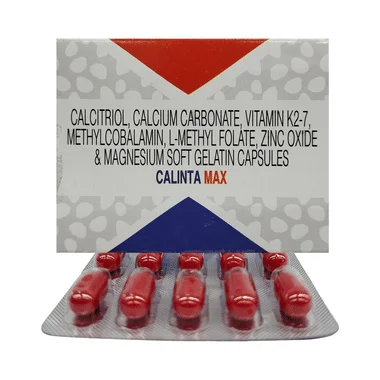
Adbone-K2 Softgel Capsule: Complete Medicine Guide
When to Call Your Doctor IMMEDIATELY
- Severe nausea, vomiting, or abdominal pain
- Confusion, drowsiness, or extreme weakness
- Increased thirst and frequent urination that does not stop
- Fast, slow, or irregular heartbeat
- Blood in urine or severe flank pain
- Swelling of the face, lips, or throat
- Yellowing of the skin or eyes
- Decreased urine output or swelling in the legs
If experiencing severe symptoms, call emergency services immediately.
What is calinta max soft gelatin capsule used for?
This medicine is a prescription oral softgel capsule containing calcitriol 0.25 mcg and calcium carbonate 1250 mg. It is used to treat low calcium levels and bone disease, especially in chronic kidney disease, hypoparathyroidism, rickets, and osteomalacia. It works by increasing calcium absorption and regulating bone metabolism. It must be taken under medical supervision with regular blood tests.
- Generic Name: Calcitriol + Calcium Carbonate
- Manufacturer: Intas Pharmaceuticals Ltd
- Form: Allopathy
- Pregnancy Category: Consult doctor
- Prescription Required: Yes
🇮🇳 calinta max soft gelatin capsule के बारे में (Hindi Summary)
उपयोग: यह दवा कैल्सिट्रियोल और कैल्शियम कार्बोनेट का संयोजन है। यह शरीर में कैल्शियम की कमी को पूरा करने और हड्डियों की बीमारियों के इलाज के लिए दी जाती है। यह गुर्दे की बीमारी वाले मरीजों में कैल्शियम की कमी, हाइपोपैराथायरॉइडिज़्म, रिकेट्स और ऑस्टियोमलेशिया के इलाज में उपयोग की जाती है। यह दवा विटामिन डी के सक्रिय रूप के रूप में काम करती है और आंतों से कैल्शियम के अवशोषण को बढ़ाती है। यह दवा डॉक्टर के पर्चे के बिना नहीं लेनी चाहिए।
साइड इफेक्ट्स: आम दुष्प्रभावों में मतली, उल्टी, पेट दर्द, कब्ज, दस्त, मुँह सूखना, अधिक प्यास लगना, बार-बार पेशाब आना, कमजोरी और सिरदर्द शामिल हैं। गंभीर दुष्प्रभावों में रक्त में कैल्शियम का बहुत अधिक बढ़ जाना शामिल है, जिससे भ्रम, नींद आना, अनियमित धड़कन और गुर्दे की समस्या हो सकती है। अगर आपको लगातार उल्टी, अत्यधिक प्यास, बार-बार पेशाब, भ्रम या धड़कन में गड़बड़ी महसूस हो, तो तुरंत डॉक्टर से संपर्क करें।
सुरक्षा सलाह: इस दवा को डॉक्टर के बताए अनुसार ही लें। अपनी मर्जी से डोज न बदलें और न ही बंद करें। डॉक्टर समय-समय पर रक्त में कैल्शियम, फॉस्फेट और गुर्दे की कार्यप्रणाली की जाँच करेंगे। पर्याप्त पानी पिएँ जब तक डॉक्टर ने तरल पदार्थ सीमित करने को न कहा हो। बिना डॉक्टर की सलाह के अतिरिक्त कैल्शियम या विटामिन डी सप्लीमेंट न लें। अगर आप गर्भवती हैं, गर्भधारण की योजना बना रही हैं या स्तनपान करा रही हैं, तो डॉक्टर से सलाह लें।
💊 calinta max soft gelatin capsule Uses & Benefits
[{"condition":"Hypocalcemia in chronic kidney disease","description":"Used to raise and maintain normal blood calcium levels in patients with kidney failure who cannot convert vitamin D to its active form.","evidence":"Well-established"},{"condition":"Secondary hyperparathyroidism","description":"Helps suppress overactive parathyroid glands in chronic kidney disease by increasing calcium absorption and vitamin D receptor activation.","evidence":"Well-established"},{"condition":"Postmenopausal osteoporosis","description":"Supports bone mineral density when used as part of a comprehensive treatment plan that includes calcium and vitamin D adequacy.","evidence":"Well-established"},{"condition":"Hypoparathyroidism","description":"Replaces the active vitamin D needed to maintain normal calcium levels when the parathyroid glands do not produce enough hormone.","evidence":"Well-established"},{"condition":"Rickets and osteomalacia","description":"Treats defective bone mineralization caused by vitamin D deficiency or impaired vitamin D activation.","evidence":"Well-established"},{"condition":"Vitamin D dependent rickets","description":"Provides active vitamin D to correct the metabolic defect in patients who cannot produce calcitriol normally.","evidence":"Well-established"}]
Off-label uses: [{"condition":"Psoriasis","description":"Topical or oral activated vitamin D has been studied for psoriasis, but this oral combination is not a standard treatment.","evidence":"Limited"},{"condition":"Prevention of corticosteroid-induced osteoporosis","description":"Sometimes used as an adjunct to calcium and vitamin D supplementation, but evidence for this specific combination is limited.","evidence":"Limited"}]
Primary treatment for: Hypocalcemia and bone disease associated with chronic kidney disease
Also treats: Secondary hyperparathyroidism, Postmenopausal osteoporosis, Hypoparathyroidism, Rickets, Osteomalacia, Vitamin D dependent rickets
📋 Drug Information
| Generic Name(s) | Calcitriol + Calcium Carbonate |
| Brand Name | Atibon-K27 Softgel Capsule |
| Manufacturer | Intas Pharmaceuticals Ltd |
| Packaging / Form | Varies by brand (Allopathy) |
| Therapeutic Class | VITAMINS MINERALS NUTRIENTS |
| Action Class | Vitamins and Minerals |
| Route of Administration | Oral |
| Storage | Store at room temperature between 15°C and 30°C in a dry place. Protect from light and moisture. Keep the softgel capsules in their original container with the lid tightly closed. |
| Shelf Life | 24 months from the date of manufacture, or as printed on the pack. Do not use after the expiry date. |
| WHO Guideline | Not established from the available information. |
| ICMR Guideline | Not established from the available information. |
👨⚕️ Doctor's Practical Tips
Evidence-based practical advice from experienced clinicians
🔍 Is This Medicine Right for Your Symptom?
Educational reference. Always consult a doctor for diagnosis.
🔬 How This Medicine Works (Pharmacology)
Pharmacokinetics
How It Works
Calcitriol binds to the vitamin D receptor in the nucleus of target cells, especially in the intestine, bone, kidney, and parathyroid glands. This binding increases the production of calcium-binding proteins that carry calcium from the gut into the bloodstream. In bone, calcitriol helps regulate the activity of osteoblasts and osteoclasts so that calcium can be released or deposited as needed. In the parathyroid gland, it reduces the production of parathyroid hormone when calcium levels are low. Calcium carbonate dissolves in the stomach to release calcium ions, which are then absorbed and used for bone formation, muscle contraction, nerve signaling, and blood clotting.
Mechanism Steps
💡 How to Take calinta max soft gelatin capsule
Strength: Calcitriol 0.25 mcg and Calcium Carbonate 1250 mg softgel capsule
Dosage Information
| Adult Dosage | The usual adult dose is one softgel capsule taken by mouth once daily or as directed by your doctor. The exact dose depends on the condition being treated, your blood calcium levels, kidney function, and other medicines you take. Your doctor may adjust the dose based on regular blood tests. Dose must be individualized by a qualified clinician based on indication, age, weight, renal and hepatic function. Do not change the dose without medical advice. |
| Pediatric Dosage | Pediatric dosing is not established from available information. Consult a pediatrician. |
| Elderly Dosage | Older adults may be more sensitive to the effects of calcitriol and calcium. Kidney function often declines with age, so lower doses and more frequent monitoring of calcium and kidney function may be needed. Dose must be individualized by a qualified clinician. |
| Renal Impairment | Patients with kidney disease require careful dose adjustment and frequent monitoring of calcium, phosphate, and kidney function. This medicine is often used in chronic kidney disease, but the dose must be individualized by a nephrologist or qualified clinician. |
| Hepatic Impairment | Patients with liver disease may have altered metabolism of calcitriol and should be monitored closely for hypercalcemia. Dose must be individualized by a qualified clinician. |
| Maximum Daily Dose | The maximum daily dose must be determined by your doctor based on your blood calcium levels and clinical response. Do not exceed the prescribed dose. |
Dosage Timeline
🍽️ Food Timing Guide
⏰ What to Do If You Miss a Dose
⚠️ Side Effects of calinta max soft gelatin capsule
✅ Common Side Effects
🚨 Serious Side Effects
⚠️ Rare Side Effects
Consult your doctor if you experience any unusual symptoms.
🔬 Drug Interactions
| Drug | Severity | Effect |
|---|---|---|
| Thiazide diuretics | Major | |
| Digoxin | Major | |
| Vitamin D supplements | Major | |
| Calcium supplements | Major | |
| Corticosteroids | Moderate | |
| Orlistat | Moderate | |
| Cholestyramine | Moderate | |
| Aluminum-containing antacids | Moderate | |
| Iron supplements | Minor | |
| Thyroid hormones | Minor |
🚨 Major Interactions
- Thiazide diuretics
- Digoxin
- Vitamin D supplements
- Calcium supplements
⚡ Moderate Interactions
- Corticosteroids
- Orlistat
- Cholestyramine
- Aluminum-containing antacids
🍷 Alcohol Interaction
Alcohol can reduce calcium absorption, interfere with vitamin D metabolism, and weaken bones. It is best to avoid alcohol or limit it to occasional small amounts while taking this medicine. Heavy drinking increases the risk of falls and fractures and may worsen the underlying bone condition.
🔎 Check Your Other Medicines
Educational tool. Always confirm with your doctor or pharmacist.
🛡️ Safety & Warnings
🚫 Contraindications
["Hypercalcemia","Hypervitaminosis D","Known hypersensitivity to calcitriol, calcium carbonate, or any component of the formulation","Active calcium-containing kidney stones","Severe kidney failure without specialist supervision"]
⚠️ Warnings & Precautions
["Monitor calcium levels regularly to avoid hypercalcemia.","Use with caution in patients with kidney disease, heart disease, or sarcoidosis.","Avoid additional calcium or vitamin D supplements unless prescribed.","Drink plenty of water to reduce the risk of kidney stones.","Tell your doctor if you are taking digoxin, thiazide diuretics, or other medications.","Do not use this medicine for routine vitamin supplementation without medical advice.","Seek medical attention if you develop symptoms of high calcium such as confusion, thirst, or frequent urination."]
🤱 Lactation Safety
Calcitriol and calcium are excreted in small amounts in breast milk. This medicine is generally considered compatible with breastfeeding when used at prescribed doses, but the infant should be monitored for signs of hypercalcemia. Consult your doctor before using this medicine while breastfeeding.
💊 Overdose Management
Overdose can cause severe hypercalcemia with nausea, vomiting, confusion, dehydration, irregular heartbeat, and kidney damage. If you suspect an overdose, stop the medicine and seek emergency medical care immediately. Treatment may include stopping the medicine, intravenous fluids, and medications to lower calcium levels. Do not try to treat yourself at home.
⏰ Missed Dose
If you miss a dose, take it as soon as you remember if it is less than half the dosing interval away. If more than half the interval has passed, skip the missed dose and continue with your regular schedule. Do not take a double dose to make up for a missed one.
Additional Safety Advice
Take this medicine exactly as prescribed by your doctor. Do not change the dose or stop it on your own. Your doctor will monitor your blood calcium, phosphate, and kidney function regularly. Drink plenty of water unless your doctor has told you to limit fluids. Avoid taking extra calcium or vitamin D supplements without medical advice, because too much calcium can be dangerous. Tell your doctor if you have kidney disease, heart disease, sarcoidosis, or a history of kidney stones. Avoid antacids that contain calcium or magnesium unless approved by your doctor. If you are pregnant, planning pregnancy, or breastfeeding, speak to your doctor before using this medicine. Keep all follow-up appointments and laboratory tests.
👴 Special Considerations for Elderly
💡 For Patients Above 65
Older adults are more likely to have reduced kidney function and may be more sensitive to the effects of calcitriol and calcium. Lower doses and more frequent monitoring of calcium, phosphate, and kidney function are often needed. Falls and fractures are more common in this age group, so bone health and safety at home should be reviewed regularly.
🤰 Pregnancy Planning (TTC)
If you are planning to become pregnant, talk to your doctor before continuing this medicine. Your calcium and vitamin D levels should be optimized before conception. This medicine may need to be continued or adjusted during pregnancy under specialist supervision. Do not start or stop any medicine without medical advice.
🏥 Post-Surgery Considerations
After surgery, especially thyroid or parathyroid surgery, your calcium levels may change rapidly. This medicine may be prescribed to maintain normal calcium levels. Follow your surgeon's instructions carefully and keep all follow-up appointments for blood tests. Report any tingling, muscle cramps, or confusion immediately.
🦷 Dental Procedures
Tell your dentist that you are taking this medicine before any dental procedure. High calcium levels can affect healing and increase the risk of complications. Your dentist may ask about your recent blood test results. Continue taking your medicine as prescribed unless your doctor tells you otherwise.
💚 Lifestyle Tips for Better Results
🏋️ Exercise Considerations
Regular physical activity is good for bone health, but avoid high-impact exercises if you have weak bones or are at risk of fractures. Ask your doctor before starting any new exercise program. If you feel dizzy or weak, stop exercising and rest. Swimming and walking are generally safe low-impact options.
🥗 Diet Recommendations
💼 Impact on Daily Work & Life
This medicine is not known to impair your ability to work or drive. However, if you experience dizziness, confusion, or weakness from high calcium levels, avoid driving or operating heavy machinery until you feel well. Keep your doctor informed about your work schedule if you have irregular hours, as the timing of your dose may need adjustment.
🛑 When to Stop This Medicine
Do not stop this medicine on your own. Your doctor will decide when to stop based on your blood calcium levels, kidney function, and the condition being treated. If you experience signs of high calcium such as confusion, excessive thirst, or irregular heartbeat, contact your doctor immediately. Stopping suddenly can cause calcium levels to drop and worsen your symptoms.
📅 Long-Term Use Effects
Long-term use of this medicine requires regular monitoring of blood calcium, phosphate, and kidney function. If calcium levels remain normal, it can be used safely for months to years under medical supervision. Prolonged high calcium levels can lead to kidney stones, kidney damage, and calcification of soft tissues. Your doctor will adjust the dose based on periodic tests and may recommend dietary changes or other treatments.
🌿 Non-Medicine Approaches
These can complement medicine but do not replace prescribed treatment.
Increasing calcium and vitamin D through food and safe sunlight can help maintain bone health, but may not be enough for people with kidney disease or hypoparathyroidism.
Evidence: Well-establishedMedicines such as alfacalcidol or cholecalciferol may be used instead, depending on the condition and kidney function.
Evidence: Well-establishedIn chronic kidney disease, additional medicines may be needed to control phosphate and parathyroid hormone levels.
Evidence: Well-established💉 Vaccination Considerations
💉 If You're Getting Vaccinated
There are no known interactions between this medicine and vaccines. However, if you have a condition that affects your immune system or are taking other medicines, ask your doctor about the best time to receive vaccines. Keep your vaccination records up to date.
📦 Storage Guide
✅ DO
Store at room temperature between 15°C and 30°C
❌ DON'T
Do not refrigerate unless specified
✅ DO
Keep in the original container with the lid tightly closed
❌ DON'T
Do not transfer to unmarked containers
✅ DO
Keep away from direct sunlight and moisture
❌ DON'T
Do not store in the bathroom cabinet
✅ DO
Keep out of reach of children
❌ DON'T
Do not use after the expiry date
✈️ Traveling with This Medicine
Carry this medicine in its original packaging with the prescription label clearly visible. Bring a copy of your prescription and a letter from your doctor if you are traveling internationally. Keep the capsules in your hand luggage to avoid temperature extremes in checked baggage. Store at room temperature and protect from direct sunlight. If you are crossing time zones, ask your doctor how to adjust the timing of your dose. Do not pack it in a way that exposes it to heat or moisture.
💰 Cost Analysis & Savings
👥 Real Patient Stories
Educational, anonymized scenarios. Individual results may vary.
💬 Questions Patients Often Ask
A: Calcitriol starts working within hours, but it may take several days to weeks to see improvements in blood calcium levels and symptoms. Your doctor will monitor your progress with blood tests.
A: Yes, it is best taken with food to improve absorption and reduce stomach upset.
A: If you remember within half the dosing interval, take it as soon as possible. If more than half the interval has passed, skip the missed dose and continue with your regular schedule. Do not double dose.
A: No, do not take extra calcium or vitamin D supplements unless your doctor specifically tells you to. Too much calcium can be dangerous.
A: It should only be used during pregnancy if prescribed by your doctor. Your calcium levels will need to be monitored closely.
A: Signs include increased thirst, frequent urination, nausea, vomiting, confusion, drowsiness, and irregular heartbeat. Report these to your doctor immediately.
🤔 Common Patient Concerns
🔄 Substitutes for calinta max soft gelatin capsule
View AllAlternative brands with exact same active ingredient:
-
calcisafe-ct tabletDaxin Pharmaceutical Pvt Ltd ₹121.88 60.4% CHEAPER
-
osbrace k 2 softgel capsuleMecartus Health Care Pvt Ltd ₹178.13 42.2% CHEAPER
-
wekcium-plus soft gel capsuleMeckley Life Sciences Pvt Ltd ₹205.78 33.2% CHEAPER
-
adbone-k2 softgel capsuleAdinex Healthcare ₹241.88 21.5% CHEAPER
-
k to 7 softgel capsuleKenzar Pharma World ₹328.13 6.5% COSTLIER
Medical Note: Always consult your doctor before switching medications.
🛑 Myths vs. Facts
- Myth: This medicine is just a calcium supplement and can be taken by anyone.
Fact: This is a prescription medicine that contains activated vitamin D and high-dose calcium. It can cause dangerous high calcium levels if taken without medical supervision. - Myth: More calcium always means stronger bones.
Fact: Too much calcium can cause kidney stones, soft tissue calcification, and heart rhythm problems. The dose must be carefully monitored. - Myth: You can stop this medicine once you feel better.
Fact: Stopping suddenly can cause calcium levels to drop again. Always consult your doctor before stopping. - Myth: This medicine can replace a healthy diet and exercise.
Fact: It supports bone health but does not replace a balanced diet, weight-bearing exercise, and other treatments your doctor recommends.
🔄 Alternative Options
Generic Alternatives
- Calcitriol and calcium carbonate combination capsules
- Calcitriol capsules with separate calcium carbonate tablets
Brand Alternatives
- Adbone-K2 Softgel Capsule