
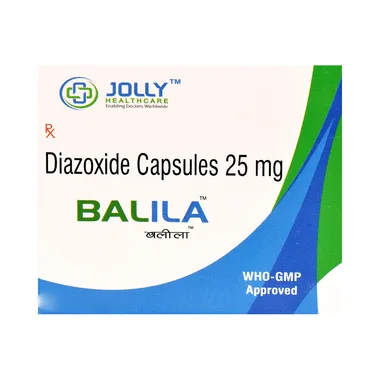
Balila 25mg Capsule (Diazoxide): Complete Medicine Guide
Clinical Reference Standards: CDSCO (Central Drugs Standard Control Organisation), Indian Pharmacopoeia (IP) & WHO | Last Updated: September 2026
When to Call Your Doctor IMMEDIATELY
- Fainting, severe dizziness, or inability to stand up due to low blood pressure
- Sudden breathlessness, chest pain, or worsening swelling of the legs and abdomen
- Confusion, sweating, shakiness, or seizures suggesting dangerously low blood sugar
- Unusual bruising, bleeding, fever, or sore throat suggesting a blood disorder
- Severe upper abdominal pain radiating to the back, which may suggest pancreatitis
- Swelling of the face, lips, or throat, or difficulty breathing, suggesting a severe allergic reaction
- Passing very little urine or sudden weight gain with swelling
If experiencing severe symptoms, call emergency services immediately.
What is balila 25mg capsule used for?
This medicine contains Diazoxide 25 mg, an oral capsule used mainly in specialist care to treat persistent low blood sugar caused by excessive insulin release. It works by reducing insulin secretion from the pancreas and widening blood vessels, and it must be used under close medical supervision with regular monitoring of blood sugar, blood pressure, and fluid balance.
- Generic Name: Diazoxide
- Manufacturer: Jolly Healthcare
- Form: Allopathy
- Pregnancy Category: Consult doctor
- Prescription Required: Yes
🇮🇳 balila 25mg capsule के बारे में (Hindi Summary)
उपयोग: यह दवा डायाज़ॉक्साइड 25 मिलीग्राम कैप्सूल के रूप में मिलती है और मुख्य रूप से उन विशेष स्थितियों में दी जाती है जहाँ शरीर में इंसुलिन बहुत ज़्यादा बनता है और बार-बार शुगर कम हो जाती है। यह अग्न्याशय से इंसुलिन के स्राव को कम करती है और रक्त वाहिकाओं को फैलाकर रक्तचाप को कम करती है। यह दवा केवल डॉक्टर की देखरेख में ही लेनी चाहिए, क्योंकि इससे शुगर, ब्लड प्रेशर और शरीर में पानी जमा होने जैसी समस्याएँ हो सकती हैं। इसे उन लोगों को नहीं लेना चाहिए जिन्हें हृदय रोग, गंभीर निम्न रक्तचाप या इस दवा से एलर्जी है।
साइड इफेक्ट्स: इस दवा के आम दुष्प्रभावों में पैरों या टखनों में सूजन, शरीर पर बाल बढ़ना, जी मिचलाना, उल्टी, पेट में असहजता, धड़कन तेज़ होना, चक्कर आना और सिरदर्द शामिल हैं। कभी-कभी गंभीर रूप से ब्लड प्रेशर कम हो सकता है, दिल की विफलता के लक्षण जैसे साँस फूलना और सूजन बढ़ सकती है, या ब्लड शुगर खतरनाक स्तर तक गिर सकती है। अगर आपको साँस लेने में तकलीफ, बेहोशी, सीने में दर्द, या चेहरे-होंठों में सूजन हो, तो तुरंत डॉक्टर से मिलें।
सुरक्षा सलाह: इस दवा को डॉक्टर के बताए अनुसार ही लें और अपनी मर्ज़ी से डोज़ न बदलें। शुगर और ब्लड प्रेशर की नियमित जाँच करते रहें और रिकॉर्ड रखें। हमेशा अपने पास ग्लूकोज़ की गोलियाँ या मिठाई रखें ताकि शुगर कम होने पर तुरंत ले सकें। शराब न लें क्योंकि इससे शुगर और ब्लड प्रेशर दोनों पर बुरा असर पड़ सकता है। गाड़ी चलाने या मशीन चलाने से बचें जब तक आपको पता न चल जाए कि यह दवा आप पर कैसा असर करती है। गर्भावस्था या स्तनपान के दौरान डॉक्टर से सलाह लें। दवा को ठंडी, सूखी जगह पर मूल डिब्बे में रखें और बच्चों से दूर रखें।
💊 balila 25mg capsule Uses & Benefits
[{"condition":"Hyperinsulinism and persistent hypoglycaemia","description":"This medicine is used to reduce excessive insulin release from the pancreas and to raise blood glucose in people with hyperinsulinism who do not respond adequately to other measures.","evidence":"Well-established in specialist endocrine practice"},{"condition":"Hypoglycaemia due to insulinoma","description":"It can help control low blood sugar episodes in patients with insulin-producing tumours of the pancreas when surgery is not immediately possible.","evidence":"Established in specialist use"},{"condition":"Neonatal hypoglycaemia (selected cases)","description":"In some newborns with persistent hyperinsulinism, oral Diazoxide may be used under specialist supervision to maintain normal blood sugar.","evidence":"Established in neonatal intensive care settings"},{"condition":"Hypertension (historical use)","description":"Diazoxide has been used in the past for severe high blood pressure, but safer and more predictable medicines are now preferred for this purpose.","evidence":"Historical use; largely replaced"}]
Off-label uses: [{"condition":"Severe hypertension in pregnancy (selected specialist settings)","description":"In some hospital settings, Diazoxide has been used to lower very high blood pressure in pregnancy, but this is not a standard first-line approach and requires specialist care.","evidence":"Limited and specialist-only"},{"condition":"Peripheral vasodilatation in selected vascular conditions","description":"Its blood-vessel-widening effect has occasionally been explored in certain circulatory problems, but this is not a common or well-established use.","evidence":"Limited"}]
Primary treatment for: Hyperinsulinism with persistent hypoglycaemia
Also treats: Insulinoma, Neonatal hypoglycaemia due to hyperinsulinism, Severe hypertension (historical use)
📋 Drug Information
| Generic Name(s) | Diazoxide |
| Brand Name | Balila 25mg Capsule |
| Manufacturer | Jolly Healthcare |
| Packaging / Form | Varies by brand (Allopathy) |
| Therapeutic Class | ANTI DIABETIC |
| Action Class | Antidiabetic |
| Route of Administration | Oral |
| Storage | Store at room temperature between 15°C and 30°C in a dry place, away from direct sunlight and moisture. Keep the capsule in its original container and out of reach of children. |
| Shelf Life | The shelf life is usually 24 months from the date of manufacture, but always check the expiry date printed on the pack and do not use the medicine after that date. |
| WHO Guideline | Not established from the available information. Treatment should follow local specialist guidelines and the advice of the treating clinician. |
| ICMR Guideline | Not established from the available information. Please refer to current Indian endocrine and paediatric guidelines for hyperinsulinism management. |
👨⚕️ Doctor's Practical Tips
Evidence-based practical advice from experienced clinicians
🔍 Is This Medicine Right for Your Symptom?
Educational reference. Always consult a doctor for diagnosis.
🔬 How This Medicine Works (Pharmacology)
Pharmacokinetics
How It Works
This medicine works mainly by opening potassium channels in the membranes of pancreatic beta cells. When these channels open, potassium moves out of the cell, which makes the cell less excitable and reduces the entry of calcium. Because calcium entry is needed for insulin-containing granules to be released, this medicine lowers insulin secretion from the pancreas. At the same time, it acts on blood vessel smooth muscle to cause relaxation and widening of the vessels, which lowers blood pressure. It also encourages the liver to release stored glucose into the blood. The combined effect is a rise in blood glucose and a fall in blood pressure, which explains both its benefits and many of its side effects.
Mechanism Steps
💡 How to Take balila 25mg capsule
Strength: Diazoxide 25 mg immediate-release capsule for oral use.
Dosage Information
| Adult Dosage | The adult dose of this medicine is not fixed and must be individualised by a qualified clinician based on the condition being treated, the patient's weight, blood sugar levels, blood pressure, kidney function, and liver function. In hyperinsulinism, treatment is often started at a low dose and increased gradually under close supervision, with monitoring of blood glucose, blood pressure, and fluid balance. Dose must be individualised by a qualified clinician based on indication, age, weight, renal and hepatic function. Never adjust the dose yourself. |
| Pediatric Dosage | Pediatric dosing is not established from available information. Consult a pediatrician. Use in newborns and children must be supervised by a specialist in pediatric endocrinology or neonatology. |
| Elderly Dosage | Older adults may be more sensitive to the blood pressure lowering and fluid retaining effects of this medicine. Treatment should be started at a low dose and increased slowly, with careful monitoring of blood pressure, blood sugar, kidney function, and heart function. |
| Renal Impairment | Because this medicine is removed mainly by the kidneys, people with reduced kidney function may need a lower dose and longer intervals between doses. Kidney function should be checked regularly, and the dose must be adjusted by a qualified clinician. |
| Hepatic Impairment | People with liver disease may break down this medicine more slowly, leading to stronger and longer-lasting effects. A lower dose and closer monitoring may be needed, as decided by a qualified clinician. |
| Maximum Daily Dose | The maximum daily dose is not fixed and depends on the condition, response, and tolerability. It must be determined by a qualified clinician. Do not exceed the dose prescribed for you. |
Dosage Timeline
🍽️ Food Timing Guide
⏰ What to Do If You Miss a Dose
⚠️ Side Effects of balila 25mg capsule
✅ Common Side Effects
🚨 Serious Side Effects
⚠️ Rare Side Effects
Consult your doctor if you experience any unusual symptoms.
🔬 Drug Interactions
| Drug | Severity | Effect |
|---|---|---|
| Other antihypertensives | Major | |
| Thiazide diuretics | Major | |
| Warfarin | Major | |
| Phenytoin | Major | |
| Corticosteroids | Moderate | |
| Beta-blockers | Moderate | |
| Loop diuretics | Moderate | |
| Antacids | Minor | |
| Alcohol | Moderate |
🚨 Major Interactions
- Other blood pressure lowering medicines
- Thiazide diuretics
- Warfarin
- Phenytoin
⚡ Moderate Interactions
- Corticosteroids
- Beta-blockers
- Loop diuretics
🍷 Alcohol Interaction
Alcohol can increase the risk of low blood sugar and low blood pressure when taken with this medicine. It is safest to avoid alcohol completely while you are on treatment, or to discuss safe limits with your doctor.
🔎 Check Your Other Medicines
Educational tool. Always confirm with your doctor or pharmacist.
🛡️ Safety & Warnings
🚫 Contraindications
["Known allergy or hypersensitivity to Diazoxide or any ingredient of this product","Certain heart conditions such as heart failure or severe heart disease where fluid retention is dangerous","Severe low blood pressure or shock","Kidney disease with significant fluid retention, unless specifically managed by a specialist","Use in breastfeeding without specialist advice"]
⚠️ Warnings & Precautions
["This medicine can cause fluid retention and swelling; report rapid weight gain or worsening ankle swelling.","It can cause low blood pressure; rise slowly from sitting or lying positions to avoid dizziness.","It can cause high blood sugar; monitor glucose as advised and report excessive thirst or urination.","It may cause increased hair growth, which is usually reversible after stopping treatment.","Use with caution in people with heart, kidney, or liver disease.","Do not stop this medicine suddenly without medical advice.","Avoid alcohol while taking this medicine.","Tell your doctor about all other medicines, including over-the-counter products and herbal supplements."]
🤱 Lactation Safety
This medicine passes into breast milk and may affect the nursing infant. Breastfeeding is generally not recommended while taking this medicine unless a specialist has advised that it is safe in your particular case.
💊 Overdose Management
An overdose of this medicine can cause dangerously low blood pressure, a very fast heartbeat, and serious changes in blood sugar. If you suspect an overdose, seek emergency medical care immediately. Treatment is supportive and may include fluids, medicines to support blood pressure, and close monitoring of blood sugar, heart rhythm, and kidney function. Do not try to treat an overdose at home.
⏰ Missed Dose
If you miss a dose, take it as soon as you remember, unless it is almost time for your next dose. If it is almost time for the next dose, skip the missed dose and continue with your regular schedule. Do not take a double dose to make up for a missed one. If you are unsure, contact your doctor or pharmacist.
Additional Safety Advice
Take this medicine exactly as prescribed by your doctor, and never change the dose without medical advice. Because this medicine can affect blood sugar and blood pressure, check your levels as often as your clinician recommends and keep a record. Carry a fast-acting source of sugar such as glucose tablets or candy at all times in case of low blood sugar. Tell your doctor if you have heart disease, kidney disease, liver disease, gout, or if you are pregnant, planning pregnancy, or breastfeeding. Avoid alcohol while taking this medicine because it can worsen low blood sugar and blood pressure changes. Do not drive or operate heavy machinery until you know how this medicine affects you. Keep all follow-up appointments for blood tests, blood pressure checks, and heart monitoring. Store this medicine in its original container at room temperature, away from moisture and direct sunlight, and keep it out of reach of children. Do not share this medicine with anyone else, even if they have similar symptoms.
👴 Special Considerations for Elderly
💡 For Patients Above 65
Older adults are more likely to experience low blood pressure, dizziness, fluid retention, and kidney problems with this medicine. Treatment should be started at a low dose, increased slowly, and monitored closely with regular blood tests and clinical review.
🤰 Pregnancy Planning (TTC)
If you are planning pregnancy, talk to your doctor before conceiving. This medicine crosses the placenta and may affect the baby, so your treatment may need to be reviewed or changed. Do not stop or change your medicine without medical advice.
🏥 Post-Surgery Considerations
After surgery, this medicine may need to be temporarily adjusted or stopped depending on your blood sugar, blood pressure, fluid balance, and kidney function. Inform your surgical and anaesthetic team that you take this medicine, and follow their instructions carefully.
🦷 Dental Procedures
Tell your dentist that you take this medicine, especially if you have heart or blood pressure problems. Dental procedures can cause stress and changes in blood sugar, so monitor your levels as advised and follow your doctor's instructions about taking your medicine on the day of the procedure.
💚 Lifestyle Tips for Better Results
🏋️ Exercise Considerations
Exercise can lower blood sugar, and this medicine can also affect blood sugar and blood pressure. Check your blood sugar before and after exercise if advised, stay hydrated, and avoid very strenuous activity until you know how the medicine affects you. Stop exercising and seek help if you feel dizzy, breathless, or unwell.
🥗 Diet Recommendations
💼 Impact on Daily Work & Life
This medicine can cause dizziness, low blood pressure, and changes in blood sugar, which may affect your ability to drive or operate machinery. Avoid these activities until you know how the medicine affects you. Tell your employer if your work involves safety-sensitive tasks, and discuss any necessary adjustments with your doctor.
🛑 When to Stop This Medicine
Do not stop this medicine on your own. Your doctor may reduce or stop it if your condition improves, if side effects become troublesome, or if another treatment is more suitable. Stopping suddenly can cause blood sugar and blood pressure problems, so always follow medical advice.
📅 Long-Term Use Effects
Long-term use of this medicine may cause persistent fluid retention, increased hair growth, changes in blood counts, and effects on the heart. Regular blood tests, blood pressure checks, weight monitoring, and clinical review are needed to detect problems early. The dose may need to be adjusted over time, and the medicine should not be stopped suddenly without medical advice.
🌿 Non-Medicine Approaches
These can complement medicine but do not replace prescribed treatment.
Frequent small meals and controlled carbohydrate intake can help manage low blood sugar in some people.
Evidence: Well-established as part of overall careA somatostatin analogue given by injection that can reduce insulin release when this medicine is not effective or not tolerated.
Evidence: Established in specialist practiceFor some cases of insulinoma or focal hyperinsulinism, surgery may be curative and is considered by specialists.
Evidence: Well-established for suitable cases💉 Vaccination Considerations
💉 If You're Getting Vaccinated
There are no specific vaccine interactions established for this medicine. Routine vaccinations can usually be given, but tell your doctor or nurse that you are taking this medicine, especially if you have a fever or feel unwell.
📦 Storage Guide
✅ DO
Store at room temperature between 15°C and 30°C
❌ DON'T
Do not refrigerate unless the label says so
✅ DO
Keep in the original labelled container
❌ DON'T
Do not transfer to unmarked containers
✅ DO
Keep away from direct sunlight and moisture
❌ DON'T
Do not store in the bathroom cabinet
✅ DO
Keep out of reach of children
❌ DON'T
Do not use after the expiry date
✈️ Traveling with This Medicine
Carry this medicine in its original labelled container with a copy of your prescription, especially when travelling internationally. Keep it in your hand luggage rather than checked baggage, and store it away from heat and direct sunlight. If you are crossing time zones, ask your doctor how to adjust the timing of your doses. Carry a fast-acting source of sugar and a written list of your medicines and allergies. Check local rules about carrying prescription medicines before you travel.
💰 Cost Analysis & Savings
👥 Real Patient Stories
Educational, anonymized scenarios. Individual results may vary.
💬 Questions Patients Often Ask
A: The effects usually begin within a few hours of taking a dose, but it may take days to weeks of careful dose adjustment before your blood sugar and blood pressure are well controlled.
A: No. Stopping suddenly can cause serious problems with blood sugar and blood pressure. Always talk to your doctor before stopping or changing the dose.
A: Sit or lie down immediately and raise your legs. If dizziness is severe, you faint, or you cannot stand, seek medical help right away.
A: This medicine crosses the placenta and can affect the baby. It should only be used in pregnancy under specialist supervision when clearly needed.
A: This medicine passes into breast milk and may affect the baby. Breastfeeding is generally not recommended unless a specialist advises it is safe.
🤔 Common Patient Concerns
🔄 Substitutes for balila 25mg capsule
View AllAlternative brands with exact same active ingredient:
Medical Note: Always consult your doctor before switching medications.
🛑 Myths vs. Facts
- Myth: This medicine is a general blood pressure medicine that anyone can take.
Fact: This medicine is a specialist treatment used mainly for hyperinsulinism and related low blood sugar conditions. It is not a routine blood pressure medicine and must only be used under specialist supervision. - Myth: More medicine means better blood sugar control.
Fact: Taking more than prescribed can cause dangerous low blood pressure, fluid retention, and other serious problems. The dose must be adjusted only by your doctor. - Myth: You can stop this medicine as soon as you feel better.
Fact: Stopping suddenly can cause blood sugar and blood pressure problems. Always talk to your doctor before stopping.
🔄 Alternative Options
Generic Alternatives
- Diazoxide 25 mg oral capsule (generic)
Brand Alternatives
- Balila 25mg capsule