
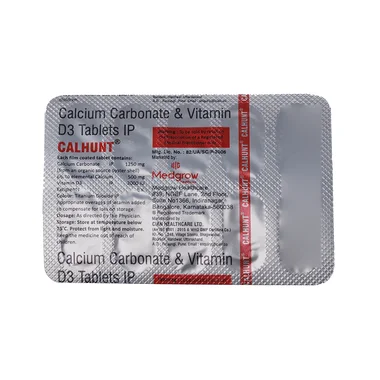
Calhunt Tablet: Complete Guide to Uses, Dosage, and Safety
Clinical Reference Standards: CDSCO (Central Drugs Standard Control Organisation), Indian Pharmacopoeia (IP) & WHO | Last Updated: September 2026
When to Call Your Doctor IMMEDIATELY
- Excessive thirst and frequent urination
- Severe nausea, vomiting, or abdominal pain
- Confusion or mood changes
- Irregular heartbeat or palpitations
- Blood in urine or severe flank pain
- Signs of allergic reaction: rash, swelling, difficulty breathing
- Muscle weakness or bone pain that worsens
If experiencing severe symptoms, call emergency services immediately.
What is calhunt tablet used for?
This medicine is a calcium and vitamin D3 supplement used to treat or prevent low calcium levels and vitamin D deficiency, supporting bone health. It is taken orally, usually once daily with food, as prescribed by a doctor.
- Generic Name: Calcium + Vitamin D3
- Manufacturer: Medgrow Health Care
- Form: Allopathy
- Pregnancy Category: Consult doctor
- Prescription Required: Yes
🇮🇳 calhunt tablet के बारे में (Hindi Summary)
उपयोग: यह दवा कैल्शियम और विटामिन डी3 की कमी को पूरा करने के लिए दी जाती है। यह हड्डियों को मजबूत बनाने, ऑस्टियोपोरोसिस और रिकेट्स के इलाज में सहायक है। गर्भावस्था और स्तनपान के दौरान भी डॉक्टर की सलाह पर इसका उपयोग किया जाता है।
साइड इफेक्ट्स: आमतौर पर यह दवा सुरक्षित मानी जाती है, लेकिन कुछ लोगों को कब्ज, पेट में गड़बड़ी, जी मिचलाना या दस्त हो सकते हैं। गंभीर दुष्प्रभाव दुर्लभ हैं, लेकिन अगर आपको बहुत प्यास लगे, बार-बार पेशाब आए, भ्रम हो या दिल की धड़कन अनियमित लगे तो तुरंत डॉक्टर से मिलें।
सुरक्षा सलाह: इस दवा को डॉक्टर के बताए अनुसार ही लें। खुराक से अधिक न लें। इसे भोजन के साथ लें ताकि अवशोषण बेहतर हो और पेट की परेशानी कम हो। अगर आपको किडनी की बीमारी, हृदय रोग या कैल्शियम की अधिकता है तो डॉक्टर को बताएं। कुछ अन्य दवाओं के साथ इसका सेवन करने से पहले डॉक्टर से सलाह लें।
💊 calhunt tablet Uses & Benefits
[{"condition":"Calcium and vitamin D deficiency","description":"Used to prevent and treat low levels of calcium and vitamin D, which are essential for bone health.","evidence":"Well-established"},{"condition":"Osteoporosis","description":"Adjunct therapy to support bone mineral density and reduce fracture risk when dietary intake is insufficient.","evidence":"Well-established"},{"condition":"Osteomalacia and rickets","description":"Helps correct underlying calcium and vitamin D deficiencies that cause soft or weak bones.","evidence":"Well-established"},{"condition":"Pregnancy and lactation","description":"Supports increased calcium demands during pregnancy and breastfeeding, as recommended by healthcare providers.","evidence":"Well-established"},{"condition":"Postmenopausal women","description":"Helps maintain bone health when estrogen levels decline and bone loss accelerates.","evidence":"Well-established"},{"condition":"Fracture recovery","description":"Supports bone healing after fractures when calcium and vitamin D intake is inadequate.","evidence":"Moderate"}]
Off-label uses: [{"condition":"Premenstrual syndrome (PMS)","description":"Sometimes calcium supplements are used to reduce PMS symptoms, but this is not a primary approved use.","evidence":"Limited"},{"condition":"Colorectal cancer prevention","description":"Some studies suggest calcium may reduce risk, but evidence is not conclusive and it is not recommended for this purpose alone.","evidence":"Limited"}]
Primary treatment for: Calcium and vitamin D deficiency
Also treats: Osteoporosis, Osteomalacia, Rickets, Pregnancy and lactation, Postmenopausal bone loss
📋 Drug Information
| Generic Name(s) | Calcium + Vitamin D3 |
| Brand Name | Argical HD Tablet |
| Manufacturer | Medgrow Health Care |
| Packaging / Form | Varies by brand (Allopathy) |
| Therapeutic Class | VITAMINS MINERALS NUTRIENTS |
| Action Class | Vitamin and Mineral Supplement |
| Route of Administration | Oral |
| Storage | Store at room temperature between 15°C and 30°C (59°F to 86°F). Protect from light and moisture. Keep in the original container, tightly closed. |
| Shelf Life | 24 months from the date of manufacture, or as printed on the packaging. |
| WHO Guideline | Not established from the available information for this specific product. However, WHO recommends adequate calcium and vitamin D intake for bone health. |
| ICMR Guideline | Not established from the available information for this specific product. ICMR recommends daily calcium and vitamin D intake for Indian population. |
👨⚕️ Doctor's Practical Tips
Evidence-based practical advice from experienced clinicians
🔍 Is This Medicine Right for Your Symptom?
Educational reference. Always consult a doctor for diagnosis.
🔬 How This Medicine Works (Pharmacology)
Pharmacokinetics
How It Works
This medicine provides two essential nutrients that work together to support bone health. Calcium is a fundamental building block of bone mineral and is also required for muscle contraction, nerve transmission, and blood clotting. Vitamin D3 (cholecalciferol) acts as a hormone precursor that increases the absorption of calcium and phosphate from the intestines and helps regulate calcium balance in the body. By ensuring adequate levels of both, this medicine promotes bone mineralization and helps prevent calcium deficiency-related disorders.
Mechanism Steps
💡 How to Take calhunt tablet
Strength: Calcium 1250 mg + Vitamin D3 2000 IU immediate-release tablet.
Dosage Information
| Adult Dosage | The usual adult dose is one tablet once daily or as directed by a physician. The dose may vary depending on the indication, severity of deficiency, and individual patient factors such as age, kidney function, and dietary intake. Dose must be individualized by a qualified clinician based on indication, age, weight, renal and hepatic function. Do not self-adjust the dose. |
| Pediatric Dosage | Pediatric dosing is not established from available information. Consult a pediatrician for appropriate dosing in children. |
| Elderly Dosage | Elderly patients may require the same dose as adults, but they are more prone to hypercalcemia and kidney problems. Regular monitoring of calcium and kidney function is advised. Dose must be individualized by a qualified clinician. |
| Renal Impairment | Use with caution in patients with renal impairment. Dose adjustment may be necessary based on kidney function. Consult a doctor for personalized dosing. |
| Hepatic Impairment | No specific dose adjustment is typically required for mild to moderate liver impairment. However, severe liver disease may affect vitamin D metabolism. Consult a doctor for personalized dosing. |
| Maximum Daily Dose | The maximum daily dose should not exceed the prescribed amount. Generally, calcium intake from all sources should not exceed 2000-2500 mg per day, and vitamin D should not exceed 4000 IU per day unless under medical supervision. Follow your doctor's advice. |
Dosage Timeline
🍽️ Food Timing Guide
⏰ What to Do If You Miss a Dose
⚠️ Side Effects of calhunt tablet
✅ Common Side Effects
🚨 Serious Side Effects
⚠️ Rare Side Effects
Consult your doctor if you experience any unusual symptoms.
🔬 Drug Interactions
| Drug | Severity | Effect |
|---|---|---|
| Thiazide diuretics | Major | |
| Digoxin | Major | |
| Tetracycline antibiotics | Major | |
| Fluoroquinolone antibiotics | Major | |
| Iron supplements | Moderate | |
| Levothyroxine | Moderate | |
| Bisphosphonates | Moderate | |
| Corticosteroids | Moderate | |
| Aluminum-containing antacids | Minor | |
| Laxatives | Minor |
🚨 Major Interactions
- Thiazide diuretics
- Digoxin and other cardiac glycosides
- Tetracycline and fluoroquinolone antibiotics
⚡ Moderate Interactions
- Iron supplements
- Levothyroxine
- Bisphosphonates
- Corticosteroids
🍷 Alcohol Interaction
Alcohol may impair calcium absorption and vitamin D metabolism. It is advisable to limit alcohol consumption while taking this medicine. Chronic heavy alcohol use can worsen bone health and increase the risk of fractures.
🔎 Check Your Other Medicines
Educational tool. Always confirm with your doctor or pharmacist.
🛡️ Safety & Warnings
🚫 Contraindications
["Hypercalcemia (high blood calcium)","Hypervitaminosis D (vitamin D toxicity)","Severe renal impairment or kidney stones (unless advised by doctor)","Known allergy to any ingredient","Sarcoidosis (may increase sensitivity to vitamin D)"]
⚠️ Warnings & Precautions
["Do not exceed the recommended dose.","Use with caution in patients with kidney disease or history of kidney stones.","Monitor calcium levels if taking thiazide diuretics or digoxin.","Avoid concurrent use with other calcium or vitamin D supplements without medical advice.","Inform your doctor if you are pregnant, planning pregnancy, or breastfeeding.","Keep out of reach of children.","Do not use if the tablet is discolored or damaged."]
🤱 Lactation Safety
Calcium and vitamin D3 are considered safe during breastfeeding and are often needed to meet increased maternal requirements. They pass into breast milk in amounts that are not harmful to the infant. Consult your doctor for proper dosage.
💊 Overdose Management
Overdose can cause hypercalcemia, hypercalciuria, and hypervitaminosis D. Symptoms include nausea, vomiting, excessive thirst, frequent urination, confusion, and irregular heartbeat. If overdose is suspected, stop the medicine and seek immediate medical attention. Treatment may include hydration, discontinuation of calcium and vitamin D, and in severe cases, medications to lower calcium levels. Dialysis may be required in extreme cases.
⏰ Missed Dose
If you miss a dose, take it as soon as you remember. If it is almost time for your next dose, skip the missed dose and continue with your regular schedule. Do not take a double dose to make up for a missed one.
Additional Safety Advice
Take this medicine exactly as prescribed by your doctor. Do not exceed the recommended dose, as too much calcium or vitamin D can be harmful. Take the tablet with a full glass of water, preferably with a meal to improve absorption and reduce stomach upset. If you have a history of kidney stones, kidney disease, heart disease, or sarcoidosis, inform your doctor before starting this medicine. Avoid taking antacids, iron supplements, or certain antibiotics within two hours of this medicine, as they may interfere with absorption. Do not take this medicine if you have high calcium levels or vitamin D toxicity. Pregnant and breastfeeding women should consult their doctor before use. Keep this medicine out of reach of children. Store it in a cool, dry place away from direct sunlight. Do not use it after the expiry date.
👴 Special Considerations for Elderly
💡 For Patients Above 65
Elderly patients are more susceptible to hypercalcemia and kidney problems. Regular monitoring of calcium and kidney function is advised. They may also have difficulty swallowing tablets; consult doctor for alternative forms if needed.
🤰 Pregnancy Planning (TTC)
Calcium and vitamin D are important for fetal bone development. If you are planning pregnancy, ensure adequate intake through diet and supplements as advised by your doctor. Do not exceed recommended doses.
🏥 Post-Surgery Considerations
After surgery, especially orthopedic surgery, calcium and vitamin D supplements may be recommended to support bone healing. Follow your surgeon's advice regarding dosage and timing.
🦷 Dental Procedures
No specific precautions for dental procedures. Inform your dentist about all medications you are taking, including this supplement.
💚 Lifestyle Tips for Better Results
🏋️ Exercise Considerations
No specific exercise restrictions while taking this medicine. However, if you have bone fractures or osteoporosis, consult your doctor before starting any exercise program. Weight-bearing exercises are generally beneficial for bone health.
🥗 Diet Recommendations
💼 Impact on Daily Work & Life
This medicine is unlikely to affect your ability to drive or operate machinery. However, if you experience dizziness or confusion (signs of high calcium), avoid these activities and consult your doctor.
🛑 When to Stop This Medicine
Do not stop taking this medicine without consulting your doctor. If you experience side effects or your condition changes, your doctor may adjust the dose or recommend discontinuation. Routine blood tests may guide the decision to stop.
📅 Long-Term Use Effects
Long-term use at recommended doses is generally safe and beneficial for bone health. However, excessive intake can lead to hypercalcemia, kidney stones, and kidney damage. Regular monitoring of calcium and vitamin D levels is advised, especially in individuals with kidney disease or those taking other medications. Review with your doctor periodically to adjust the dose as needed.
🌿 Non-Medicine Approaches
These can complement medicine but do not replace prescribed treatment.
Increasing intake of calcium-rich foods and safe sun exposure can help maintain levels.
Evidence: Well-establishedCalcium citrate may be better absorbed in some individuals, especially those with low stomach acid.
Evidence: Moderate💉 Vaccination Considerations
💉 If You're Getting Vaccinated
No known interactions with vaccines. Continue routine vaccinations as recommended by your doctor.
📦 Storage Guide
✅ DO
Store at room temperature (15-30°C)
❌ DON'T
Do not refrigerate unless specified
✅ DO
Keep in original container
❌ DON'T
Do not transfer to unmarked containers
✅ DO
Keep away from direct sunlight
❌ DON'T
Do not store in bathroom cabinet
✈️ Traveling with This Medicine
Carry this medicine in its original packaging with a copy of your prescription. Store it in a cool, dry place away from direct sunlight. If traveling across time zones, continue taking it at your usual meal times. For long trips, pack enough supply. Check customs regulations for supplements. Keep it in carry-on luggage if possible.
💰 Cost Analysis & Savings
👥 Real Patient Stories
Educational, anonymized scenarios. Individual results may vary.
💬 Questions Patients Often Ask
A: Improvements in calcium levels may begin within days, but effects on bone health and vitamin D status take weeks to months of consistent use.
A: It is best taken with food to enhance absorption and reduce stomach upset.
A: Consult your doctor before combining with other calcium or vitamin D supplements to avoid excessive intake.
🤔 Common Patient Concerns
🛑 Myths vs. Facts
- Myth: Calcium supplements can cause kidney stones in everyone.
Fact: Only excessive intake or pre-existing kidney conditions increase risk. Normal doses are safe for most people. - Myth: Vitamin D3 is only for bones.
Fact: Vitamin D3 also supports muscle function, immune health, and mood regulation. - Myth: You can take calcium supplements anytime.
Fact: Calcium absorption is better when taken with food and separated from certain medications.
🔄 Alternative Options
Generic Alternatives
- Calcium carbonate + Vitamin D3 tablets
- Calcium citrate + Vitamin D3 tablets
Brand Alternatives
- Calcium + Vitamin D3 supplements from various manufacturers