
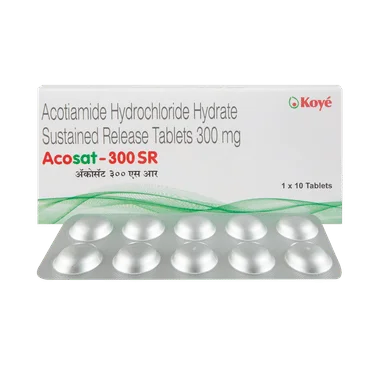
Acotiamide 300mg Tablet: Complete Guide to Uses, Side Effects, and Safety
When to Call Your Doctor IMMEDIATELY
- Swelling of the face, lips, tongue, or throat
- Difficulty breathing or wheezing
- Yellowing of the skin or eyes
- Dark urine or pale stools
- Severe abdominal pain that does not go away
- Persistent vomiting or inability to keep fluids down
- Blood in vomit or stool
- Chest pain or palpitations
If experiencing severe symptoms, call emergency services immediately.
What is acosat 300mg tablet sr used for?
Acotiamide is a prokinetic medicine used to treat functional dyspepsia. It works by increasing acetylcholine in the gut, which helps the stomach empty faster and reduces feelings of fullness and discomfort after meals. It is usually taken as a 300 mg tablet three times a day before meals.
- Generic Name: Acotiamide
- Manufacturer: Koye Pharmaceuticals Pvt ltd
- Form: Allopathy
- Pregnancy Category: Consult doctor
- Prescription Required: Yes
🇮🇳 acosat 300mg tablet sr के बारे में (Hindi Summary)
उपयोग: यह दवा एसिटियोमाइड 300 मिलीग्राम टैबलेट है, जिसका उपयोग कार्यात्मक अपच (फंक्शनल डिस्पेप्सिया) के इलाज के लिए किया जाता है। यह पेट की गतिशीलता को बढ़ाकर भोजन के बाद पेट भरे होने की भावना, जल्दी पेट भर जाने और ऊपरी पेट में असुविधा को कम करती है। यह दवा आमतौर पर भोजन से पहले दिन में तीन बार ली जाती है। यह दर्द निवारक या एंटासिड नहीं है, इसलिए यह सीने में जलन या एसिड रिफ्लक्स के लिए नहीं है। इसका उपयोग डॉक्टर की सलाह के बिना न करें।
साइड इफेक्ट्स: इस दवा के आम दुष्प्रभावों में सिरदर्द, दस्त, कब्ज, जी मिचलाना और पेट में दर्द या सूजन शामिल हैं। ये आमतौर पर हल्के होते हैं और कुछ दिनों में ठीक हो जाते हैं। गंभीर दुष्प्रभाव दुर्लभ हैं, लेकिन अगर आपको चेहरे, होंठ या गले में सूजन, सांस लेने में कठिनाई, त्वचा या आंखों का पीला पड़ना, या गहरे रंग का पेशाब आता है, तो तुरंत डॉक्टर से मिलें।
सुरक्षा सलाह: इस दवा को डॉक्टर के बताए अनुसार ही लें, आमतौर पर भोजन से पहले दिन में तीन बार। टैबलेट को पानी के साथ पूरा निगलें, चबाएं या तोड़ें नहीं। इस दवा के साथ शराब न लें क्योंकि इससे पेट की परेशानी और नींद आ सकती है। गाड़ी चलाने या मशीन चलाने से बचें जब तक आपको पता न चल जाए कि यह दवा आप पर कैसा असर करती है। गर्भवती या स्तनपान कराने वाली महिलाएं बिना डॉक्टर की सलाह के इसका इस्तेमाल न करें।
💊 acosat 300mg tablet sr Uses & Benefits
[{"condition":"Functional dyspepsia","description":"This medicine is used to relieve postprandial fullness, early satiety, and upper abdominal bloating in adults with functional dyspepsia.","evidence":"Well-established in Japan and several Asian countries; evidence in Western populations is more limited."},{"condition":"Gastric motility disorders","description":"It may be used to improve delayed gastric emptying in selected patients with motility-related dyspepsia.","evidence":"Limited, based on small clinical studies."}]
Off-label uses: [{"condition":"Diabetic gastroparesis","description":"Occasionally considered off-label to improve gastric emptying in people with diabetes-related slow stomach emptying.","evidence":"Limited, not established as standard therapy."},{"condition":"Functional bloating","description":"Sometimes prescribed off-label for persistent bloating without a clear structural cause.","evidence":"Limited, based on small studies."}]
Primary treatment for: Functional dyspepsia
Also treats: Gastric motility disorders, Diabetic gastroparesis (off-label)
📋 Drug Information
| Generic Name(s) | Acotiamide |
| Brand Name | Acogut Tablet |
| Manufacturer | Koye Pharmaceuticals Pvt ltd |
| Packaging / Form | Varies by brand (Allopathy) |
| Therapeutic Class | GASTRO INTESTINAL |
| Action Class | Anticholinesterase-Prokinetic agent |
| Route of Administration | Oral |
| Storage | Store at room temperature between 15°C and 30°C, away from direct sunlight and moisture. Keep in the original packaging. |
| Shelf Life | Typically 24 months from the date of manufacture. Check the expiry date on the pack. |
| WHO Guideline | Not established from the available information. |
| ICMR Guideline | Not established from the available information. |
👨⚕️ Doctor's Practical Tips
Evidence-based practical advice from experienced clinicians
🔍 Is This Medicine Right for Your Symptom?
Educational reference. Always consult a doctor for diagnosis.
🔬 How This Medicine Works (Pharmacology)
Pharmacokinetics
How It Works
Acotiamide is a prokinetic agent that works by inhibiting acetylcholinesterase in the gastrointestinal tract and by blocking presynaptic muscarinic M1 and M2 receptors. This dual action increases the availability of acetylcholine at the nerve endings in the stomach and upper intestine, which strengthens gastric contractions and accelerates gastric emptying. At the same time, acotiamide reduces the sensitivity of the stomach to distension, which helps relieve the feeling of fullness and discomfort after eating. Unlike some older prokinetics, acotiamide has little effect on the heart's electrical activity, which makes it a safer option for many patients.
Mechanism Steps
💡 How to Take acosat 300mg tablet sr
Strength: Acotiamide 300 mg immediate-release tablet.
Dosage Information
| Adult Dosage | The usual adult dose of this medicine is 300 mg taken by mouth three times a day, preferably before meals. The exact dose and duration must be individualized by a qualified clinician based on the severity of symptoms, response to treatment, and any underlying liver or kidney conditions. Do not change the dose without medical advice. |
| Pediatric Dosage | Pediatric dosing is not established from available information. Consult a pediatrician. |
| Elderly Dosage | Elderly patients may be more sensitive to the effects of this medicine. No specific dose adjustment is established, but use with caution and under medical supervision. |
| Renal Impairment | Dose adjustment in kidney disease is not established from the available information. Consult your doctor if you have kidney problems. |
| Hepatic Impairment | This medicine should be avoided in severe liver disease. In mild to moderate liver impairment, dose adjustment may be needed; consult your doctor. |
| Maximum Daily Dose | The maximum recommended daily dose is 900 mg (300 mg three times a day). Do not exceed this without medical advice. |
Dosage Timeline
🍽️ Food Timing Guide
⏰ What to Do If You Miss a Dose
⚠️ Side Effects of acosat 300mg tablet sr
✅ Common Side Effects
🚨 Serious Side Effects
⚠️ Rare Side Effects
Consult your doctor if you experience any unusual symptoms.
🔬 Drug Interactions
| Drug | Severity | Effect |
|---|---|---|
| Atropine | Major | |
| Opioids | Moderate | |
| Metoclopramide | Moderate | |
| Antacids | Minor |
🚨 Major Interactions
- Anticholinergic drugs (e.g., atropine, hyoscyamine)
⚡ Moderate Interactions
- Drugs that slow gastric emptying (e.g., opioids)
- Drugs that increase gastric motility (e.g., metoclopramide)
🍷 Alcohol Interaction
Alcohol may worsen stomach irritation and increase drowsiness or dizziness. It is best to avoid alcohol while taking this medicine.
🔎 Check Your Other Medicines
Educational tool. Always confirm with your doctor or pharmacist.
🛡️ Safety & Warnings
🚫 Contraindications
["Known allergy to acotiamide or any component of the tablet","Severe liver disease","Known gastrointestinal obstruction or perforation","Children and adolescents under 18 years (safety not established)","Pregnancy and breastfeeding (unless specifically advised by a doctor)"]
⚠️ Warnings & Precautions
["Do not exceed the recommended dose.","Use with caution in elderly patients and those with kidney or liver problems.","Avoid alcohol while taking this medicine.","Do not drive or operate machinery until you know how this medicine affects you.","Inform your doctor if you have any heart condition or are taking other medicines.","Stop the medicine and seek medical help if you experience signs of an allergic reaction or liver problems."]
🤱 Lactation Safety
It is not known whether acotiamide passes into breast milk. Breastfeeding is not recommended while taking this medicine unless a doctor advises otherwise.
💊 Overdose Management
There is no specific antidote for acotiamide overdose. If you suspect an overdose, seek immediate medical attention. Treatment is supportive and symptomatic, with monitoring of vital signs and gastrointestinal symptoms.
⏰ Missed Dose
If you miss a dose, take it as soon as you remember, provided there is enough time before your next scheduled dose. If it is almost time for your next dose, skip the missed dose and continue with your regular schedule. Do not take a double dose to make up for a missed one.
Additional Safety Advice
Take this medicine exactly as prescribed, usually three times a day before meals. Do not crush, chew, or break the tablet unless your doctor tells you to. Swallow it whole with a glass of water. Avoid alcohol while taking this medicine because it can worsen stomach discomfort and may increase drowsiness. Do not drive or operate heavy machinery until you know how this medicine affects you. Inform your doctor about all other medicines, supplements, and herbal products you are taking, especially anticholinergic drugs, because they may reduce the effect of this medicine. If you are pregnant, planning pregnancy, or breastfeeding, talk to your doctor before using this medicine. Keep this medicine out of reach of children and store it in a cool, dry place away from direct sunlight. Do not use it after the expiry date printed on the pack.
👴 Special Considerations for Elderly
💡 For Patients Above 65
Elderly patients may be more sensitive to the effects of this medicine. Use with caution and under medical supervision. Monitor for side effects such as dizziness or gastrointestinal symptoms.
🤰 Pregnancy Planning (TTC)
If you are planning pregnancy, consult your doctor before taking this medicine. It is not recommended during pregnancy unless clearly needed and advised by a specialist.
🏥 Post-Surgery Considerations
There is limited information on the use of this medicine after surgery. Consult your surgeon or doctor before resuming it, especially after abdominal surgery.
🦷 Dental Procedures
This medicine does not typically interfere with dental procedures. However, inform your dentist about all medicines you are taking, especially if you are scheduled for surgery or sedation.
💚 Lifestyle Tips for Better Results
🏋️ Exercise Considerations
Moderate exercise is generally safe and can help digestion. Avoid vigorous exercise immediately after meals as it may worsen fullness or discomfort. Listen to your body and rest if you feel unwell.
🥗 Diet Recommendations
💼 Impact on Daily Work & Life
This medicine may cause dizziness or drowsiness in some people. Avoid driving or operating heavy machinery until you know how it affects you. It should not significantly impact your ability to work, but take precautions if you feel unwell.
🛑 When to Stop This Medicine
Do not stop this medicine without consulting your doctor. If you experience serious side effects such as allergic reactions or signs of liver problems, stop immediately and seek medical help. Your doctor will advise when it is safe to discontinue based on your symptom control.
📅 Long-Term Use Effects
Long-term use of acotiamide is generally well tolerated in clinical studies. However, regular follow-up with your doctor is recommended to assess symptom control and monitor for any rare side effects such as liver enzyme changes. Do not continue beyond the prescribed duration without medical review.
🌿 Non-Medicine Approaches
These can complement medicine but do not replace prescribed treatment.
Eating smaller, low-fat meals and avoiding trigger foods can help manage functional dyspepsia.
Evidence: Well-establishedTechniques such as yoga, meditation, and cognitive behavioural therapy may reduce dyspepsia symptoms.
Evidence: ModerateMedicines like domperidone or itopride may be alternatives, but they have different side effect profiles.
Evidence: Well-established💉 Vaccination Considerations
💉 If You're Getting Vaccinated
There are no known interactions between this medicine and vaccines. You can receive vaccinations as scheduled. Inform your healthcare provider about all medicines you are taking before any vaccination.
📦 Storage Guide
✅ DO
Store at room temperature (15-30°C)
❌ DON'T
Do not refrigerate unless specified
✅ DO
Keep in original container
❌ DON'T
Do not transfer to unmarked containers
✅ DO
Keep away from direct sunlight
❌ DON'T
Do not store in bathroom cabinet
✈️ Traveling with This Medicine
When travelling, carry this medicine in its original packaging along with a copy of your prescription. Keep it in your hand luggage to avoid extreme temperatures in checked baggage. If crossing time zones, continue taking the medicine before meals according to your new local meal times. Store it in a cool, dry place away from direct sunlight. Check customs regulations for carrying prescription medicines into your destination country.
💰 Cost Analysis & Savings
👥 Real Patient Stories
Educational, anonymized scenarios. Individual results may vary.
💬 Questions Patients Often Ask
A: Some people notice improvement within a few days, but it may take one to two weeks for full benefits.
A: It is best taken 15 to 30 minutes before meals. If it upsets your stomach, you may take it with a small snack, but this may reduce its effectiveness.
A: Take it as soon as you remember if there is enough time before your next dose. Otherwise, skip it and continue your regular schedule. Do not double dose.
A: Inform your doctor about all medicines you take, especially anticholinergic drugs, as they may reduce the effect of this medicine.
🤔 Common Patient Concerns
🔄 Substitutes for acosat 300mg tablet sr
View AllAlternative brands with exact same active ingredient:
-
akostol-od tablet srZydus Cadila ₹250.00 15.3% CHEAPER
-
orgamide 300mg tablet erAstonea Labs Private Limited ₹326.25 10.5% COSTLIER
-
cotia 300mg tablet srMedley Pharmaceuticals ₹373.13 26.4% COSTLIER
-
dycotiam sr 300mg tabletTorrent Pharmaceuticals Ltd ₹408.50 38.3% COSTLIER
-
acotrust od 300mg tablet erDr Reddy's Laboratories Ltd ₹480.23 62.6% COSTLIER
Medical Note: Always consult your doctor before switching medications.
🛑 Myths vs. Facts
- Myth: Acotiamide is a painkiller for any stomach pain.
Fact: Acotiamide is not a general painkiller. It is specifically for functional dyspepsia and works by improving stomach motility, not by blocking pain signals. - Myth: Acotiamide can be taken for heartburn and acid reflux.
Fact: Acotiamide is not an antacid and does not treat acid reflux. It is used for functional dyspepsia, which is a different condition. - Myth: Acotiamide is safe to take without a prescription.
Fact: Acotiamide is a prescription medicine. It should only be taken under the supervision of a qualified doctor.