
Emtec 25mg Injection: Complete Medicine Guide
Clinical Reference Standards: CDSCO (Central Drugs Standard Control Organisation), Indian Pharmacopoeia (IP) & WHO | Last Updated: September 2026
When to Call Your Doctor IMMEDIATELY
- Difficulty breathing or swelling of face, lips, or throat
- Severe abdominal pain or vomiting blood
- Black, tarry stools
- Irregular heartbeat or palpitations
- Confusion, hallucinations, or severe dizziness
- Yellowing of skin or eyes
- Decreased urine output
If experiencing severe symptoms, call emergency services immediately.
What is imuski injection used for?
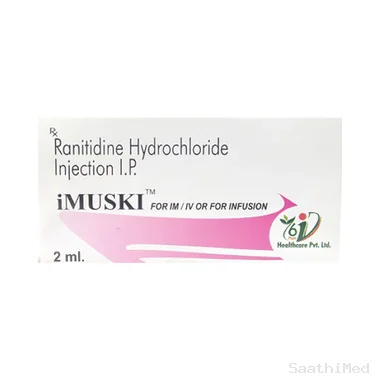
This medicine is a ranitidine injection used to reduce stomach acid in hospitalized patients who cannot take oral medications. It treats conditions like ulcers and GERD and is given intravenously or intramuscularly by a healthcare professional.
- Generic Name: Ranitidine (25mg/ml)
- Manufacturer: 6ipain Healthcare Pvt Ltd
- Form: Allopathy
- Pregnancy Category: Consult doctor
- Prescription Required: Yes
🇮🇳 imuski injection के बारे में (Hindi Summary)
उपयोग: यह दवा रैनिटिडीन का इंजेक्शन है, जिसका उपयोग पेट में एसिड को कम करने के लिए किया जाता है। यह अल्सर, गैस्ट्रोएसोफेजियल रिफ्लक्स डिजीज (GERD), और ज़ोलिंगर-एलिसन सिंड्रोम जैसी स्थितियों के इलाज में मदद करती है। यह उन मरीजों के लिए दी जाती है जो मुंह से दवा नहीं ले सकते। यह दवा अस्पताल में डॉक्टर या नर्स द्वारा नस या मांसपेशी में इंजेक्शन के रूप में दी जाती है।
साइड इफेक्ट्स: इस दवा के सामान्य दुष्प्रभावों में सिरदर्द, चक्कर आना, कब्ज, दस्त, मतली और इंजेक्शन की जगह पर दर्द शामिल हैं। गंभीर दुष्प्रभाव दुर्लभ हैं, लेकिन भ्रम, हृदय गति में बदलाव, और एलर्जी प्रतिक्रिया हो सकती है। अगर कोई गंभीर लक्षण दिखे तो तुरंत डॉक्टर से संपर्क करें।
सुरक्षा सलाह: यह दवा केवल योग्य स्वास्थ्य पेशेवर द्वारा ही दी जानी चाहिए। अपने डॉक्टर को अपनी सभी चिकित्सीय स्थितियों और दवाओं के बारे में बताएं। इस दवा को लेने के दौरान शराब न पिएं। अगर आपको असामान्य लक्षण जैसे गंभीर सिरदर्द, भ्रम, या धड़कन में गड़बड़ी महसूस हो, तो तुरंत डॉक्टर को बताएं।
💊 imuski injection Uses & Benefits
[{"condition":"Duodenal ulcer","description":"This medicine reduces gastric acid secretion, promoting healing of duodenal ulcers.","evidence":"Well-established"},{"condition":"Gastric ulcer","description":"It helps in the healing of benign gastric ulcers by decreasing acid production.","evidence":"Well-established"},{"condition":"Gastroesophageal reflux disease (GERD)","description":"This medicine provides relief from heartburn and acid regurgitation by reducing stomach acid.","evidence":"Well-established"},{"condition":"Zollinger-Ellison syndrome","description":"It controls hypersecretion of acid in patients with this rare condition.","evidence":"Well-established"},{"condition":"Stress ulcer prophylaxis","description":"Used in critically ill patients to prevent stress-related mucosal bleeding.","evidence":"Well-established"},{"condition":"Acid aspiration prophylaxis","description":"Administered before surgery to reduce the risk of acid aspiration during anesthesia.","evidence":"Well-established"}]
Off-label uses: [{"condition":"Warts","description":"Sometimes injected intralesionally for the treatment of common warts.","evidence":"Limited"},{"condition":"Urticaria","description":"Occasionally used as an adjunct for chronic urticaria due to its H2-blocking effects.","evidence":"Limited"}]
Primary treatment for: Gastroesophageal reflux disease (GERD)
Also treats: Duodenal ulcer, Gastric ulcer, Zollinger-Ellison syndrome, Stress ulcer prophylaxis
📋 Drug Information
| Generic Name(s) | Ranitidine (25mg/ml) |
| Brand Name | imuski injection |
| Manufacturer | 6ipain Healthcare Pvt Ltd |
| Packaging / Form | Varies by brand (Allopathy) |
| Therapeutic Class | GASTRO INTESTINAL |
| Action Class | H2 Receptor Blocker |
| Route of Administration | Parenteral (intravenous or intramuscular) |
| Storage | Store at controlled room temperature 20°C to 25°C (68°F to 77°F). Protect from light. Do not freeze. Keep out of reach of children. |
| Shelf Life | Not established from the available information. Refer to the product packaging for the expiration date. |
| WHO Guideline | Not established from the available information. |
| ICMR Guideline | Not established from the available information. |
👨⚕️ Doctor's Practical Tips
Evidence-based practical advice from experienced clinicians
🔍 Is This Medicine Right for Your Symptom?
Educational reference. Always consult a doctor for diagnosis.
🔬 How This Medicine Works (Pharmacology)
Pharmacokinetics
How It Works
This medicine competitively inhibits the action of histamine at the histamine H2 receptors located on the basolateral membrane of gastric parietal cells. This inhibition reduces both the volume and concentration of gastric acid secreted in response to food, histamine, pentagastrin, and other stimuli. It also decreases pepsin output.
Mechanism Steps
💡 How to Take imuski injection
Strength: Injection: 25 mg/ml
Dosage Information
| Adult Dosage | The dosage of this medicine must be individualized by a qualified clinician based on the indication, age, weight, renal and hepatic function. For active duodenal ulcer, the usual adult dose is 50 mg intravenously or intramuscularly every 6 to 8 hours. For Zollinger-Ellison syndrome, higher doses may be required. For stress ulcer prophylaxis, 50 mg intravenously every 8 hours is common. Dose adjustment is necessary in renal impairment. |
| Pediatric Dosage | Pediatric dosing is not established from available information. Consult a pediatrician. |
| Elderly Dosage | Elderly patients may have reduced renal function; dose adjustment may be necessary. Monitor for confusion and other CNS effects. |
| Renal Impairment | In patients with moderate to severe renal impairment (creatinine clearance less than 50 mL/min), the dose should be reduced. For creatinine clearance less than 50 mL/min, the usual dose is 50 mg intravenously every 12 to 24 hours. Consult a clinician for individualized dosing. |
| Hepatic Impairment | No specific dosage adjustment is established for hepatic impairment, but use with caution and monitor liver function. |
| Maximum Daily Dose | The maximum daily dose is not established from the available information. Doses up to 400 mg per day have been used in some conditions. Individualized by clinician. |
Dosage Timeline
🍽️ Food Timing Guide
⏰ What to Do If You Miss a Dose
⚠️ Side Effects of imuski injection
✅ Common Side Effects
🚨 Serious Side Effects
⚠️ Rare Side Effects
Consult your doctor if you experience any unusual symptoms.
🔬 Drug Interactions
| Drug | Severity | Effect |
|---|---|---|
| Ketoconazole | Major | |
| Atazanavir | Major | |
| Warfarin | Major | |
| Metformin | Moderate | |
| Procainamide | Moderate | |
| Triazolam | Moderate | |
| Antacids | Minor | |
| Sucralfate | Minor | |
| Alcohol | Moderate | |
| Caffeine | Minor |
🚨 Major Interactions
- Ketoconazole
- Atazanavir
- Warfarin
⚡ Moderate Interactions
- Metformin
- Procainamide
- Triazolam
🍷 Alcohol Interaction
Avoid alcohol while receiving this medicine. Alcohol can increase stomach acid production and may worsen the condition being treated. It may also increase the risk of dizziness and other side effects.
🔎 Check Your Other Medicines
Educational tool. Always confirm with your doctor or pharmacist.
🛡️ Safety & Warnings
🚫 Contraindications
["Known hypersensitivity to ranitidine or any component of the formulation","History of acute porphyria"]
⚠️ Warnings & Precautions
["Use with caution in patients with renal impairment; dose reduction may be required.","Use with caution in patients with hepatic impairment.","Elderly patients may be more susceptible to confusion and other CNS effects.","Avoid use in patients with a history of acute porphyria.","Prolonged use may lead to vitamin B12 deficiency due to reduced acid secretion.","May mask symptoms of gastric malignancy; ensure diagnosis is confirmed before starting therapy.","Injection should be administered slowly to avoid hypotension and bradycardia."]
🤱 Lactation Safety
Ranitidine is excreted in human milk. Caution should be exercised when administered to a nursing woman. Consult your doctor to weigh the benefits and risks.
💊 Overdose Management
Overdose with this medicine is rare. Symptoms may include hypotension, tachycardia, and confusion. Treatment is supportive and symptomatic. Contact a poison control center or emergency department immediately if overdose is suspected.
⏰ Missed Dose
Since this medicine is usually administered by a healthcare professional in a hospital or clinic setting, missed doses are uncommon. If you miss a scheduled dose, contact your healthcare provider for instructions. Do not attempt to self-administer an extra dose.
Additional Safety Advice
This medicine should only be administered by a qualified healthcare professional. Inform your doctor about all your medical conditions, especially kidney or liver disease, and all medications you are taking. Do not drive or operate heavy machinery until you know how this medicine affects you. Avoid alcohol while receiving this medicine as it may increase stomach acid and worsen your condition. Report any unusual symptoms, such as severe headache, confusion, or palpitations, to your doctor immediately.
👴 Special Considerations for Elderly
💡 For Patients Above 65
Elderly patients are more prone to confusion and other central nervous system side effects. Dose adjustment may be necessary based on renal function. Monitor closely for any changes in mental status.
🤰 Pregnancy Planning (TTC)
If you are planning to become pregnant, consult your doctor before using this medicine. Ranitidine crosses the placenta, and its use should be discussed with your healthcare provider to weigh benefits and risks.
🏥 Post-Surgery Considerations
This medicine is often used before surgery to reduce the risk of acid aspiration. After surgery, it may be continued if needed for stress ulcer prophylaxis. Follow your surgeon's instructions regarding its use.
🦷 Dental Procedures
Inform your dentist if you are receiving this medicine, as it may affect your ability to undergo certain procedures. No specific precautions are established, but your dentist may consult with your doctor.
💚 Lifestyle Tips for Better Results
🏋️ Exercise Considerations
Avoid strenuous exercise immediately after receiving this medicine, especially if you experience dizziness. Consult your doctor before resuming any exercise routine.
🥗 Diet Recommendations
💼 Impact on Daily Work & Life
This medicine may cause dizziness or confusion, affecting your ability to drive or operate machinery. Avoid these activities until you know how the medicine affects you. It is usually administered in a hospital setting, so work-life impact is minimal for most patients.
🛑 When to Stop This Medicine
Do not stop this medicine without consulting your doctor. The duration of treatment will be determined by your healthcare provider based on your condition. If you experience severe side effects, seek immediate medical advice.
📅 Long-Term Use Effects
Long-term use of this medicine is not common as it is typically used for short-term management in hospitalized patients. Prolonged use may lead to vitamin B12 deficiency due to reduced gastric acid. Monitoring of vitamin B12 levels may be considered for patients on long-term therapy. Regular review of the need for continued therapy is recommended.
🌿 Non-Medicine Approaches
These can complement medicine but do not replace prescribed treatment.
PPIs like omeprazole are often used as alternatives for acid suppression.
Evidence: Well-establishedDietary changes and weight loss can help manage GERD symptoms.
Evidence: Well-established💉 Vaccination Considerations
💉 If You're Getting Vaccinated
Not established from the available information. Consult your doctor regarding vaccinations while on this medicine.
📦 Storage Guide
✅ DO
Store at room temperature (20-25°C)
❌ DON'T
Do not freeze
✅ DO
Keep in original container
❌ DON'T
Do not transfer to unmarked containers
✅ DO
Protect from light
❌ DON'T
Do not use if solution is discolored or contains particles
✈️ Traveling with This Medicine
This medicine is typically administered in a healthcare setting, so travel advice is limited. If you are prescribed this medicine for self-administration during travel, carry it in its original packaging with a copy of your prescription. Store it at room temperature and protect it from light. Check with your airline and destination country about regulations for carrying injectable medications. Always carry a doctor's note explaining your medical need.
💰 Cost Analysis & Savings
👥 Real Patient Stories
Educational, anonymized scenarios. Individual results may vary.
💬 Questions Patients Often Ask
A: This medicine starts working within 30 minutes after intravenous administration and within 15-30 minutes after intramuscular injection.
A: No, this medicine is an injection and must be administered by a healthcare professional in a medical setting.
A: Report any side effects to your doctor immediately. Serious side effects like difficulty breathing require emergency medical attention.
🤔 Common Patient Concerns
🔄 Substitutes for imuski injection
View AllAlternative brands with exact same active ingredient:
-
natidine 25mg injectionNatco Pharma Ltd ₹2.23 30.1% CHEAPER
-
emtec 25mg injectionSanjivani Drugs Pvt Ltd ₹2.25 29.5% CHEAPER
-
Rantid InjectionGracure Pharmaceuticals Ltd ₹2.50 21.6% CHEAPER
-
zeetak injectionSun Life Sciences Pvt Ltd ₹3.19 SAME PRICE
-
imuski 10ml injection6ipain Healthcare Pvt Ltd ₹15.94 399.7% COSTLIER
Medical Note: Always consult your doctor before switching medications.
🛑 Myths vs. Facts
- Myth: This medicine can be taken orally.
Fact: This medicine is an injection and must be administered by a healthcare professional. - Myth: This medicine is safe for everyone.
Fact: It is not safe for individuals with a history of acute porphyria or known allergy to ranitidine. - Myth: This medicine can be used for immediate relief of heartburn at home.
Fact: It is intended for use in medical settings under supervision.
🔄 Alternative Options
Generic Alternatives
- Ranitidine injection
Brand Alternatives
- Zantac injection
- Aciloc injection
- Rantac injection