
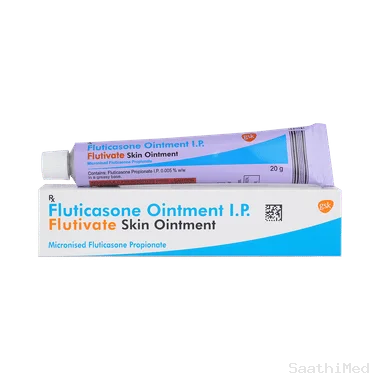
Flutivate 0.005% Ointment: A Complete Guide To Uses, Dosage, And Safety

Clinical Background: Balrampur Hospital, Lucknow (Emergency Medicine) & SCPM Hospital | Standards: CDSCO, Indian Pharmacopoeia (IP) & WHO
When to Call Your Doctor IMMEDIATELY
- Severe burning, stinging, or blistering at the application site.
- Signs of an allergic reaction such as rash, itching, swelling of the face, lips, or throat, or difficulty breathing.
- Skin thinning, stretch marks, or easy bruising.
- Symptoms of adrenal suppression: extreme fatigue, weakness, nausea, vomiting, low blood pressure.
- Signs of infection: increased pain, swelling, redness, warmth, or pus at the application site.
- Blurred vision or eye pain, which may indicate glaucoma or cataracts.
- Unexplained weight gain, moon face, or high blood sugar.
If experiencing severe symptoms, call emergency services immediately.
What is flutivate 0.005% ointment used for?
This medicine is a topical corticosteroid ointment used to treat inflammatory skin conditions like eczema and psoriasis. It reduces redness, itching, and swelling by suppressing the immune response in the skin. Apply a thin film to the affected area once or twice daily as prescribed. Do not use on the face or for longer than 4 weeks without medical advice.
- Generic Name: Fluticasone Propionate (0.005% w/w)
- Manufacturer: Glaxo SmithKline Pharmaceuticals Ltd
- Form: Allopathy
- Pregnancy Category: Consult doctor
- Prescription Required: Yes
🇮🇳 flutivate 0.005% ointment के बारे में (Hindi Summary)
उपयोग: यह दवा एक टॉपिकल कॉर्टिकोस्टेरॉइड ऑइंटमेंट है जिसका उपयोग त्वचा की सूजन, खुजली, लालिमा और पपड़ी जैसी समस्याओं के इलाज के लिए किया जाता है। यह एक्जिमा, सोरायसिस और एलर्जिक डर्मेटाइटिस जैसी स्थितियों में प्रभावी है। यह दवा त्वचा में सूजन पैदा करने वाले रसायनों को कम करके काम करती है। इसे डॉक्टर के निर्देशानुसार ही लगाएं। इसे चेहरे, जांघों के बीच या बगल में बिना डॉक्टर की सलाह के न लगाएं।
साइड इफेक्ट्स: इस दवा के सामान्य दुष्प्रभावों में लगाने की जगह पर हल्की जलन, खुजली, सूखापन और लालिमा शामिल हैं। ये आमतौर पर अस्थायी होते हैं और कुछ दिनों में ठीक हो जाते हैं। लंबे समय तक या बड़े क्षेत्र पर उपयोग करने से त्वचा पतली हो सकती है, खिंचाव के निशान पड़ सकते हैं और बाल बढ़ सकते हैं। दुर्लभ मामलों में यह रक्त में अवशोषित होकर ब्लड शुगर बढ़ा सकती है और हार्मोनल असंतुलन कर सकती है। अगर आपको गंभीर जलन, छाले या एलर्जी के लक्षण दिखें तो तुरंत डॉक्टर से मिलें।
सुरक्षा सलाह: इस दवा का उपयोग करने से पहले अपने डॉक्टर को गर्भावस्था, स्तनपान या किसी अन्य दवा के बारे में बताएं। इसे खुले घाव, कटे-फटे या संक्रमित त्वचा पर न लगाएं। आंखों, मुंह और श्लेष्मा झिल्ली के संपर्क से बचें। यदि गलती से संपर्क हो जाए तो पानी से धो लें। बिना डॉक्टर की सलाह के इलाज वाली जगह को हवा बंद पट्टी से न ढकें। इस दवा को केवल उसी स्थिति के लिए उपयोग करें जिसके लिए यह लिखी गई है। बच्चों की पहुंच से दूर रखें।
flutivate 0.005% ointment Uses & Benefits
This medicine helps reduce inflammation, itching, and redness associated with eczema, also known as atopic dermatitis.
It is used to treat plaque psoriasis by reducing scaling, inflammation, and thickening of the skin.
This medicine provides relief from skin reactions caused by contact with allergens, reducing itching and rash.
It helps control flaking and redness in areas like the scalp and face, though use on the face should be supervised.
This medicine reduces the itching and thickening of skin caused by chronic scratching.
Off-Label & Investigational Uses:
Sometimes used off-label to reduce inflammation in vitiligo patches, but evidence is limited.
May be prescribed off-label to treat localized hair loss due to autoimmune inflammation.
Occasionally used off-label for skin lesions of discoid lupus, but specialist supervision is required.
📋 Drug Information
| Generic Name(s) | Fluticasone Propionate (0.005% w/w) |
| Brand Name | flutivate 0.005% ointment |
| Manufacturer | Glaxo SmithKline Pharmaceuticals Ltd |
| Packaging / Form | Varies by brand (Allopathy) |
| Therapeutic Class | RESPIRATORY |
| Action Class | Glucocorticoids |
| Route of Administration | Topical |
| Storage | Store at room temperature between 15°C and 30°C (59°F to 86°F). Keep away from direct sunlight and moisture. Do not freeze. |
| Shelf Life | 24 months from the date of manufacture. |
| WHO Guideline | The World Health Organization does not have specific guidelines for the use of topical fluticasone propionate. However, topical corticosteroids are included in the WHO Model List of Essential Medicines for the treatment of inflammatory skin conditions. |
| ICMR Guideline | The Indian Council of Medical Research has not issued specific guidelines for topical fluticasone propionate. However, standard dermatological practice in India follows international guidelines for the use of topical corticosteroids. |
👨⚕️ Doctor's Practical Tips
Evidence-based practical advice from experienced clinicians
🔍 Is This Medicine Right for Your Symptom?
Educational reference. Always consult a doctor for diagnosis.
🔬 How This Medicine Works (Pharmacology)
Pharmacokinetics
How It Works
This medicine works by binding to glucocorticoid receptors inside skin cells. Once bound, it activates specific genes that produce anti-inflammatory proteins and inhibits genes that promote inflammation. This leads to a reduction in the release of inflammatory mediators such as histamine, prostaglandins, and leukotrienes from immune cells in the skin. As a result, redness, swelling, itching, and scaling are reduced. The ointment base also provides an occlusive barrier that enhances the penetration of fluticasone propionate into the skin, making it effective for dry, scaly, and thickened lesions.
Mechanism Steps
💡 How to Take flutivate 0.005% ointment
Strength: Ointment containing fluticasone propionate 0.005% w/w.
Dosage Information
| Adult Dosage | Apply a thin film of this medicine to the affected area once or twice daily, or as directed by your doctor. The frequency and duration of treatment depend on the condition being treated and its severity. For eczema, it is often applied once daily; for psoriasis, twice daily may be needed. Do not use for more than 4 weeks without medical advice. Dose must be individualized by a qualified clinician based on indication, age, and response to treatment. |
| Pediatric Dosage | This medicine may be used in children over 1 year of age, but only under the supervision of a pediatrician. The dose and duration should be minimized to reduce the risk of systemic side effects. Pediatric dosing is not established from available information. Consult a pediatrician. |
| Elderly Dosage | Elderly patients can use this medicine, but they may be more susceptible to skin thinning and systemic effects. Use the lowest effective dose for the shortest duration. Monitor for signs of adrenal suppression and skin atrophy. |
| Renal Impairment | No dosage adjustment is required for patients with renal impairment, as systemic absorption is minimal. However, if used over large areas, monitor for signs of systemic corticosteroid effects. |
| Hepatic Impairment | Patients with severe hepatic impairment may have reduced metabolism of fluticasone propionate, leading to increased systemic exposure. Use with caution and monitor for corticosteroid side effects. |
| Maximum Daily Dose | The maximum daily dose is not established for topical use. Apply only as prescribed by your doctor. Generally, do not exceed 50 grams per week of the 0.005% ointment without medical supervision. |
Dosage Timeline
🍽️ Food Timing Guide
⏰ What to Do If You Miss a Dose
⚠️ Side Effects of flutivate 0.005% ointment
✅ Common Side Effects
🚨 Serious Side Effects
⚠️ Rare Side Effects
Consult your doctor if you experience any unusual symptoms.
🔬 Drug Interactions
| Drug | Severity | Effect |
|---|---|---|
| Ketoconazole | Major | |
| Ritonavir | Major | |
| Clarithromycin | Major | |
| Tacrolimus topical | Moderate | |
| Pimecrolimus topical | Moderate | |
| Other topical corticosteroids | Moderate | |
| Topical antihistamines | Minor | |
| Topical antibiotics | Minor |
🚨 Major Interactions
- CYP3A4 inhibitors (e.g., ketoconazole, ritonavir, clarithromycin)
⚡ Moderate Interactions
- Other topical corticosteroids
- Topical calcineurin inhibitors (e.g., tacrolimus, pimecrolimus)
🍷 Alcohol Interaction
There is no known direct interaction between alcohol and this topical medicine. However, alcohol consumption can worsen certain skin conditions like psoriasis and eczema, so it is advisable to limit alcohol intake while treating these conditions.
🔎 Check Your Other Medicines
Educational tool. Always confirm with your doctor or pharmacist.
🛡️ Safety & Warnings
🚫 Contraindications
["Hypersensitivity to fluticasone propionate or any component of the ointment","Untreated bacterial, viral, fungal, or parasitic skin infections","Rosacea","Acne vulgaris","Perioral dermatitis","Application to the face, groin, or axillae unless directed by a doctor","Use in children under 1 year of age"]
⚠️ Warnings & Precautions
["For external use only. Do not ingest.","Avoid contact with eyes, lips, and mucous membranes.","Do not use on open wounds or broken skin.","Do not cover with occlusive dressings unless instructed.","Prolonged use can lead to systemic absorption and side effects.","Use in children may cause growth retardation; monitor growth.","If irritation or sensitization occurs, discontinue use and consult a doctor.","Do not use for longer than prescribed without medical review.","Keep out of reach of children.","Inform your doctor if you are pregnant, planning pregnancy, or breastfeeding."]
🤱 Lactation Safety
It is not known whether fluticasone propionate applied to the skin passes into breast milk. However, systemic absorption is minimal. To be safe, avoid applying the ointment to the breast area, especially the nipples, to prevent infant exposure. Consult your doctor before using this medicine while breastfeeding.
💊 Overdose Management
Overdose with this topical medicine is unlikely. If accidental ingestion occurs, seek medical attention immediately. Symptoms of systemic corticosteroid overdose may include weakness, fatigue, nausea, and electrolyte imbalances. Treatment is supportive and symptomatic. In case of excessive topical application, wash the area with water and contact a doctor if any adverse effects are noticed.
⏰ Missed Dose
If you miss a dose, apply it as soon as you remember. However, if it is almost time for your next dose, skip the missed dose and continue with your regular schedule. Do not apply a double dose to make up for a missed one.
Additional Safety Advice
Before using this medicine, inform your doctor if you are pregnant, planning to become pregnant, or breastfeeding. Do not use this medicine on open wounds, cuts, or areas of infected skin unless directed by your doctor. Avoid contact with the eyes, mouth, and other mucous membranes. If accidental contact occurs, rinse thoroughly with water. Do not cover the treated area with airtight dressings unless instructed, as this can increase absorption and side effects. Use this medicine only for the condition it was prescribed for and do not share it with others. Keep out of reach of children. If you are using other topical products on the same area, consult your doctor or pharmacist to avoid interactions. Regular follow-up with your doctor is important to monitor the response to treatment and to check for any signs of systemic absorption, especially if you are using this medicine for a long time or on a large area of skin.
👴 Special Considerations for Elderly
💡 For Patients Above 65
Elderly patients may have thinner skin and are more prone to side effects like skin atrophy and systemic absorption. Use the lowest effective dose for the shortest duration. Monitor for signs of adrenal suppression, especially if using on large areas or for prolonged periods.
🤰 Pregnancy Planning (TTC)
If you are planning to become pregnant, discuss the use of this medicine with your doctor. Topical corticosteroids are generally considered safe, but it is best to use them only when necessary and for the shortest duration. Inform your doctor if you become pregnant while using this medicine.
🏥 Post-Surgery Considerations
If you have recently had surgery, consult your doctor before applying this medicine to the surgical area. It should not be applied to open wounds or incisions unless specifically directed. Corticosteroids can delay wound healing and increase the risk of infection.
🦷 Dental Procedures
This medicine is applied to the skin and does not directly affect dental procedures. However, if you are using it on the face or around the mouth, inform your dentist. There is no need to stop the medicine before dental work unless your doctor advises otherwise.
💚 Lifestyle Tips for Better Results
🏋️ Exercise Considerations
There is no specific exercise restriction while using this medicine. However, if you have skin lesions on areas that are subject to friction during exercise, such as the groin or underarms, you may want to avoid activities that cause excessive rubbing. Swimming in chlorinated pools may dry out the skin, so rinse and moisturize after swimming.
🥗 Diet Recommendations
💼 Impact on Daily Work & Life
This medicine is applied to the skin and is unlikely to affect your ability to drive or operate machinery. However, if you experience any dizziness or blurred vision (rare), avoid these activities until you feel normal. You can continue your usual work and daily activities, but avoid getting the treated area wet or rubbing it against clothing excessively. If your work involves frequent hand washing or exposure to chemicals, you may need to take extra precautions to protect the treated skin.
🛑 When to Stop This Medicine
You should stop using this medicine when your skin condition improves, as directed by your doctor. Do not stop abruptly if you have been using it for a long time; your doctor may recommend tapering the frequency to prevent a flare-up. If you experience side effects like skin thinning or signs of systemic effects, stop using it and consult your doctor immediately. Do not use it for longer than prescribed without medical advice.
📅 Long-Term Use Effects
Long-term use of this medicine can lead to skin thinning, stretch marks, and increased hair growth. It can also cause systemic effects such as adrenal suppression, high blood sugar, and high blood pressure, especially if used over large areas or with occlusive dressings. Regular monitoring by a doctor is recommended for prolonged use. If you need to use it for more than 4 weeks, your doctor may recommend periodic breaks or alternative treatments.
🌿 Non-Medicine Approaches
These can complement medicine but do not replace prescribed treatment.
Regular use of moisturizers helps repair the skin barrier and reduce the need for topical steroids.
Evidence: Well-establishedNon-steroidal creams like tacrolimus and pimecrolimus can be used for sensitive areas and long-term management.
Evidence: Well-establishedControlled exposure to ultraviolet light can help treat psoriasis and eczema under medical supervision.
Evidence: Well-establishedFor severe psoriasis, injectable biologics that target specific immune pathways may be considered.
Evidence: Well-established💉 Vaccination Considerations
💉 If You're Getting Vaccinated
There are no known interactions between this topical medicine and vaccines. You can receive vaccinations while using this medicine. However, if you are using large amounts of topical corticosteroids or have systemic absorption, consult your doctor before receiving live vaccines.
📦 Storage Guide
✅ DO
Store at room temperature between 15°C and 30°C.
❌ DON'T
Do not refrigerate or freeze.
✅ DO
Keep the tube tightly closed when not in use.
❌ DON'T
Do not leave the cap off.
✅ DO
Store away from direct sunlight and heat.
❌ DON'T
Do not store in the bathroom or near a sink.
✅ DO
Keep out of reach of children and pets.
❌ DON'T
Do not transfer to another container.
✈️ Traveling with This Medicine
When traveling with this medicine, keep it in its original packaging with the prescription label intact. Carry a copy of your prescription in case you need to show it at customs or to a healthcare provider. Store it at room temperature and protect it from extreme heat or cold. If you are flying, pack it in your carry-on luggage to avoid loss or temperature extremes in checked baggage. Continue your regular application schedule as prescribed, and if you cross time zones, adjust the timing gradually. Do not leave the ointment in a hot car or in direct sunlight.
💰 Cost Analysis & Savings
👥 Real Patient Stories
Educational, anonymized scenarios. Individual results may vary.
💬 Questions Patients Often Ask
A: You may start to see improvement in itching and redness within a few days, but it can take up to 2 weeks for the full effect. If your condition does not improve after 2 weeks, consult your doctor.
A: No, unless your doctor specifically tells you to. The skin on the face is thin and more susceptible to side effects like thinning and stretch marks.
A: If you remember within a few hours, apply it as soon as you can. If it is almost time for your next dose, skip the missed dose and continue with your regular schedule. Do not apply a double dose.
A: Topical corticosteroids are generally considered safe during pregnancy when used as directed. However, you should consult your doctor before using this medicine.
A: It is not known if this medicine passes into breast milk. To be safe, avoid applying it to the breast area and consult your doctor.
A: Prolonged use or use on sensitive areas can cause skin thinning. Use the lowest effective dose for the shortest duration and follow your doctor's instructions.
A: Yes, but apply them at different times. Wait at least 30 minutes between applying this medicine and other products. Consult your doctor or pharmacist if unsure.
A: Rinse your eyes thoroughly with water and seek medical advice if irritation persists.
🤔 Common Patient Concerns
🔄 Substitutes for flutivate 0.005% ointment
View AllAlternative brands with exact same active ingredient:
-
fluticare ointmentHetero Drugs Ltd ₹34.69 84.1% CHEAPER
-
geflute 0.005% creamDermawin Pharmaceuticals ₹39.38 82% CHEAPER
-
fluskin 0.005% ointmentEast West Pharma ₹51.09 76.6% CHEAPER
-
Fusone 0.005% OintmentGodetia Healthcare ₹109.69 49.8% CHEAPER
Medical Note: Always consult your doctor before switching medications.
🛑 Myths vs. Facts
- Myth: Topical steroids are always dangerous and should be avoided.
Fact: When used appropriately and as prescribed, topical steroids like this medicine are safe and effective for many skin conditions. The key is to use them correctly and for the recommended duration. - Myth: You can use this ointment on any part of the body.
Fact: This medicine should not be used on the face, groin, or underarms unless specifically directed by a doctor, as these areas are more prone to side effects. - Myth: If it works, you can use it indefinitely.
Fact: Prolonged use can lead to skin thinning and systemic side effects. It should only be used for the duration prescribed by your doctor. - Myth: Natural remedies are always better than steroids.
Fact: While some natural remedies may help, they are not always effective for moderate to severe conditions. This medicine is proven to reduce inflammation and is recommended by doctors when appropriate.
🔄 Alternative Options
Generic Alternatives
- Fluticasone propionate 0.005% ointment
Brand Alternatives
- Flutivate 0.005% ointment