
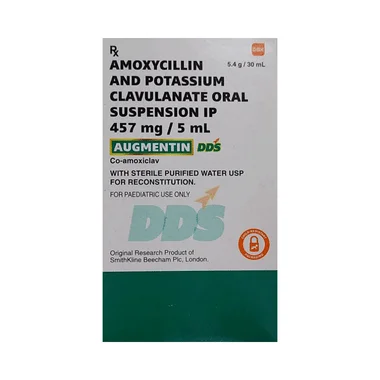
Augmentin DDS Suspension: Complete Medicine Guide
When to Call Your Doctor IMMEDIATELY
- Difficulty breathing or swelling of the face, lips, or throat
- Severe or persistent diarrhea, or blood in stool
- Yellowing of the skin or eyes, or dark urine
- Severe abdominal pain or cramping
- Signs of a severe skin reaction such as blistering, peeling, or sores in the mouth
- Decreased urine output or swelling in the legs
- Fever with sore throat and fatigue (possible blood disorder)
If experiencing severe symptoms, call emergency services immediately.
What is augmentin dds suspension used for?
This medicine is a combination antibiotic containing amoxycillin and clavulanic acid. It is used to treat a wide range of bacterial infections, including sinusitis, otitis media, pneumonia, urinary tract infections, and skin infections. It works by killing bacteria and overcoming their resistance mechanisms. It should be taken exactly as prescribed, and the full course must be completed to prevent recurrence and resistance.
- Generic Name: Amoxicillin + Clavulanic Acid
- Manufacturer: Glaxo SmithKline Pharmaceuticals Ltd
- Form: Allopathy
- Pregnancy Category: Consult doctor
- Prescription Required: Yes
🇮🇳 augmentin dds suspension के बारे में (Hindi Summary)
उपयोग: यह दवा एक संयुक्त एंटीबायोटिक है जिसमें अमोक्सिसिलिन और क्लैवुलैनिक एसिड होते हैं। यह कान, साइनस, गले, छाती, मूत्र मार्ग, त्वचा और दांतों के बैक्टीरियल संक्रमणों के इलाज के लिए इस्तेमाल की जाती है। यह बैक्टीरिया को मारती है और उनके प्रतिरोध तंत्र को बेअसर करती है। इसका उपयोग डॉक्टर के निर्देशानुसार ही करना चाहिए।
साइड इफेक्ट्स: इस दवा के सामान्य दुष्प्रभावों में दस्त, जी मिचलाना, उल्टी, त्वचा पर चकत्ते और यीस्ट संक्रमण शामिल हैं। गंभीर दुष्प्रभाव दुर्लभ हैं लेकिन इनमें एलर्जी, गंभीर त्वचा प्रतिक्रियाएं और लीवर की समस्या शामिल हो सकती है। यदि आपको सांस लेने में कठिनाई, चेहरे या गले में सूजन, या गंभीर दस्त हो तो तुरंत डॉक्टर से संपर्क करें।
सुरक्षा सलाह: इस दवा को लेने से पहले अपने डॉक्टर को अपनी सभी एलर्जी, लीवर या किडनी की बीमारियों के बारे में बताएं। इसे डॉक्टर के बताए अनुसार ही लें, खाने के साथ या बिना खाने के ले सकते हैं। सस्पेंशन को अच्छी तरह हिलाकर ही निकालें और सही मापने वाले कप से ही दवा लें। दवा का कोर्स पूरा करें, बीच में न छोड़ें। यदि खुराक भूल जाएं तो याद आते ही ले लें, लेकिन अगली खुराक का समय नजदीक हो तो छोड़ दें। डबल डोज न लें। इस दवा के साथ शराब न लें। गर्भवती या स्तनपान कराने वाली महिलाएं डॉक्टर से सलाह लें।
💊 augmentin dds suspension Uses & Benefits
[{"condition":"Acute bacterial sinusitis","description":"This medicine is used to treat sinus infections caused by beta-lactamase-producing bacteria such as Haemophilus influenzae and Moraxella catarrhalis.","evidence":"Well-established"},{"condition":"Acute otitis media","description":"It is commonly prescribed for middle ear infections in children, especially when resistant bacteria are suspected.","evidence":"Well-established"},{"condition":"Community-acquired pneumonia","description":"This medicine is effective against common respiratory pathogens including Streptococcus pneumoniae and Haemophilus influenzae.","evidence":"Well-established"},{"condition":"Urinary tract infections","description":"It is used for complicated or recurrent UTIs caused by susceptible bacteria, including Escherichia coli and Klebsiella species.","evidence":"Well-established"},{"condition":"Skin and soft tissue infections","description":"This medicine treats infections such as cellulitis, abscesses, and wound infections caused by susceptible organisms.","evidence":"Well-established"},{"condition":"Dental infections","description":"It is used for dental abscesses and periodontal infections caused by beta-lactamase-producing oral anaerobes.","evidence":"Well-established"}]
Off-label uses: [{"condition":"Lyme disease","description":"Sometimes used off-label for early Lyme disease, though other antibiotics are generally preferred.","evidence":"Limited"},{"condition":"Prophylaxis in dental procedures","description":"Occasionally used off-label for prevention of endocarditis in high-risk patients, but not first-line.","evidence":"Limited"}]
Primary treatment for: Bacterial infections
Also treats: Acute bacterial sinusitis, Acute otitis media, Community-acquired pneumonia, Urinary tract infections, Skin and soft tissue infections, Dental infections
📋 Drug Information
| Generic Name(s) | Amoxicillin + Clavulanic Acid |
| Brand Name | Amoxyclav 625 Tablet |
| Manufacturer | Glaxo SmithKline Pharmaceuticals Ltd |
| Packaging / Form | Varies by brand (Allopathy) |
| Therapeutic Class | ANTI INFECTIVES |
| Action Class | Penicillin Antibiotics |
| Route of Administration | Oral |
| Storage | Store the dry powder at room temperature (15-30°C) in a tightly closed container. After reconstitution, store the suspension in the refrigerator (2-8°C) and discard any unused portion after 7 to 10 days, or as directed on the label. Do not freeze. |
| Shelf Life | The shelf life of the dry powder is typically 2 years from the date of manufacture. After reconstitution, the suspension should be used within 7 to 10 days when stored in the refrigerator. |
| WHO Guideline | The World Health Organization includes amoxycillin/clavulanic acid in its Model List of Essential Medicines for the treatment of various bacterial infections. It is recommended for use in specific clinical scenarios as per WHO guidelines. |
| ICMR Guideline | The Indian Council of Medical Research (ICMR) recommends amoxycillin/clavulanic acid for the treatment of community-acquired pneumonia, acute exacerbations of chronic bronchitis, and other susceptible bacterial infections, in accordance with its antimicrobial stewardship guidelines. |
👨⚕️ Doctor's Practical Tips
Evidence-based practical advice from experienced clinicians
🔍 Is This Medicine Right for Your Symptom?
Educational reference. Always consult a doctor for diagnosis.
🔬 How This Medicine Works (Pharmacology)
Pharmacokinetics
How It Works
This medicine combines amoxycillin, a broad-spectrum penicillin antibiotic, with clavulanic acid, a beta-lactamase inhibitor. Amoxycillin works by binding to penicillin-binding proteins (PBPs) on the bacterial cell wall, inhibiting the cross-linking of peptidoglycan chains, which is essential for cell wall integrity. This leads to bacterial cell lysis and death. However, many bacteria produce beta-lactamase enzymes that hydrolyze the beta-lactam ring of amoxycillin, rendering it ineffective. Clavulanic acid is a suicide inhibitor that binds irreversibly to beta-lactamase enzymes, preventing them from destroying amoxycillin. This allows amoxycillin to exert its bactericidal effect against beta-lactamase-producing bacteria. The combination extends the spectrum of amoxycillin to include organisms like Staphylococcus aureus, Haemophilus influenzae, and Bacteroides fragilis.
Mechanism Steps
💡 How to Take augmentin dds suspension
Strength: This medicine is available as a dry powder for oral suspension containing amoxycillin 400 mg and clavulanic acid 57 mg per 5 mL after reconstitution. It is supplied in bottles of various sizes.
Dosage Information
| Adult Dosage | The usual adult dose of this medicine is 500 mg/125 mg every 8 hours or 875 mg/125 mg every 12 hours, depending on the severity of the infection. For severe infections, the higher dose may be used. The dose must be individualized by a qualified clinician based on indication, age, weight, renal and hepatic function. The suspension formulation is typically not used for adults unless they have difficulty swallowing tablets; in such cases, the dose is calculated based on the amoxycillin component. |
| Pediatric Dosage | Pediatric dosing is based on the child's weight and the severity of the infection. The usual dose is 25 to 45 mg/kg/day of the amoxycillin component, divided every 12 hours, or 20 to 40 mg/kg/day divided every 8 hours. For severe infections, doses up to 90 mg/kg/day may be used. The dose must be individualized by a pediatrician based on weight, renal function, and the specific infection. Use a calibrated measuring device for accurate dosing. |
| Elderly Dosage | Elderly patients may have reduced renal function, which can affect the elimination of this medicine. Dose adjustment may be necessary based on creatinine clearance. Monitor renal function and adjust dose as needed. The dose must be individualized by a qualified clinician. |
| Renal Impairment | In patients with renal impairment, dose adjustment is required. For creatinine clearance 10-30 mL/min, the usual dose is 250-500 mg every 12 hours. For creatinine clearance less than 10 mL/min, the dose is 250-500 mg every 24 hours. For patients on hemodialysis, a dose should be administered after each dialysis session. The dose must be individualized by a qualified clinician based on renal function. |
| Hepatic Impairment | In patients with hepatic impairment, this medicine should be used with caution. Monitor liver function tests regularly. Dose adjustment may be necessary, and the dose must be individualized by a qualified clinician based on hepatic function. |
| Maximum Daily Dose | The maximum recommended daily dose for adults is 875 mg/125 mg every 12 hours or 500 mg/125 mg every 8 hours. For children, the maximum daily dose is typically 90 mg/kg/day of the amoxycillin component, not to exceed the adult maximum. Doses should not exceed these limits without specialist supervision. |
Dosage Timeline
🍽️ Food Timing Guide
⏰ What to Do If You Miss a Dose
⚠️ Side Effects of augmentin dds suspension
✅ Common Side Effects
🚨 Serious Side Effects
⚠️ Rare Side Effects
Consult your doctor if you experience any unusual symptoms.
🔬 Drug Interactions
| Drug | Severity | Effect |
|---|---|---|
| Warfarin | Major | |
| Methotrexate | Major | |
| Allopurinol | Moderate | |
| Oral contraceptives | Moderate | |
| Probenecid | Moderate | |
| Tetracyclines | Moderate | |
| Aminoglycosides | Moderate | |
| Antacids | Minor | |
| Iron supplements | Minor | |
| Methotrexate | Major |
🚨 Major Interactions
- Warfarin
- Methotrexate
- Allopurinol
- Oral contraceptives
⚡ Moderate Interactions
- Probenecid
- Tetracyclines
- Aminoglycosides
🍷 Alcohol Interaction
Alcohol may worsen gastrointestinal side effects such as nausea, vomiting, and diarrhea. It is advisable to avoid alcohol while taking this medicine to reduce the risk of stomach upset and to support recovery from infection.
🔎 Check Your Other Medicines
Educational tool. Always confirm with your doctor or pharmacist.
🛡️ Safety & Warnings
🚫 Contraindications
["Known hypersensitivity to amoxycillin, clavulanic acid, or any other penicillin-class antibiotic","History of severe allergic reaction (e.g., anaphylaxis) to any beta-lactam antibiotic","Previous history of cholestatic jaundice or hepatic dysfunction associated with amoxycillin/clavulanate use","Infectious mononucleosis (increased risk of rash)"]
⚠️ Warnings & Precautions
["Serious and occasionally fatal hypersensitivity reactions can occur. Before initiating therapy, inquire about previous hypersensitivity reactions to penicillins, cephalosporins, or other allergens.","Clostridioides difficile-associated diarrhea can occur during or after treatment. If diarrhea develops, evaluate for this condition.","Use with caution in patients with renal impairment; dose adjustment may be necessary.","Use with caution in patients with hepatic impairment; monitor liver function.","May cause convulsions in patients with renal impairment or those receiving high doses.","Prolonged use may result in overgrowth of non-susceptible organisms, including fungi.","Not effective for viral infections. Misuse can lead to antibiotic resistance."]
🤱 Lactation Safety
Amoxycillin and clavulanic acid are excreted in human breast milk in small amounts. This medicine is generally considered safe during breastfeeding, but it may cause diarrhea or thrush in the nursing infant. Monitor the infant for these effects and consult a doctor if they occur.
💊 Overdose Management
Overdose of this medicine may cause gastrointestinal symptoms such as nausea, vomiting, and diarrhea, as well as fluid and electrolyte imbalances. In severe cases, crystalluria and renal failure may occur. Treatment is symptomatic and supportive. Hemodialysis can remove amoxycillin and clavulanic acid from the bloodstream. If overdose is suspected, seek immediate medical attention.
⏰ Missed Dose
If you miss a dose, take it as soon as you remember. If it is almost time for your next dose, skip the missed dose and continue with your regular dosing schedule. Do not double the dose to catch up.
Additional Safety Advice
Before taking this medicine, inform your doctor if you are allergic to penicillins, cephalosporins, or any other medications. Also disclose any history of liver disease, kidney disease, or mononucleosis, as this medicine can increase the risk of rash in patients with mononucleosis. Take this medicine exactly as prescribed, with or without food, but taking it with food may reduce stomach upset. Shake the suspension well before each dose and use a proper measuring device to ensure accurate dosing. Do not skip doses or stop treatment early, even if you feel better, as this can lead to recurrence of infection and antibiotic resistance. If you miss a dose, take it as soon as you remember, but if it is almost time for your next dose, skip the missed dose and continue with your regular schedule. Do not double the dose. Avoid alcohol while taking this medicine as it may worsen gastrointestinal side effects. Inform your healthcare provider if you are pregnant, planning to become pregnant, or breastfeeding. This medicine may reduce the effectiveness of oral contraceptives, so additional contraceptive measures are advised during treatment. Keep this medicine out of reach of children and store it as directed on the label.
👴 Special Considerations for Elderly
💡 For Patients Above 65
Elderly patients are more likely to have reduced kidney function, which can affect the elimination of this medicine. Dose adjustment may be necessary based on creatinine clearance. They are also at higher risk of liver toxicity and should be monitored accordingly. Use with caution and individualize dosing.
🤰 Pregnancy Planning (TTC)
If you are planning to become pregnant, consult your doctor before taking this medicine. It is generally considered safe in pregnancy (Category B), but should be used only if clearly needed. Discuss any concerns with your healthcare provider.
🏥 Post-Surgery Considerations
This medicine may be prescribed after surgery to prevent or treat surgical site infections. Follow your surgeon's instructions carefully. Inform your surgeon if you have any allergies or kidney problems.
🦷 Dental Procedures
This medicine may be used to treat dental infections or as prophylaxis before dental procedures in patients at risk of endocarditis. Inform your dentist if you are taking this medicine or have any allergies.
💚 Lifestyle Tips for Better Results
🏋️ Exercise Considerations
This medicine may cause dizziness or fatigue in some people. Avoid strenuous exercise or activities requiring mental alertness if you experience these effects. Listen to your body and rest as needed while recovering from infection.
🥗 Diet Recommendations
💼 Impact on Daily Work & Life
This medicine may cause dizziness, fatigue, or gastrointestinal upset, which can affect your ability to drive or operate machinery. If you experience these effects, avoid driving or operating heavy machinery until you feel better. Most people can continue their normal daily activities, but take precautions as needed.
🛑 When to Stop This Medicine
Do not stop taking this medicine before completing the full course prescribed by your doctor, even if you feel better. Stopping early can lead to recurrence of infection and antibiotic resistance. If you experience severe side effects, consult your doctor before stopping. Your doctor may advise stopping if you develop a serious allergic reaction, severe diarrhea, or liver problems.
📅 Long-Term Use Effects
Long-term use of this medicine can lead to antibiotic resistance and may increase the risk of Clostridioides difficile-associated diarrhea. Rarely, prolonged therapy can cause liver toxicity, blood disorders, or kidney problems. Regular monitoring of liver and kidney function may be required if used for extended periods. It is important to use this medicine only when prescribed and for the shortest duration necessary.
🌿 Non-Medicine Approaches
These can complement medicine but do not replace prescribed treatment.
May be used if the infection is known to be caused by non-beta-lactamase-producing bacteria.
Evidence: Well-establishedAlternative antibiotics for patients allergic to penicillin, depending on cross-reactivity risk.
Evidence: Well-establishedUsed for respiratory infections when penicillin cannot be used.
Evidence: Well-established💉 Vaccination Considerations
💉 If You're Getting Vaccinated
This medicine does not interact with vaccines. However, if you are scheduled to receive a live bacterial vaccine (e.g., typhoid vaccine), antibiotics may reduce its effectiveness. Consult your doctor about timing.
📦 Storage Guide
✅ DO
Store dry powder at room temperature (15-30°C)
❌ DON'T
Do not refrigerate the dry powder
✅ DO
After reconstitution, store in refrigerator (2-8°C)
❌ DON'T
Do not freeze the reconstituted suspension
✅ DO
Keep in original container with cap tightly closed
❌ DON'T
Do not transfer to unmarked containers
✅ DO
Discard unused suspension after 7-10 days
❌ DON'T
Do not use beyond the discard date
✈️ Traveling with This Medicine
When traveling with this medicine, carry it in its original packaging along with a copy of your prescription. Keep the dry powder at room temperature and protect it from extreme heat or cold. If the suspension is already reconstituted, store it in a cool place or refrigerator and use within the specified time. For air travel, keep it in your carry-on luggage to avoid temperature extremes in checked baggage. If traveling across time zones, adjust dosing times gradually to maintain even intervals, but consult your doctor for specific advice. Check customs regulations for carrying prescription medications into other countries.
💰 Cost Analysis & Savings
👥 Real Patient Stories
Educational, anonymized scenarios. Individual results may vary.
💬 Questions Patients Often Ask
A: You may start feeling better within 24 to 48 hours, but it may take a few days for full effect. Complete the entire course as prescribed.
A: Yes, you can take it with or without food. Taking it with food may help reduce stomach upset.
A: If you miss a dose, take it as soon as you remember. If it is almost time for your next dose, skip the missed dose and continue with your regular schedule. Do not double the dose.
A: Yes, this medicine is commonly prescribed for children, but the dose is based on weight and must be determined by a pediatrician.
A: It is best to avoid alcohol as it can worsen gastrointestinal side effects like nausea and diarrhea.
A: Store the dry powder at room temperature. After reconstitution, keep it in the refrigerator and use within 7 to 10 days. Do not freeze.
🤔 Common Patient Concerns
🛑 Myths vs. Facts
- Myth: This medicine can cure viral infections like the common cold.
Fact: This medicine is an antibiotic and is only effective against bacterial infections. It does not treat viral infections. - Myth: You can stop taking this medicine as soon as you feel better.
Fact: You must complete the full course as prescribed, even if symptoms improve, to prevent recurrence and antibiotic resistance. - Myth: This medicine is safe to take without a prescription.
Fact: This medicine is a prescription antibiotic and should only be taken under the guidance of a healthcare professional. - Myth: Taking this medicine with alcohol is safe.
Fact: Alcohol can worsen gastrointestinal side effects and should be avoided during treatment.
🔄 Alternative Options
Generic Alternatives
- Amoxycillin and Clavulanic Acid Suspension
- Amoxycillin/Clavulanate Potassium Oral Suspension
Brand Alternatives
- Clavam
- Moxikind-CV
- Advent
- Amoxyclav