
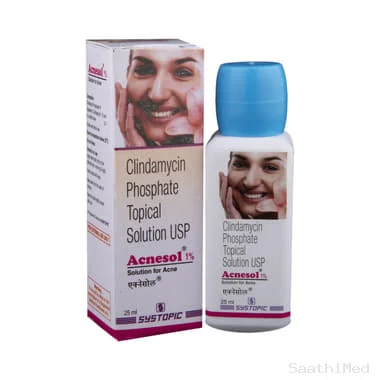
Acnesol 1% Solution: A Complete Guide To Uses, Side Effects, And Safety

Clinical Background: Balrampur Hospital, Lucknow (Emergency Medicine) & SCPM Hospital | Standards: CDSCO, Indian Pharmacopoeia (IP) & WHO
When to Call Your Doctor IMMEDIATELY
- Severe allergic reaction: rash, hives, swelling of face, lips, or throat, difficulty breathing.
- Severe diarrhea, abdominal cramps, or blood in stool (possible C. difficile infection).
- Intense skin irritation, blistering, or peeling.
- Signs of systemic absorption: metallic taste, nausea, or vomiting.
- No improvement after 8-12 weeks of consistent use.
- Development of new or worsening skin lesions.
If experiencing severe symptoms, call emergency services immediately.
What is acnesol 1% solution used for?
This medicine is a topical antibiotic solution containing clindamycin 1% w/v, used to treat acne vulgaris by reducing acne-causing bacteria on the skin. It is applied directly to affected areas once or twice daily, as prescribed by a doctor.
- Generic Name: Clindamycin
- Manufacturer: Systopic Laboratories Pvt Ltd
- Form: Allopathy
- Pregnancy Category: Consult doctor
- Prescription Required: Yes
🇮🇳 acnesol 1% solution के बारे में (Hindi Summary)
उपयोग: यह दवा एक टॉपिकल सॉल्यूशन है जिसमें क्लिंडामाइसिन 1% w/v होता है और इसका उपयोग मुँहासे (एक्ने) के इलाज के लिए किया जाता है। यह त्वचा पर मुँहासे पैदा करने वाले बैक्टीरिया को मारती है और सूजन को कम करती है। यह दवा केवल डॉक्टर के पर्चे पर मिलती है और इसे प्रभावित हिस्से पर पतली परत में लगाया जाता है।
साइड इफेक्ट्स: इस दवा के सामान्य दुष्प्रभावों में त्वचा का सूखना, पपड़ी बनना, खुजली, लालिमा और जलन शामिल हैं। ये आमतौर पर हल्के होते हैं और कुछ समय में ठीक हो जाते हैं। गंभीर दुष्प्रभाव दुर्लभ हैं, लेकिन अगर आपको गंभीर एलर्जी, दस्त, या पेट में ऐंठन हो तो तुरंत डॉक्टर से संपर्क करें।
सुरक्षा सलाह: इस दवा का उपयोग करने से पहले अपने डॉक्टर को अपनी एलर्जी और अन्य दवाओं के बारे में बताएं। इसे केवल बाहरी उपयोग के लिए ही लगाएं, आंखों, होंठों और म्यूकस मेम्ब्रेन से दूर रखें। अगर गलती से आंखों में चला जाए तो तुरंत पानी से धोएं। इसे नियमित रूप से लगाएं और बीच में न छोड़ें। धूप में जाने से बचें और सनस्क्रीन का उपयोग करें। बच्चों की पहुंच से दूर रखें।
acnesol 1% solution Uses & Benefits
This medicine is indicated for the topical treatment of mild to moderate inflammatory acne vulgaris caused by Cutibacterium acnes.
Topical clindamycin may sometimes be used off-label for rosacea, but it is not a first-line treatment.
Occasionally used for certain superficial skin infections, though not a primary choice.
Off-Label & Investigational Uses:
Topical clindamycin may be used off-label to reduce inflammation and bacterial colonization in mild hidradenitis suppurativa.
Sometimes prescribed off-label for bacterial folliculitis, but evidence is limited.
📋 Drug Information
| Generic Name(s) | Clindamycin |
| Brand Name | Acnesol Gel |
| Manufacturer | Systopic Laboratories Pvt Ltd |
| Packaging / Form | Varies by brand (Allopathy) |
| Therapeutic Class | ANTI INFECTIVES |
| Action Class | Lincosamides |
| Route of Administration | Topical |
| Storage | Store at room temperature between 15°C and 30°C (59°F to 86°F). Keep away from direct sunlight, heat, and moisture. Do not freeze. |
| Shelf Life | 24 months from the date of manufacture. |
| WHO Guideline | Not established from the available information. |
| ICMR Guideline | Not established from the available information. |
👨⚕️ Doctor's Practical Tips
Evidence-based practical advice from experienced clinicians
🔍 Is This Medicine Right for Your Symptom?
Educational reference. Always consult a doctor for diagnosis.
🔬 How This Medicine Works (Pharmacology)
Pharmacokinetics
How It Works
This medicine works by inhibiting bacterial protein synthesis. Clindamycin binds to the 50S ribosomal subunit of susceptible bacteria, specifically to the 23S rRNA component, preventing the elongation of peptide chains. This action is primarily bacteriostatic, meaning it stops bacteria from multiplying, and at higher concentrations, it can be bactericidal. By targeting Cutibacterium acnes, this medicine reduces the bacterial population in hair follicles, which decreases the release of inflammatory mediators and helps resolve acne lesions.
Mechanism Steps
💡 How to Take acnesol 1% solution
Strength: Topical solution, 1% w/v
Dosage Information
| Adult Dosage | Apply a thin layer of this medicine to the affected area once or twice daily, as directed by your doctor. Clean and dry the skin before application. The frequency and duration of treatment should be individualized by a qualified clinician based on the severity of acne and response to therapy. Typically, improvement is seen within 6 to 8 weeks, but full benefit may take up to 12 weeks. Do not use more than prescribed. |
| Pediatric Dosage | Pediatric dosing is not established from available information. Consult a pediatrician. |
| Elderly Dosage | Clinical studies of this medicine did not include sufficient numbers of subjects aged 65 and over to determine whether they respond differently from younger subjects. In general, dose selection for an elderly patient should be cautious, reflecting the greater frequency of decreased hepatic, renal, or cardiac function, and of concomitant disease or other drug therapy. |
| Renal Impairment | No dosage adjustment is typically necessary for topical use in renal impairment. However, in severe renal impairment, systemic accumulation may occur, and caution is advised. Consult your doctor. |
| Hepatic Impairment | No dosage adjustment is typically necessary for topical use in hepatic impairment. However, in severe hepatic impairment, systemic accumulation may occur, and caution is advised. Consult your doctor. |
| Maximum Daily Dose | The maximum recommended daily dose for topical clindamycin 1% solution is typically 2 mL per day, but this may vary based on the area treated. Follow your doctor's instructions. |
Dosage Timeline
⏰ What to Do If You Miss a Dose
⚠️ Side Effects of acnesol 1% solution
✅ Common Side Effects
🚨 Serious Side Effects
⚠️ Rare Side Effects
Consult your doctor if you experience any unusual symptoms.
🔬 Drug Interactions
| Drug | Severity | Effect |
|---|---|---|
| Erythromycin | Major | |
| Neuromuscular blockers | Major | |
| Benzoyl peroxide | Moderate | |
| Retinoids | Moderate | |
| Alcohol-containing products | Minor |
🚨 Major Interactions
- Erythromycin
- Neuromuscular blocking agents (e.g., vecuronium)
⚡ Moderate Interactions
- Other topical acne treatments (e.g., benzoyl peroxide, retinoids)
- Kaolin-pectin antidiarrheal
🍷 Alcohol Interaction
No known interaction between alcohol and topically applied clindamycin. However, alcohol consumption may worsen acne in some individuals, so moderation is advised.
🔎 Check Your Other Medicines
Educational tool. Always confirm with your doctor or pharmacist.
🛡️ Safety & Warnings
🚫 Contraindications
["Hypersensitivity to clindamycin, lincomycin, or any component of the formulation","History of regional enteritis, ulcerative colitis, or antibiotic-associated colitis","Use on broken skin, eczema, or rosacea (may worsen condition)"]
⚠️ Warnings & Precautions
["For external use only; avoid contact with eyes, lips, and mucous membranes.","Do not apply to large areas of broken skin or open wounds.","Prolonged use may lead to bacterial resistance; use only as prescribed.","If severe diarrhea develops, discontinue use and consult a doctor immediately.","Avoid concurrent use with other topical acne products that may cause irritation.","Use sunscreen and protective clothing as acne treatments may increase sun sensitivity.","Keep out of reach of children."]
🤱 Lactation Safety
Clindamycin is excreted in breast milk. Topical use is unlikely to cause significant systemic exposure, but caution is advised. Consult your doctor before using while breastfeeding. Avoid applying to the breast area to prevent infant exposure.
💊 Overdose Management
Topical overdose is unlikely due to limited systemic absorption. If excessive amounts are applied, wash the area with soap and water. If ingested accidentally, seek medical attention immediately. Symptoms of oral overdose may include nausea, vomiting, and diarrhea. Treatment is supportive and symptomatic.
⏰ Missed Dose
If you miss a dose, apply it as soon as you remember. If it is almost time for your next dose, skip the missed dose and continue with your regular schedule. Do not apply a double dose to make up for a missed one.
Additional Safety Advice
Before using this medicine, inform your doctor if you are allergic to clindamycin, lincomycin, or any other medications. This medicine is for external use only; do not ingest it. Avoid applying it to broken skin, open wounds, or areas affected by eczema or rosacea. Keep it away from your eyes, lips, and mucous membranes. If accidental contact occurs, rinse thoroughly with water. Wash your hands before and after applying the solution. Do not cover the treated area with tight bandages or dressings unless instructed by your doctor. Use this medicine regularly as prescribed, and do not skip doses or stop treatment prematurely, as this may lead to recurrence of acne or bacterial resistance. If your acne does not improve after 6 to 8 weeks of use, consult your doctor. Pregnant or breastfeeding women should consult their doctor before using this medicine. Avoid excessive sun exposure and use sunscreen, as some acne treatments can increase sun sensitivity. Keep this medicine out of reach of children.
👴 Special Considerations for Elderly
💡 For Patients Above 65
Acne is less common in the elderly, but if prescribed, use with caution due to potentially drier skin. Monitor for irritation and adjust frequency as needed.
🤰 Pregnancy Planning (TTC)
If you are planning pregnancy or are pregnant, consult your doctor before using this medicine. Topical clindamycin is generally considered safe, but your doctor will weigh the benefits and risks.
🏥 Post-Surgery Considerations
If you have recently had surgery, consult your doctor before applying this medicine to surgical areas. Avoid applying to healing wounds unless directed.
🦷 Dental Procedures
No specific precautions for dental procedures. Inform your dentist about all medications you are using.
💚 Lifestyle Tips for Better Results
🏋️ Exercise Considerations
Exercise is generally safe while using this medicine. However, sweat may irritate the skin, so wash your face gently after exercising. Avoid sharing towels or equipment that may come into contact with treated areas.
🥗 Diet Recommendations
💼 Impact on Daily Work & Life
This medicine is applied topically and is unlikely to affect your ability to drive or operate machinery. You can continue your normal daily activities. However, if you experience skin irritation, it may cause some discomfort, but it is not systemically impairing.
🛑 When to Stop This Medicine
Do not stop using this medicine without consulting your doctor. If you experience severe side effects such as allergic reactions or severe diarrhea, stop immediately and seek medical attention. If your acne has cleared, your doctor may recommend a maintenance regimen or gradual discontinuation to prevent recurrence.
📅 Long-Term Use Effects
Long-term use of topical clindamycin may lead to bacterial resistance, reducing its effectiveness. It is generally recommended to use it for limited periods, often in combination with other agents like benzoyl peroxide to prevent resistance. Prolonged use may also increase the risk of skin irritation. Regular follow-up with your doctor is advised to assess continued need and to monitor for any adverse effects.
🌿 Non-Medicine Approaches
These can complement medicine but do not replace prescribed treatment.
An antibacterial agent that can be used alone or in combination with clindamycin.
Evidence: Well-establishedHelp unclog pores and reduce acne lesions.
Evidence: Well-establishedFor moderate to severe acne, prescribed by a doctor.
Evidence: Well-establishedProfessional treatments that can complement topical therapy.
Evidence: Moderate💉 Vaccination Considerations
💉 If You're Getting Vaccinated
No known interactions between this medicine and vaccines. Continue routine vaccinations as scheduled.
📦 Storage Guide
✅ DO
Store at room temperature (15-30°C)
❌ DON'T
Do not refrigerate unless specified
✅ DO
Keep in original container
❌ DON'T
Do not transfer to unmarked containers
✅ DO
Keep away from direct sunlight
❌ DON'T
Do not store in bathroom cabinet
✈️ Traveling with This Medicine
When traveling with this medicine, keep it in its original packaging with the prescription label. Carry a copy of your prescription in case of customs checks. Store it in your carry-on luggage to avoid extreme temperatures in checked baggage. If traveling across time zones, continue applying as per your usual schedule; no adjustment needed for topical use. Ensure the cap is tightly closed to prevent leakage.
💰 Cost Analysis & Savings
👥 Real Patient Stories
Educational, anonymized scenarios. Individual results may vary.
💬 Questions Patients Often Ask
A: You may start seeing improvement in 2-4 weeks, but maximum benefit may take 8-12 weeks of consistent use.
A: Yes, but consult your doctor as some combinations may increase skin irritation. It is often combined with benzoyl peroxide or retinoids.
A: Topical clindamycin is generally considered safe during pregnancy (Category B), but consult your doctor before use.
A: Apply it as soon as you remember. If it's almost time for your next dose, skip the missed dose and continue with your regular schedule. Do not double dose.
A: Yes, dryness is a common side effect. Use a moisturizer if needed, and consult your doctor if it persists.
A: No, it is a prescription medicine. You need a doctor's prescription to purchase it.
A: Yes, but allow the solution to dry completely first. Use non-comedogenic makeup to avoid clogging pores.
A: It may interact with erythromycin (antagonism). Inform your doctor about all medications you are taking.
🤔 Common Patient Concerns
🔄 Substitutes for acnesol 1% solution
View AllAlternative brands with exact same active ingredient:
-
Acnelot LotionWest-Coast Pharmaceutical Works Ltd ₹53.50 53.9% CHEAPER
-
rakcen topical solutionRekvina Laboratories Ltd ₹99.00 14.7% CHEAPER
-
cliface lotionTalent India ₹112.50 3% CHEAPER
-
erytop lotionUSV Ltd ₹159.30 37.3% COSTLIER
-
clinmiakin 1% solutionCuratio Healthcare India Pvt Ltd ₹160.00 37.9% COSTLIER
Medical Note: Always consult your doctor before switching medications.
🛑 Myths vs. Facts
- Myth: This medicine works immediately.
Fact: It may take several weeks to see noticeable improvement. - Myth: More frequent application will clear acne faster.
Fact: Applying more than prescribed can increase irritation without added benefit. - Myth: This medicine can be used on any skin infection.
Fact: It is specifically for acne and should not be used on other infections without medical advice. - Myth: Once acne clears, treatment can be stopped immediately.
Fact: Stopping too soon may lead to recurrence; maintenance therapy is often needed.
🔄 Alternative Options
Generic Alternatives
- Clindamycin 1% topical solution
Brand Alternatives
- Acnesol 1% Solution
- Clindac A 1% Solution
- Dalacin T 1% Solution