
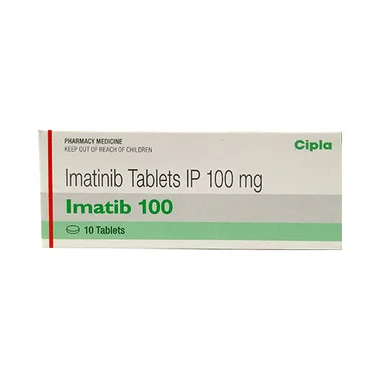
Imatinib Mesylate 100 mg Tablet: Complete Patient Guide
Clinical Reference Standards: CDSCO (Central Drugs Standard Control Organisation), Indian Pharmacopoeia (IP) & WHO | Last Updated: September 2026
When to Call Your Doctor IMMEDIATELY
- Rapid weight gain or swelling of face, lips, or throat.
- Difficulty breathing or chest pain.
- Yellowing of eyes or skin, dark urine, or severe abdominal pain.
- Unusual bleeding or bruising, or blood in vomit or stool.
- Fever, sore throat, or signs of infection.
- Severe skin rash with blisters or peeling.
- Decreased urine output or swelling in legs.
- Severe headache with vision changes.
- Irregular heartbeat or palpitations.
- Extreme fatigue or weakness.
If experiencing severe symptoms, call emergency services immediately.
What is imatib 100 tablet used for?
This medicine contains imatinib mesylate 100 mg, a targeted cancer medicine used to treat chronic myeloid leukemia (CML) and gastrointestinal stromal tumors (GIST). It works by blocking specific abnormal proteins that drive cancer cell growth. It is taken orally, usually once daily with food. Regular blood tests and monitoring are essential. Do not stop or change the dose without consulting your oncologist.
- Generic Name: Imatinib mesylate (100mg)
- Manufacturer: Cipla Ltd
- Form: Allopathy
- Pregnancy Category: Consult doctor
- Prescription Required: Yes
🇮🇳 imatib 100 tablet के बारे में (Hindi Summary)
उपयोग: यह दवा इमैटिनिब मेसिलेट 100 मिलीग्राम की गोली है, जिसका उपयोग कुछ प्रकार के कैंसर के इलाज के लिए किया जाता है। यह मुख्य रूप से क्रोनिक मायलॉइड ल्यूकेमिया (सीएमएल) और गैस्ट्रोइंटेस्टाइनल स्ट्रोमल ट्यूमर (जीआईएसटी) के इलाज में इस्तेमाल होती है। यह दवा कैंसर कोशिकाओं में मौजूद कुछ असामान्य प्रोटीन को रोककर उनकी वृद्धि को रोकती है। इसे मुँह से निगला जाता है, आमतौर पर दिन में एक बार भोजन के साथ। इस दवा को डॉक्टर के बताए अनुसार ही लें, अपने आप बंद या शुरू न करें। इलाज के दौरान नियमित रूप से खून की जांच करानी चाहिए।
साइड इफेक्ट्स: इस दवा के आम दुष्प्रभावों में शरीर में सूजन (आँखों, टखनों या पैरों के आसपास), मतली, उल्टी, दस्त, पेट दर्द, मांसपेशियों में ऐंठन, हड्डियों में दर्द, थकान, त्वचा पर दाने और सिरदर्द शामिल हैं। ये आमतौर पर हल्के से मध्यम होते हैं और समय के साथ कम हो सकते हैं। गंभीर दुष्प्रभाव भी हो सकते हैं, जिनमें तेजी से वजन बढ़ना, सांस लेने में कठिनाई, पीलिया (आँखों या त्वचा का पीला होना), असामान्य रक्तस्राव या चोट लगना, गंभीर त्वचा प्रतिक्रियाएँ, और दिल की समस्याएँ शामिल हैं। इन लक्षणों को तुरंत डॉक्टर को बताएं।
सुरक्षा सलाह: इस दवा को डॉक्टर के निर्देशानुसार ही लें। गोली को पूरा निगलें, चबाएं या तोड़ें नहीं। इसे भोजन के साथ लें ताकि पेट की जलन कम हो। अगर आपको खुराक लेना भूल जाए, तो याद आते ही ले लें, लेकिन अगर अगली खुराक का समय नजदीक हो, तो भूली हुई खुराक छोड़ दें और सामान्य शेड्यूल जारी रखें। दोहरी खुराक न लें। नियमित रूप से खून की जांच और लिवर-किडनी की जांच कराएं। बिना डॉक्टर की सलाह के कोई अन्य दवा, हर्बल सप्लीमेंट या विटामिन न लें। इलाज के दौरान गर्भनिरोधक उपाय अपनाएं और स्तनपान न कराएं। दवा को कमरे के तापमान पर सूखी जगह पर रखें।
💊 imatib 100 tablet Uses & Benefits
- [{"condition":"Chronic myeloid leukemia (CML)","description":"First-line treatment for newly diagnosed Philadelphia chromosome-positive CML in chronic phase.
- Also used in accelerated phase, blast crisis, and after failure of other therapies.","evidence":"Well-established"},{"condition":"Gastrointestinal stromal tumors (GIST)","description":"Used for KIT-positive GIST that cannot be surgically removed or has spread, and as adjuvant therapy after surgical removal of GIST.","evidence":"Well-established"},{"condition":"Myelodysplastic syndromes / myeloproliferative diseases","description":"Used in certain subtypes associated with PDGFR gene rearrangements.","evidence":"Established in specific subtypes"},{"condition":"Systemic mastocytosis","description":"Used in aggressive forms without the D816V KIT mutation.","evidence":"Limited but recognized"},{"condition":"Hypereosinophilic syndrome","description":"Used in patients with PDGFR-alpha fusion genes.","evidence":"Limited but recognized"},{"condition":"Dermatofibrosarcoma protuberans","description":"Used for unresectable or metastatic cases.","evidence":"Limited but recognized"},{"condition":"Philadelphia chromosome-positive acute lymphoblastic leukemia (Ph+ ALL)","description":"Used as part of combination therapy.","evidence":"Established in combination regimens"}]
Off-label uses: [{"condition":"Sclerodermatous chronic graft-versus-host disease","description":"Sometimes used off-label for refractory cases.","evidence":"Limited"},{"condition":"Pulmonary arterial hypertension","description":"Rarely used off-label; not standard.","evidence":"Limited"},{"condition":"Desmoid tumors","description":"Occasionally used off-label in selected patients.","evidence":"Limited"}]
Primary treatment for: Chronic myeloid leukemia (CML)
Also treats: Gastrointestinal stromal tumors (GIST), Myelodysplastic/myeloproliferative diseases with PDGFR gene rearrangements, Systemic mastocytosis, Hypereosinophilic syndrome, Dermatofibrosarcoma protuberans, Philadelphia chromosome-positive acute lymphoblastic leukemia (Ph+ ALL)
📋 Drug Information
| Generic Name(s) | Imatinib mesylate (100mg) |
| Brand Name | imatib 100 tablet |
| Manufacturer | Cipla Ltd |
| Packaging / Form | Varies by brand (Allopathy) |
| Therapeutic Class | ANTI NEOPLASTICS |
| Action Class | Tyrosine kinase inhibitors |
| Route of Administration | Oral |
| Storage | Store at room temperature between 15°C and 30°C (59°F to 86°F). Protect from moisture and heat. Keep the tablets in their original container with the lid tightly closed. Do not remove the desiccant packet. Keep out of reach of children. |
| Shelf Life | Typically 24 months from the date of manufacture, but check the expiry date on the pack. Do not use after the expiry date. |
| WHO Guideline | Not established from the available information. Guidelines from organizations such as WHO may recommend this medicine for certain conditions, but specific recommendations should be verified from current official sources. |
| ICMR Guideline | Not established from the available information. ICMR guidelines may include this medicine for specific cancers; consult current ICMR guidelines for details. |
👨⚕️ Doctor's Practical Tips
Evidence-based practical advice from experienced clinicians
🔍 Is This Medicine Right for Your Symptom?
Educational reference. Always consult a doctor for diagnosis.
🔬 How This Medicine Works (Pharmacology)
Pharmacokinetics
How It Works
This medicine is a tyrosine kinase inhibitor that selectively inhibits the BCR-ABL fusion protein, which is the abnormal tyrosine kinase created by the Philadelphia chromosome in chronic myeloid leukemia. It also inhibits other tyrosine kinases including KIT, PDGFR, and CSF-1R. By blocking these enzymes, it stops the signals that tell cancer cells to grow and divide, leading to cell death and reduced tumor growth. It does not affect normal cells as strongly because it targets specific abnormal pathways.
Mechanism Steps
💡 How to Take imatib 100 tablet
Strength: Imatinib mesylate 100 mg immediate-release tablet
Dosage Information
| Adult Dosage | The dose of this medicine must be individualized by a qualified clinician based on the specific condition being treated, the patient's response, and tolerability. For chronic myeloid leukemia in chronic phase, a common starting dose is 400 mg once daily. For accelerated phase or blast crisis, 600 mg once daily may be used. For gastrointestinal stromal tumors, 400 mg once daily is typical. Doses may be increased up to 800 mg daily in divided doses if needed and tolerated. In some cases, a lower starting dose of 100 mg may be used for other conditions. Always follow your oncologist's prescription exactly. Do not change the dose without consulting your doctor. |
| Pediatric Dosage | Pediatric dosing is not established from available information for this specific 100 mg tablet. Consult a pediatric oncologist for appropriate dosing in children. |
| Elderly Dosage | No specific dose adjustment is recommended for elderly patients based solely on age. However, elderly patients may be more sensitive to side effects such as fluid retention and fatigue. Close monitoring is advised. Dose should be individualized by a clinician. |
| Renal Impairment | For patients with mild to moderate renal impairment, no dose adjustment is typically needed. For severe renal impairment (creatinine clearance less than 20 mL/min), a lower starting dose may be considered, and close monitoring is advised. Dose must be individualized by a qualified clinician. |
| Hepatic Impairment | For patients with mild to moderate hepatic impairment, a reduced dose may be necessary. For severe hepatic impairment, a significant dose reduction is recommended. Liver function should be monitored closely. Dose must be individualized by a qualified clinician. |
| Maximum Daily Dose | The maximum recommended daily dose is 800 mg (given as 400 mg twice daily) for adults in certain conditions. However, doses above 800 mg have not been well studied. Do not exceed the dose prescribed by your doctor. |
Dosage Timeline
🍽️ Food Timing Guide
⏰ What to Do If You Miss a Dose
⚠️ Side Effects of imatib 100 tablet
✅ Common Side Effects
🚨 Serious Side Effects
⚠️ Rare Side Effects
Consult your doctor if you experience any unusual symptoms.
🔬 Drug Interactions
| Drug | Severity | Effect |
|---|---|---|
| Ketoconazole | Major | |
| Rifampin | Major | |
| Warfarin | Major | |
| Acetaminophen (high dose) | Major | |
| Cyclosporine | Moderate | |
| Omeprazole | Moderate | |
| Grapefruit juice | Moderate | |
| St. John's wort | Major | |
| Antacids | Minor | |
| Iron supplements | Minor |
🚨 Major Interactions
- Strong CYP3A4 inhibitors (e.g., ketoconazole, itraconazole, clarithromycin, ritonavir)
- Strong CYP3A4 inducers (e.g., rifampin, carbamazepine, phenytoin, St. John's wort)
- Warfarin
- Acetaminophen (paracetamol) at high doses
⚡ Moderate Interactions
- CYP3A4 substrates with narrow therapeutic index (e.g., cyclosporine, tacrolimus, sirolimus)
- Grapefruit juice
- Proton pump inhibitors (e.g., omeprazole)
🍷 Alcohol Interaction
Alcohol may increase the risk of liver problems and worsen side effects such as nausea, dizziness, and fatigue. It is best to avoid alcohol while taking this medicine, especially if you have liver disease or are taking other medicines that affect the liver.
🔎 Check Your Other Medicines
Educational tool. Always confirm with your doctor or pharmacist.
🛡️ Safety & Warnings
🚫 Contraindications
["Known hypersensitivity to imatinib or any component of the tablet.","Pregnancy, unless the potential benefit justifies the potential risk to the fetus.","Breastfeeding, due to potential serious adverse reactions in nursing infants."]
⚠️ Warnings & Precautions
["This medicine can cause severe fluid retention, including pulmonary edema and heart failure. Monitor weight and report rapid weight gain or swelling.","Liver toxicity can occur. Regular liver function tests are essential. Report yellowing of eyes or skin, dark urine, or abdominal pain.","Myelosuppression is common. Blood counts should be monitored regularly. Report fever, sore throat, or unusual bleeding.","Severe skin reactions, including Stevens-Johnson syndrome, have been reported. Stop the medicine and seek immediate care if a severe rash develops.","Gastrointestinal bleeding can occur. Seek emergency care if you vomit blood or have black stools.","Tumor lysis syndrome may occur in patients with rapidly growing tumors. Ensure adequate hydration and monitor electrolytes.","This medicine can interact with many drugs. Always inform your doctor about all medicines, supplements, and herbal products you take.","Avoid grapefruit and grapefruit juice during treatment.","Use effective contraception during treatment and for at least 14 days after stopping.","Do not breastfeed while taking this medicine.","Do not drive or operate machinery if you experience dizziness, fatigue, or blurred vision.","Keep all appointments for monitoring and follow-up."]
🤱 Lactation Safety
It is not known whether this medicine is excreted in human milk. Because of the potential for serious adverse reactions in nursing infants, breastfeeding is not recommended during treatment and for at least 1 month after stopping therapy.
💊 Overdose Management
Overdose with this medicine may cause severe side effects such as fluid retention, liver toxicity, and low blood counts. If you suspect an overdose, seek emergency medical attention immediately. Treatment is supportive and symptomatic. There is no specific antidote. Contact a poison control center if available.
⏰ Missed Dose
If you miss a dose, take it as soon as you remember. If it is almost time for your next dose (less than 12 hours away), skip the missed dose and continue with your regular schedule. Do not take two doses at the same time to make up for a missed dose.
Additional Safety Advice
Take this medicine exactly as prescribed by your oncologist. Swallow the tablet whole with a full glass of water, with a meal to reduce stomach upset. Do not crush, chew, or break the tablet unless your doctor says it is okay. If you miss a dose, take it as soon as you remember, but if it is almost time for your next dose, skip the missed dose and continue with your regular schedule. Do not double the dose. Keep all appointments for blood tests and check-ups. Your doctor will monitor your blood counts, liver function, and kidney function regularly. Avoid close contact with people who have infections, and practice good hand hygiene. Tell your doctor immediately if you notice rapid weight gain, swelling, difficulty breathing, yellowing of eyes or skin, unusual bleeding or bruising, or severe skin rash. Do not take any new medicine, including over-the-counter products, herbal supplements, or vitamins, without asking your doctor or pharmacist first. This medicine can interact with many drugs, including some antibiotics, antifungals, seizure medicines, and blood thinners. Use effective contraception during treatment and for a period after stopping, as advised by your doctor. Do not breastfeed while taking this medicine. Store the tablets at room temperature away from moisture and heat. Keep out of reach of children.
👴 Special Considerations for Elderly
💡 For Patients Above 65
Elderly patients (above 65 years) may be more sensitive to the side effects of this medicine, especially fluid retention, fatigue, and liver toxicity. Close monitoring of liver and kidney function, blood counts, and heart function is recommended. Dose adjustments may be necessary based on tolerability. Falls and fractures should be monitored due to potential bone effects.
🤰 Pregnancy Planning (TTC)
This medicine can cause fetal harm. Women of childbearing potential should use effective contraception during treatment and for at least 14 days after stopping. If you are planning to become pregnant, consult your oncologist well in advance to discuss alternative treatment options and timing. Men taking this medicine should also use contraception, as it may affect sperm and potentially harm the fetus. Do not become pregnant or father a child while on this medicine without medical advice.
🏥 Post-Surgery Considerations
If you are undergoing surgery, inform your surgeon and anesthesiologist that you are taking this medicine. It may need to be temporarily stopped before surgery due to its effects on blood counts and wound healing. Your doctor will advise you on when to stop and when to restart. After surgery, monitor for signs of infection, bleeding, and delayed wound healing.
🦷 Dental Procedures
Inform your dentist that you are taking this medicine before any dental procedure. It can increase the risk of bleeding and infection. Your dentist may recommend antibiotics or other precautions. Do not stop taking this medicine without consulting your oncologist. Good oral hygiene is important to prevent infections.
💚 Lifestyle Tips for Better Results
🏋️ Exercise Considerations
Exercise is generally encouraged, but you should avoid strenuous activities if you have fatigue, anemia, or low blood counts. If you have fluid retention or heart problems, consult your doctor before starting any exercise program. Listen to your body and stop if you feel dizzy, short of breath, or excessively tired.
🥗 Diet Recommendations
💼 Impact on Daily Work & Life
This medicine may cause fatigue, dizziness, or blurred vision, which can affect your ability to drive or operate machinery. Avoid driving or operating heavy machinery until you know how the medicine affects you. Most patients can continue their daily activities, but you may need to adjust your schedule to accommodate rest periods and medical appointments. Discuss any work-related concerns with your doctor.
🛑 When to Stop This Medicine
Do not stop taking this medicine without consulting your oncologist. Stopping suddenly can lead to relapse or worsening of the disease. Your doctor will decide when it is appropriate to stop based on your response to treatment, side effects, and overall condition. If you experience severe side effects, contact your doctor immediately; they may adjust the dose or temporarily interrupt treatment.
📅 Long-Term Use Effects
Long-term use of this medicine may lead to persistent side effects such as fluid retention, fatigue, and muscle cramps. It can also cause chronic liver or kidney problems, and rarely, heart failure. Regular monitoring of blood counts, liver and kidney function, and heart function is essential. Some patients may develop resistance to the medicine over time, requiring a change in treatment. Long-term use may also affect bone health and thyroid function. Always discuss any new or persistent symptoms with your doctor.
🌿 Non-Medicine Approaches
These can complement medicine but do not replace prescribed treatment.
Used if this medicine is not effective or not tolerated.
Evidence: Well-establishedA potential curative option for some patients with CML, especially younger patients.
Evidence: Well-establishedFor GIST, surgical removal is the primary treatment when feasible. This medicine may be used before or after surgery.
Evidence: Well-establishedParticipation in clinical trials may offer access to new treatments.
Evidence: Varies💉 Vaccination Considerations
💉 If You're Getting Vaccinated
Live vaccines should be avoided while taking this medicine because it can suppress the immune system. Inactivated vaccines are generally safe, but their effectiveness may be reduced. Consult your doctor before receiving any vaccine. It is important to keep vaccinations up to date for you and your close contacts, as advised by your healthcare provider.
📦 Storage Guide
✅ DO
Store at room temperature between 15°C and 30°C.
❌ DON'T
Do not refrigerate unless specified.
✅ DO
Keep in the original container with the lid tightly closed.
❌ DON'T
Do not transfer to unmarked containers.
✅ DO
Keep away from direct sunlight and moisture.
❌ DON'T
Do not store in the bathroom cabinet.
✅ DO
Keep out of reach of children and pets.
❌ DON'T
Do not use after the expiry date.
✈️ Traveling with This Medicine
When traveling, carry your medicine in its original packaging with the prescription label. Bring a copy of your prescription and a letter from your doctor stating the medical condition and medicines you are carrying. Keep the medicine in your carry-on luggage to avoid loss or temperature extremes. Store at room temperature and protect from moisture. If crossing time zones, adjust the timing of your doses gradually in consultation with your doctor. Carry enough supply for the entire trip plus extra in case of delays. Check customs regulations for controlled substances; this medicine is not a controlled substance in most countries, but documentation is advised.
💰 Cost Analysis & Savings
👥 Real Patient Stories
Educational, anonymized scenarios. Individual results may vary.
💬 Questions Patients Often Ask
A: The onset of effect varies. In CML, blood counts may start improving within weeks. In GIST, tumor shrinkage may take several weeks to months. Your doctor will monitor your response with regular tests.
A: Yes, take it with a meal and a full glass of water to reduce stomach upset. Avoid grapefruit and grapefruit juice.
A: If you miss a dose, take it as soon as you remember. If it is almost time for your next dose (less than 12 hours), skip the missed dose and continue with your regular schedule. Do not double dose.
A: No, do not stop without consulting your doctor. Stopping early can lead to relapse. Your doctor will decide when it is safe to stop.
A: Watch for rapid weight gain, swelling, difficulty breathing, yellowing of eyes or skin, unusual bleeding or bruising, fever, and severe skin rash. Report these immediately.
A: It is a targeted therapy, not traditional chemotherapy. It specifically blocks abnormal proteins in cancer cells, which makes it different from conventional chemotherapy.
A: This medicine can harm the fetus. Use effective contraception during treatment and for at least 14 days after stopping. If you plan to become pregnant, consult your doctor first.
A: Breastfeeding is not recommended during treatment and for at least 1 month after stopping, as the medicine may pass into breast milk and harm the baby.
A: Yes, it interacts with many drugs, including certain antibiotics, antifungals, seizure medicines, and blood thinners. Always inform your doctor about all medicines and supplements you take.
A: Store at room temperature between 15°C and 30°C, away from moisture and heat. Keep in the original container and out of reach of children.
🤔 Common Patient Concerns
🔄 Substitutes for imatib 100 tablet
View AllAlternative brands with exact same active ingredient:
-
resimat 100mg capsuleResonance Laboratories Pvt Ltd ₹84.00 83.9% CHEAPER
-
chemotinib 100mg capsuleNeon Laboratories Ltd ₹261.56 50% CHEAPER
-
imatib a 100mg capsuleCipla Ltd ₹539.06 3.1% COSTLIER
-
imat 100mg tabletBiochem Pharmaceutical Industries ₹578.25 10.6% COSTLIER
-
veenat 100 capsuleNatco Pharma Ltd ₹651.56 24.7% COSTLIER
Medical Note: Always consult your doctor before switching medications.
🛑 Myths vs. Facts
- Myth: Imatinib is a traditional chemotherapy that causes severe hair loss and vomiting.
Fact: Imatinib is a targeted therapy, not traditional chemotherapy. Hair loss is uncommon, and vomiting is usually manageable with supportive care. - Myth: Once you start imatinib, you can stop as soon as you feel better.
Fact: Imatinib must be taken continuously as prescribed. Stopping early can lead to relapse. Always consult your doctor before stopping. - Myth: Imatinib weakens the immune system permanently.
Fact: Imatinib can lower blood counts temporarily, but this is monitored and managed. It does not permanently weaken the immune system in most cases. - Myth: You can take imatinib with any other medicine without checking.
Fact: Imatinib interacts with many drugs. Always inform your doctor about all medicines and supplements you take.
🔄 Alternative Options
Generic Alternatives
- Imatinib mesylate 100 mg tablet (generic)
Brand Alternatives
- Apotinib 100 mg tablet