
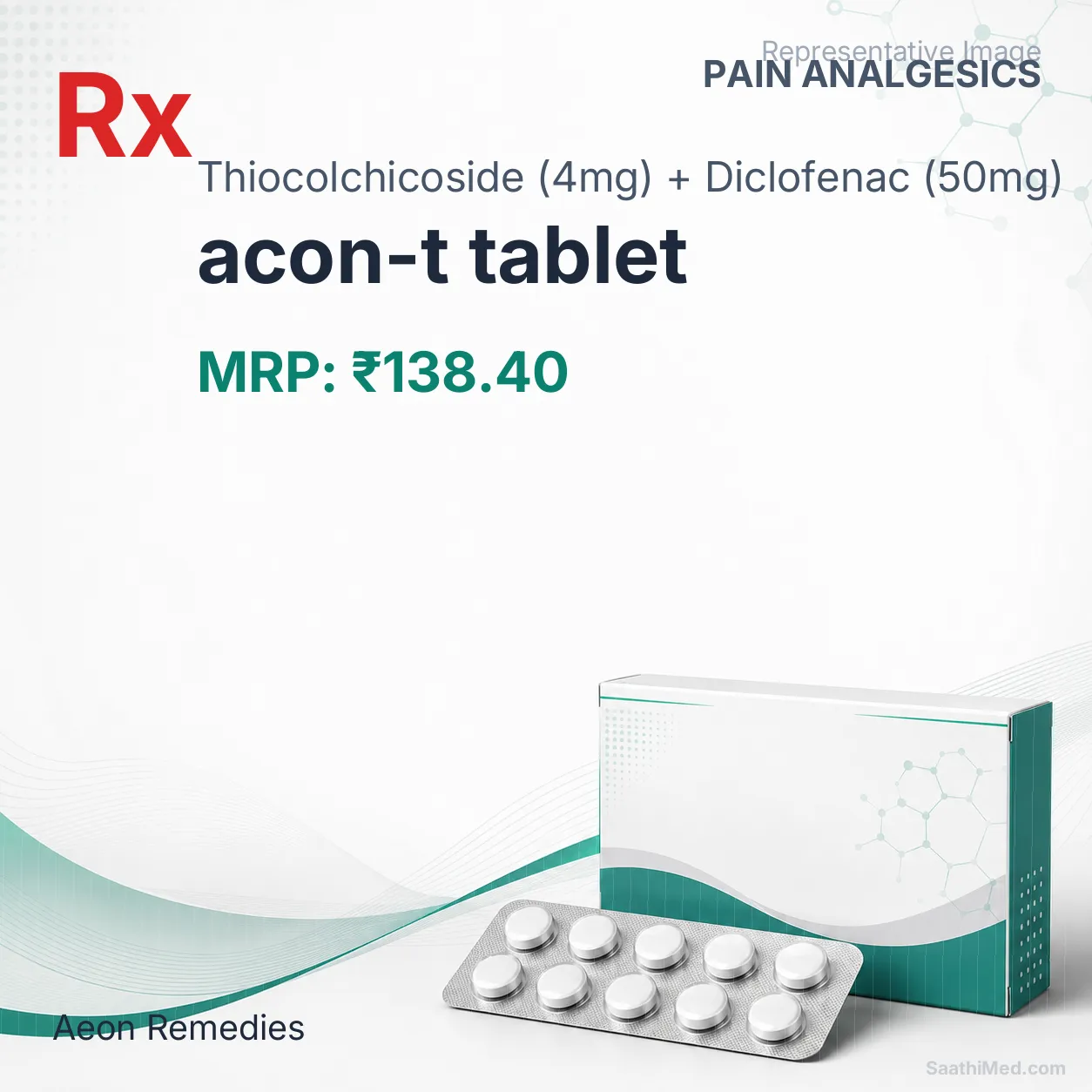
acon-t tablet - Uses, Price, Side Effects & Substitutes
What is acon-t tablet used for?
Acon-T Tablet (Thiocolchicoside + Diclofenac) is used to treat PAIN ANALGESICS. It contains Thiocolchicoside (4mg) + Diclofenac (50mg), which Thiocolchicoside: Acts as a GABA-A receptor agonist and glycine receptor agonist. Always consult your doctor before use. Take as prescribed.
- Generic Name: Thiocolchicoside + Diclofenac
- Manufacturer: Aeon Remedies
- Form: Allopathy
- Pregnancy Category: A
- Prescription Required: Yes
💊 acon-t tablet Uses & Benefits
Musculoskeletal pain, muscle spasms, low back pain, sprains, strains
Off-label uses: Not well documented
📋 Drug Information
| Generic Name(s) | Thiocolchicoside + Diclofenac |
| Brand Name | Acon-T Tablet |
| Manufacturer | Aeon Remedies |
| Packaging / Form | Varies by brand (Allopathy) |
| Therapeutic Class | PAIN ANALGESICS |
| Action Class | Muscle Relaxant + NSAID |
| Route of Administration | Oral |
| Storage | Store at room temperature (20-25°C), protect from moisture and light |
| Shelf Life | As per manufacturer |
🔬 Pharmacology (PK/PD)
Pharmacokinetics
How It Works
Thiocolchicoside: Acts as a GABA-A receptor agonist and glycine receptor agonist, producing muscle relaxation. Diclofenac: Inhibits cyclooxygenase (COX-1 and COX-2), reducing prostaglandin synthesis, thereby providing analgesic and anti-inflammatory effects.
Mechanism Steps
💡 How to Take acon-t tablet
Follow your doctor's prescription exactly.
⚠️ Side Effects of acon-t tablet
✅ Common Side Effects
- Nausea
- Vomiting
- Diarrhea
- Dizziness
- Drowsiness
- Headache
- Epigastric pain
🚨 Serious Side Effects
- GI bleeding
- Peptic ulcer
- Renal failure
- Hepatotoxicity
- Anaphylaxis
- Stevens-Johnson syndrome
- Cardiovascular thrombotic events
⚠️ Rare Side Effects
- Aplastic anemia
- Agranulocytosis
- Pancreatitis
- Interstitial nephritis
- Hepatic necrosis
Consult your doctor if you experience any unusual symptoms.
🔬 Drug Interactions
| ⚠️ Drug | Severity | Effect |
|---|---|---|
| Warfarin | Major | Increased bleeding risk |
| Lithium | Major | Increased lithium levels and toxicity |
| Methotrexate | Major | Increased methotrexate toxicity |
| Ciclosporin | Major | Increased nephrotoxicity |
| Other NSAIDs | Major | Additive GI and renal toxicity |
| Anticoagulants | Major | Increased bleeding risk |
| ACE inhibitors | Moderate | Reduced antihypertensive effect |
| Diuretics | Moderate | Reduced diuretic effect, increased renal risk |
| Aspirin | Moderate | Increased GI ulcer risk |
| Corticosteroids | Moderate | Increased GI ulcer risk |
| SSRIs | Moderate | Increased bleeding risk |
| Antacids | Minor | Reduced absorption of diclofenac |
| Cholestyramine | Minor | Reduced absorption of diclofenac |
🚨 Major Interactions
- Warfarin
- Lithium
- Methotrexate
- Ciclosporin
- Other NSAIDs
- Anticoagulants
⚡ Moderate Interactions
- ACE inhibitors
- Diuretics
- Aspirin
- Corticosteroids
- SSRIs
ℹ️ Minor Interactions
- Antacids
- Cholestyramine
🍽️ Food Interactions
Food may delay absorption of diclofenac
🍷 Alcohol Interaction
Increased risk of GI bleeding and hepatotoxicity
🛡️ Safety & Warnings
🚫 Contraindications
Hypersensitivity, active peptic ulcer, severe renal/hepatic impairment, pregnancy (3rd trimester), lactation, history of asthma/urticaria with NSAIDs, concomitant use with other NSAIDs
📊 Monitoring Parameters
Renal function, liver function, blood pressure, signs of GI bleeding, CBC
🤱 Lactation Safety
Contraindicated (excreted in breast milk)
💊 Overdose Management
Symptomatic and supportive; gastric lavage, activated charcoal; monitor for GI bleeding, renal failure, CNS depression
⏰ Missed Dose
Take as soon as remembered; if near next dose, skip missed dose; do not double dose