
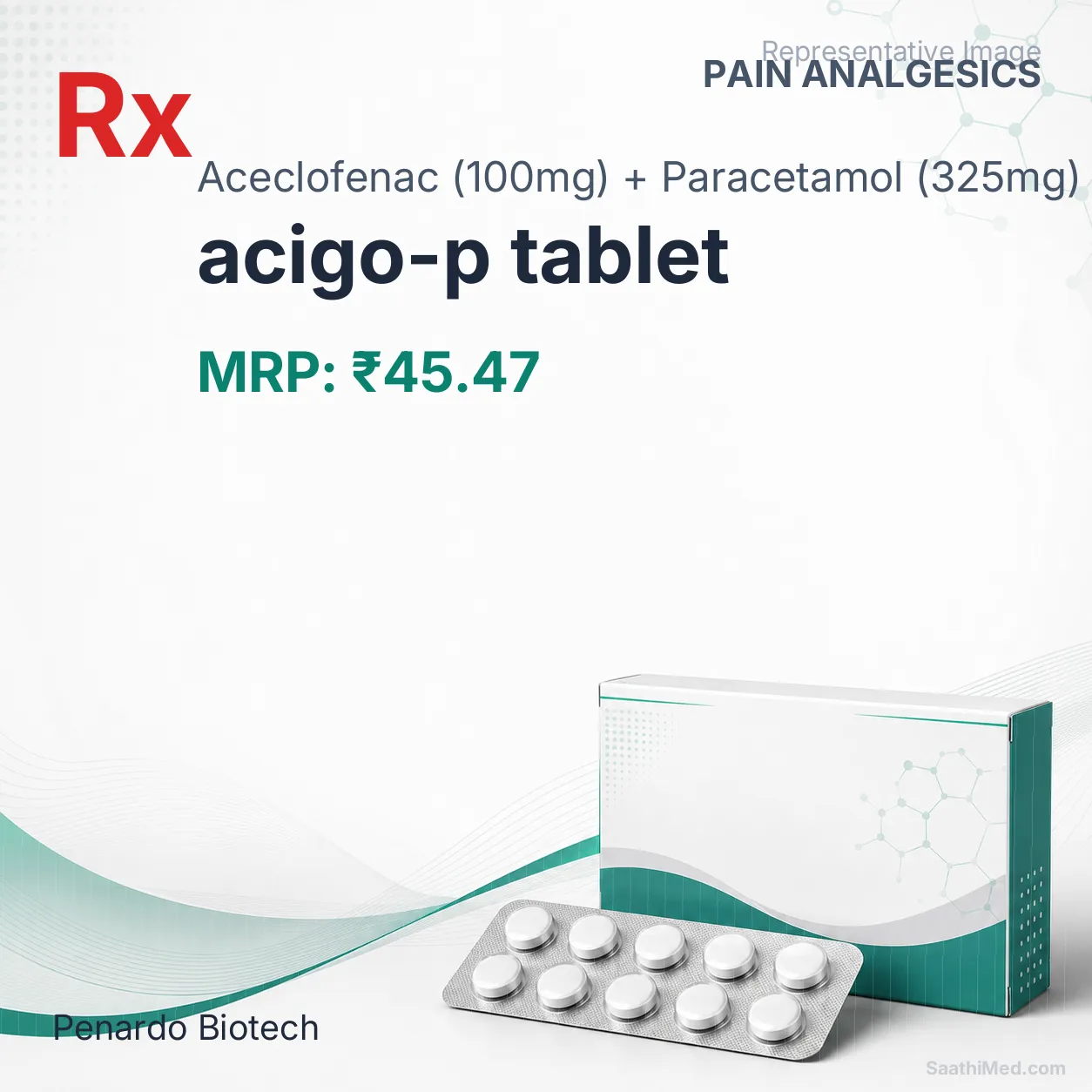
Aceclofenac + Paracetamol: Comprehensive Medical Guide
What is acigo-p tablet used for?
Aceclofenac + Paracetamol is a combination medicine used for pain and inflammation in conditions like osteoarthritis and rheumatoid arthritis. Aceclofenac is an NSAID that reduces inflammation, while paracetamol provides additional pain relief and fever reduction. It is taken twice daily with food. Common side effects include nausea and dizziness. Avoid alcohol and do not exceed the recommended dose.
- Generic Name: Aceclofenac + Paracetamol
- Manufacturer: Penardo Biotech
- Form: Allopathy
- Pregnancy Category: C (first and second trimesters); D (third trimeste
- Prescription Required: Yes
💊 acigo-p tablet Uses & Benefits
- This combination is primarily used for the symptomatic treatment of acute and chronic pain associated with musculoskeletal disorders such as osteoarthritis, rheumatoid arthritis, and ankylosing spondylitis.
- It is also effective for dental pain, postoperative pain, and dysmenorrhea.
- The antipyretic property of paracetamol makes it useful for fever associated with pain conditions.
Off-label uses: Off-label uses include management of migraine headaches, low back pain, and soft tissue injuries. However, evidence for these uses is limited and should be guided by clinical judgment.
Primary treatment for: Osteoarthritis
Also treats: Rheumatoid arthritis, Ankylosing spondylitis, Musculoskeletal pain, Dental pain, Postoperative pain, Dysmenorrhea
Relieves symptoms like: Pain, Inflammation, Fever
⚖️ Pros & Cons
Benefits
- ✅ Effective pain relief
- ✅ Synergistic action allows lower doses
- ✅ Widely available and affordable
Drawbacks
- ❌ Gastrointestinal side effects
- ❌ Risk of liver toxicity with paracetamol overdose
- ❌ Not suitable for patients with severe renal or hepatic impairment
📋 Drug Information
| Generic Name(s) | Aceclofenac + Paracetamol |
| Brand Name | Aldigesic P |
| Manufacturer | Penardo Biotech |
| Packaging / Form | Varies by brand (Allopathy) |
| Therapeutic Class | Nonsteroidal Anti-inflammatory Drugs (NSAIDs) + Analgesic/Antipyretic |
| Action Class | Cyclooxygenase (COX) inhibitor + Central analgesic |
| Route of Administration | Oral |
| Storage | Store at room temperature (15-30°C), protected from light and moisture. Keep out of reach of children. |
| Shelf Life | 3 years |
| WHO Guideline | WHO Model List of Essential Medicines: Paracetamol is included; aceclofenac is not specifically listed. |
| ICMR Guideline | ICMR guidelines for management of osteoarthritis recommend NSAIDs like aceclofenac with paracetamol for pain relief. |
🔬 Pharmacology (PK/PD)
Pharmacokinetics
How It Works
Aceclofenac is a potent NSAID that selectively inhibits COX-2 more than COX-1, reducing the production of prostaglandins involved in inflammation and pain. Paracetamol acts centrally by inhibiting COX-3 (a variant of COX-1) in the hypothalamus, reducing prostaglandin synthesis and modulating the endogenous cannabinoid system. The combination provides enhanced analgesia through complementary mechanisms.
Mechanism Steps
💡 How to Take acigo-p tablet
Dosage Information
| Adult Dosage | One tablet twice daily (morning and evening) or as directed by a physician. |
| Pediatric Dosage | Not recommended for children under 12 years of age. For children above 12 years, same as adult dosage. |
| Elderly Dosage | Use with caution; consider lower doses or increased dosing interval due to increased risk of side effects. |
| Renal Impairment | Contraindicated in severe renal impairment (CrCl <30 mL/min). Use with caution in mild to moderate impairment; adjust dose if necessary. |
| Hepatic Impairment | Contraindicated in severe hepatic impairment. Use with caution in mild to moderate impairment; maximum daily dose of paracetamol should not exceed 2 g. |
| Maximum Daily Dose | 2 tablets (200 mg aceclofenac + 650 mg paracetamol) per day, unless otherwise directed by a physicia |
Dosage Timeline
⚠️ Side Effects of acigo-p tablet
✅ Common Side Effects
- Nausea
- Vomiting
- Abdominal pain
- Dyspepsia
- Diarrhea
- Constipation
- Dizziness
- Headache
- Rash
- Pruritus
🚨 Serious Side Effects
- Gastrointestinal bleeding
- Peptic ulcer
- Stevens-Johnson syndrome
- Acute liver failure
- Renal impairment
- Anaphylaxis
⚠️ Rare Side Effects
- Pancreatitis
- Agranulocytosis
- Thrombocytopenia
- Aplastic anemia
- Interstitial nephritis
Consult your doctor if you experience any unusual symptoms.
🔬 Drug Interactions
| ⚠️ Drug | Severity | Effect |
|---|---|---|
| Warfarin | Major | Increased risk of bleeding |
| Methotrexate | Major | Increased methotrexate toxicity |
| Lithium | Major | Increased lithium levels |
| Aspirin | Major | Increased risk of gastrointestinal ulceration and bleeding |
| Other NSAIDs | Major | Additive gastrointestinal toxicity |
| ACE inhibitors | Moderate | Reduced antihypertensive effect |
| Diuretics | Moderate | Reduced diuretic effect and increased risk of renal impairment |
| Anticoagulants | Moderate | Increased bleeding risk |
| Corticosteroids | Moderate | Increased risk of gastrointestinal ulceration |
| SSRIs | Moderate | Increased bleeding risk |
| Antacids | Minor | Reduced absorption of aceclofenac |
| Cholestyramine | Minor | Reduced absorption of paracetamol |
| Metoclopramide | Minor | Increased absorption of paracetamol |
🚨 Major Interactions
- Warfarin
- Methotrexate
- Lithium
- Aspirin
- Other NSAIDs
⚡ Moderate Interactions
- ACE inhibitors
- Diuretics
- Anticoagulants
- Corticosteroids
- Selective serotonin reuptake inhibitors (SSRIs)
ℹ️ Minor Interactions
- Antacids
- Cholestyramine
- Metoclopramide
🍽️ Food Interactions
Food may delay absorption of aceclofenac but does not significantly affect overall bioavailability. Paracetamol absorption may be delayed by food.
🍷 Alcohol Interaction
Chronic alcohol consumption increases the risk of paracetamol hepatotoxicity. Alcohol may also increase the risk of gastrointestinal bleeding with aceclofenac.
🛡️ Safety & Warnings
🚫 Contraindications
Hypersensitivity to aceclofenac, paracetamol, or any excipients. Active peptic ulcer or gastrointestinal bleeding. Severe hepatic impairment. Severe renal impairment (CrCl <30 mL/min). History of asthma, urticaria, or allergic-type reactions after taking aspirin or other NSAIDs. Third trimester of pregnancy.
🚫 Contraindicated Diseases
- Active peptic ulcer
- Gastrointestinal bleeding
- Severe hepatic impairment
- Severe renal impairment
- Asthma (NSAID-sensitive)
⚠️ Warnings & Precautions
Use with caution in patients with a history of gastrointestinal disease (ulcerative colitis, Crohn's disease), renal impairment, hepatic impairment, cardiovascular disease, hypertension, asthma, or bleeding disorders. Avoid concomitant use with other NSAIDs or paracetamol-containing products. Monitor liver function tests during prolonged use. Paracetamol overdose can cause severe liver damage; maximum daily dose should not exceed 4 g in adults. Elderly patients are at increased risk of side effects.
⚠️ FDA Warning
NSAIDs may increase the risk of serious cardiovascular thrombotic events, myocardial infarction, and stroke, especially with prolonged use. Paracetamol may cause severe liver injury in cases of overdose.
📊 Monitoring Parameters
Liver function tests, renal function tests, blood pressure, signs of gastrointestinal bleeding, and complete blood count during prolonged therapy.
🤱 Lactation Safety
Aceclofenac is excreted in breast milk in small amounts; paracetamol is also excreted. Use with caut
Additional Safety Advice
Avoid alcohol consumption while taking this medicine.
Avoid in third trimester; use with caution in first two trimesters only if clearly needed.
May cause dizziness; avoid driving if affected.
Use with caution; monitor liver function. Avoid in severe liver disease.
Use with caution; monitor renal function. Avoid in severe kidney disease.
No specific dietary restrictions, but take with food to reduce stomach upset.
💊 Overdose Management
Paracetamol overdose: Administer N-acetylcysteine as soon as possible if serum paracetamol levels are toxic. Aceclofenac overdose: Symptomatic and supportive care; no specific antidote. Gastric lavage and activated charcoal may be considered if ingestion is recent.
⏰ Missed Dose
If you miss a dose, take it as soon as you remember. If it is almost time for the next dose, skip the missed dose and continue with your regular schedule. Do not take a double dose.
👨⚕️ Reviewed by Expert
🛑 Myths vs. Facts
- Myth: Paracetamol is a strong anti-inflammatory drug.
Fact: Paracetamol has minimal anti-inflammatory effects; it is primarily an analgesic and antipyretic. - Myth: Aceclofenac is safe for long-term use without monitoring.
Fact: Long-term use requires monitoring of liver, kidney, and gastrointestinal function due to potential side effects.
🔄 Alternative Options
Generic Alternatives
- Aceclofenac + Paracetamol tablets
Brand Alternatives
- Dolokind-AP
- Aceclo-Plus
- Zerodol-P
- Acepar
❓ People Also Ask
Q: What is Aceclofenac + Paracetamol used for?
A: It is used for pain and inflammation in conditions like osteoarthritis, rheumatoid arthritis, and dental pain.
Q: Is Aceclofenac + Paracetamol a muscle relaxant?
A: No, it is a combination of an NSAID and an analgesic; it does not have muscle relaxant properties.
Q: Can I take Aceclofenac + Paracetamol with other painkillers?
A: Avoid taking with other NSAIDs or paracetamol-containing products to prevent overdose and side effects.
❓ Frequently Asked Questions
Q: Can I take Aceclofenac + Paracetamol on an empty stomach?
A: It is recommended to take it with or after food to reduce the risk of gastrointestinal side effects.
Q: How long does it take for Aceclofenac + Paracetamol to work?
A: Pain relief usually begins within 30-60 minutes, with maximum effect in 1-3 hours.
Q: Can I drink alcohol while taking this medicine?
A: No, alcohol increases the risk of liver damage from paracetamol and gastrointestinal bleeding from aceclofenac.