
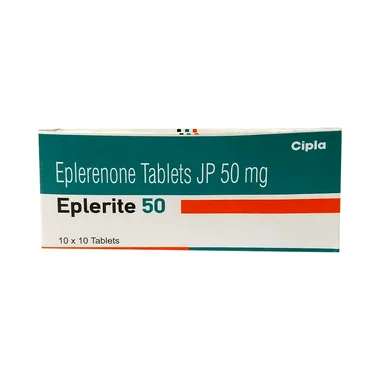
Eptus 50 Tablet (eplerenone 50mg): Complete Medicine Guide
Clinical Reference Standards: CDSCO (Central Drugs Standard Control Organisation), Indian Pharmacopoeia (IP) & WHO | Last Updated: September 2026
When to Call Your Doctor IMMEDIATELY
- Muscle weakness or paralysis
- Irregular or rapid heartbeat
- Difficulty breathing or shortness of breath
- Severe dizziness or fainting
- Decreased urine output or swelling in legs
- Yellowing of skin or eyes
- Severe abdominal pain with nausea and vomiting
- Swelling of face, lips, or throat
If experiencing severe symptoms, call emergency services immediately.
What is eplerite 50 tablet used for?
This medicine contains Eplerenone 50 mg, a selective aldosterone receptor antagonist used to treat heart failure after a heart attack and high blood pressure. It works by blocking aldosterone, reducing fluid retention and protecting the heart. It requires regular monitoring of potassium and kidney function.
- Generic Name: Eplerenone (50mg)
- Manufacturer: Cipla Ltd
- Form: Allopathy
- Pregnancy Category: Consult doctor
- Prescription Required: Yes
🇮🇳 eplerite 50 tablet के बारे में (Hindi Summary)
उपयोग: यह दवा एप्लेरेनोन 50 मिलीग्राम युक्त है और मुख्य रूप से दिल के दौरे के बाद हृदय विफलता और उच्च रक्तचाप के इलाज के लिए उपयोग की जाती है। यह एल्डोस्टेरोन हार्मोन को रोककर शरीर में अतिरिक्त तरल और सोडियम को बाहर निकालने में मदद करती है, जिससे रक्तचाप कम होता है और हृदय पर दबाव कम पड़ता है। यह दवा पोटेशियम के स्तर को बढ़ा सकती है, इसलिए नियमित जांच आवश्यक है।
साइड इफेक्ट्स: इस दवा के सामान्य दुष्प्रभावों में पोटेशियम का बढ़ना, चक्कर आना, कम रक्तचाप, सिरदर्द और पुरुषों में स्तन में कोमलता शामिल हैं। गंभीर दुष्प्रभावों में बहुत अधिक पोटेशियम, गंभीर निम्न रक्तचाप, गुर्दे की समस्या और एलर्जी प्रतिक्रियाएं शामिल हैं। यदि मांसपेशियों में कमजोरी, अनियमित दिल की धड़कन, या सांस लेने में कठिनाई हो तो तुरंत डॉक्टर से संपर्क करें।
सुरक्षा सलाह: इस दवा को डॉक्टर के निर्देशानुसार ही लें। पोटेशियम और गुर्दे की कार्यप्रणाली की नियमित जांच कराएं। पोटेशियम सप्लीमेंट और नमक के विकल्प से बचें। अन्य दवाओं के बारे में डॉक्टर को बताएं। शरूर न करें। गर्भावस्था के दौरान इस दवा का उपयोग न करें। स्तनपान न कराएं।
💊 eplerite 50 tablet Uses & Benefits
- [{"condition":"Heart failure after myocardial infarction","description":"This medicine is used to improve survival and reduce hospitalizations in patients with heart failure following a heart attack, when added to standard therapy.","evidence":"Well-established"},{"condition":"Hypertension (high blood pressure)","description":"This medicine is used to treat high blood pressure when other medicines are not effective or not tolerated.
- It is not a first-line treatment.","evidence":"Well-established"}]
Off-label uses: [{"condition":"Primary aldosteronism","description":"Sometimes used off-label for treating primary aldosteronism, a condition where the adrenal glands produce too much aldosterone.","evidence":"Limited"},{"condition":"Resistant hypertension","description":"May be used off-label as an add-on treatment for resistant hypertension when other drugs fail.","evidence":"Limited"}]
Primary treatment for: Heart failure after myocardial infarction
Also treats: Hypertension
📋 Drug Information
| Generic Name(s) | Eplerenone (50mg) |
| Brand Name | eplerite 50 tablet |
| Manufacturer | Cipla Ltd |
| Packaging / Form | Varies by brand (Allopathy) |
| Therapeutic Class | CARDIAC |
| Action Class | Potassium- sparing Diuretics |
| Route of Administration | Oral |
| Storage | Store at room temperature between 15°C and 30°C (59°F to 86°F). Keep in a dry place away from direct sunlight and moisture. |
| Shelf Life | 24 months from the date of manufacture. |
| WHO Guideline | Not established from the available information. |
| ICMR Guideline | Not established from the available information. |
👨⚕️ Doctor's Practical Tips
Evidence-based practical advice from experienced clinicians
🔍 Is This Medicine Right for Your Symptom?
Educational reference. Always consult a doctor for diagnosis.
🔬 How This Medicine Works (Pharmacology)
Pharmacokinetics
How It Works
This medicine works by selectively blocking the mineralocorticoid receptor, also known as the aldosterone receptor. Aldosterone is a hormone produced by the adrenal glands that normally binds to this receptor and causes the kidneys to retain sodium and water while excreting potassium. By blocking this receptor, this medicine prevents aldosterone from exerting its effects, leading to increased excretion of sodium and water, and retention of potassium. This results in reduced fluid overload, lower blood pressure, and decreased strain on the heart. In heart failure, this medicine also reduces fibrosis and remodeling of the heart muscle, which helps improve heart function and survival.
Mechanism Steps
💡 How to Take eplerite 50 tablet
Strength: Eplerenone 50 mg immediate-release tablet
Dosage Information
| Adult Dosage | The usual adult dose for heart failure after a heart attack is 50 mg once daily, starting with 25 mg once daily and increasing after 4 weeks if tolerated. For hypertension, the usual starting dose is 50 mg once daily, which may be increased to 50 mg twice daily if needed. Dose must be individualized by a qualified clinician based on indication, age, weight, renal and hepatic function, and potassium levels. |
| Pediatric Dosage | Pediatric dosing is not established from available information. Consult a pediatrician. |
| Elderly Dosage | Elderly patients may be more sensitive to the effects of this medicine, especially hypotension and hyperkalemia. Start with a lower dose and monitor closely. Dose must be individualized by a qualified clinician. |
| Renal Impairment | For patients with mild renal impairment (creatinine clearance 50-80 mL/min), no dose adjustment is usually needed. For moderate renal impairment (30-50 mL/min), start with 25 mg every other day. Contraindicated if creatinine clearance ≤30 mL/min. Dose must be individualized by a qualified clinician. |
| Hepatic Impairment | For patients with mild to moderate hepatic impairment (Child-Pugh A and B), no dose adjustment is usually needed. For severe hepatic impairment (Child-Pugh C), use is not recommended. Dose must be individualized by a qualified clinician. |
| Maximum Daily Dose | The maximum recommended daily dose is 50 mg twice daily (100 mg per day) for hypertension. For heart failure after a heart attack, the maximum dose is 50 mg once daily. |
Dosage Timeline
🍽️ Food Timing Guide
⏰ What to Do If You Miss a Dose
⚠️ Side Effects of eplerite 50 tablet
✅ Common Side Effects
🚨 Serious Side Effects
⚠️ Rare Side Effects
Consult your doctor if you experience any unusual symptoms.
🔬 Drug Interactions
| Drug | Severity | Effect |
|---|---|---|
| Ketoconazole | Major | |
| Clarithromycin | Major | |
| Potassium supplements | Major | |
| Spironolactone | Major | |
| Lisinopril | Major | |
| Losartan | Major | |
| Ibuprofen | Moderate | |
| Naproxen | Moderate | |
| Lithium | Moderate | |
| Digoxin | Moderate |
🚨 Major Interactions
- CYP3A4 inhibitors (e.g., ketoconazole, clarithromycin, ritonavir)
- Potassium supplements and potassium-sparing diuretics
- ACE inhibitors and angiotensin receptor blockers (ARBs)
- NSAIDs (e.g., ibuprofen, naproxen)
⚡ Moderate Interactions
- Lithium
- Digoxin
- CYP3A4 inducers (e.g., rifampin, carbamazepine)
🍷 Alcohol Interaction
Alcohol may increase the blood pressure-lowering effect of this medicine and cause dizziness or fainting. It is best to avoid alcohol or limit intake while taking this medicine.
🔎 Check Your Other Medicines
Educational tool. Always confirm with your doctor or pharmacist.
🛡️ Safety & Warnings
🚫 Contraindications
["Serum potassium >5.0 mEq/L at initiation","Creatinine clearance ≤30 mL/min","Concurrent use of strong CYP3A4 inhibitors (e.g., ketoconazole, clarithromycin)","Concurrent use of potassium-sparing diuretics","Concurrent use of potassium supplements","Type 2 diabetes with microalbuminuria","Male patients with serum creatinine >2.0 mg/dL","Female patients with serum creatinine >1.8 mg/dL","Hypersensitivity to eplerenone or any component of the formulation"]
⚠️ Warnings & Precautions
["Hyperkalemia: Monitor potassium levels closely, especially in patients with kidney disease, diabetes, or those taking ACE inhibitors or ARBs.","Hypotension: May cause symptomatic low blood pressure. Monitor blood pressure and adjust dose.","Kidney function: May worsen kidney function. Monitor creatinine and eGFR.","CYP3A4 interactions: Avoid strong CYP3A4 inhibitors. Use caution with moderate inhibitors.","Pregnancy: May harm the fetus. Use effective contraception.","Breastfeeding: Not recommended.","Elderly: Higher risk of hyperkalemia and kidney problems. Use with caution.","Surgery: May need to temporarily stop before surgery due to hypotension risk."]
🤱 Lactation Safety
It is not known if this medicine passes into breast milk. Because of the potential for serious adverse reactions in nursing infants, breastfeeding is not recommended while taking this medicine.
💊 Overdose Management
Overdose may cause severe hypotension and hyperkalemia. Seek immediate medical attention. Treatment is supportive and symptomatic. There is no specific antidote. Hemodialysis may be considered for severe hyperkalemia.
⏰ Missed Dose
If you miss a dose, take it as soon as you remember. If it is almost time for your next dose, skip the missed dose and continue with your regular schedule. Do not take two doses at the same time.
Additional Safety Advice
Always take this medicine exactly as prescribed by your doctor. Do not change the dose or stop taking it without medical advice. Your doctor will check your potassium levels and kidney function before starting and during treatment. Avoid potassium supplements, salt substitutes containing potassium, and potassium-rich foods in large amounts unless your doctor approves. Tell your doctor about all other medicines you take, especially NSAIDs, ACE inhibitors, ARBs, and diuretics. Avoid alcohol as it can lower blood pressure further. Use effective contraception during treatment if you are a woman of childbearing age, as this medicine may harm an unborn baby. Do not breastfeed while taking this medicine. Keep all follow-up appointments for blood tests. Store this medicine at room temperature away from moisture and heat.
👴 Special Considerations for Elderly
💡 For Patients Above 65
Elderly patients are at higher risk of hyperkalemia, hypotension, and kidney dysfunction. Start with a lower dose and monitor potassium and kidney function more frequently. Avoid concurrent use of NSAIDs and potassium supplements.
🤰 Pregnancy Planning (TTC)
This medicine may harm an unborn baby. Women of childbearing age should use effective contraception while taking this medicine. If you are planning pregnancy, consult your doctor to switch to a safer alternative before conception.
🏥 Post-Surgery Considerations
This medicine may increase the risk of hypotension during surgery. Inform your surgeon and anesthesiologist that you are taking this medicine. It may need to be temporarily stopped before surgery. Follow your doctor's instructions.
🦷 Dental Procedures
Inform your dentist that you are taking this medicine, as it may affect blood pressure and potassium levels. No specific precautions are usually needed for routine dental work, but monitor for dizziness.
💚 Lifestyle Tips for Better Results
🏋️ Exercise Considerations
This medicine may cause dizziness or low blood pressure, especially when you start treatment or change doses. Avoid strenuous exercise or heavy lifting until you know how this medicine affects you. Stay hydrated during exercise. Consult your doctor before starting any new exercise program.
🥗 Diet Recommendations
💼 Impact on Daily Work & Life
This medicine may cause dizziness or low blood pressure, which can affect your ability to drive or operate machinery. Avoid driving until you know how it affects you. It is usually taken once daily, so it should not significantly interfere with your work schedule. Inform your employer if you have a physically demanding job.
🛑 When to Stop This Medicine
Do not stop taking this medicine without consulting your doctor. Your doctor may stop it if you develop severe hyperkalemia, kidney failure, or other serious side effects. If you experience an allergic reaction, stop immediately and seek medical help.
📅 Long-Term Use Effects
Long-term use of this medicine requires regular monitoring of potassium and kidney function. It can be safely used for years under medical supervision. Long-term benefits include improved survival in heart failure and better blood pressure control. However, persistent hyperkalemia or kidney dysfunction may require dose adjustment or discontinuation.
🌿 Non-Medicine Approaches
These can complement medicine but do not replace prescribed treatment.
Reducing salt intake can help lower blood pressure and reduce fluid retention.
Evidence: Well-establishedModerate exercise can improve heart function and blood pressure.
Evidence: Well-establishedTechniques like yoga and meditation can help manage blood pressure.
Evidence: Moderate💉 Vaccination Considerations
💉 If You're Getting Vaccinated
There are no specific vaccine interactions with this medicine. However, patients with heart failure should receive annual influenza and pneumococcal vaccines as recommended by their doctor.
📦 Storage Guide
✅ DO
Store at room temperature (15-30°C)
❌ DON'T
Do not refrigerate unless specified
✅ DO
Keep in original container
❌ DON'T
Do not transfer to unmarked containers
✅ DO
Keep away from direct sunlight
❌ DON'T
Do not store in bathroom cabinet
✈️ Traveling with This Medicine
Carry this medicine in its original packaging with a copy of your prescription. Keep it in your hand luggage to avoid loss. Store at room temperature and protect from moisture. If traveling across time zones, continue taking your dose at the same time each day as prescribed. Check customs regulations for carrying prescription medicines. Carry enough supply for your entire trip.
💰 Cost Analysis & Savings
👥 Real Patient Stories
Educational, anonymized scenarios. Individual results may vary.
💬 Questions Patients Often Ask
A: This medicine starts working within 24 to 48 hours, but maximum blood pressure reduction may take 2 to 4 weeks. For heart failure, improvement may be noticed within a few weeks.
A: Yes, you can take it with or without food. Taking it with food may reduce stomach upset.
A: Avoid potassium supplements, salt substitutes containing potassium, grapefruit juice, and alcohol. Also avoid NSAIDs like ibuprofen unless approved by your doctor.
A: This medicine can affect kidney function, especially if you have existing kidney disease. Your doctor will monitor your kidney function regularly.
A: No, do not stop taking this medicine without consulting your doctor. Stopping suddenly may worsen your condition.
🤔 Common Patient Concerns
🔄 Substitutes for eplerite 50 tablet
View AllAlternative brands with exact same active ingredient:
-
ezuric 50mg tabletAlkem Laboratories Ltd ₹299.06 1.8% CHEAPER
-
exinia 50 tabletRPG Life Sciences Ltd ₹331.30 8.7% COSTLIER
-
eplehef 50 tabletSun Pharmaceutical Industries Ltd ₹388.13 27.4% COSTLIER
-
eplecard 50mg tabletCadila Pharmaceuticals Ltd ₹400.00 31.3% COSTLIER
-
exenta 50 tabletAlembic Pharmaceuticals Ltd ₹424.69 39.4% COSTLIER
Medical Note: Always consult your doctor before switching medications.
🛑 Myths vs. Facts
- Myth: Eplerenone is a water pill that can be used for weight loss.
Fact: Eplerenone is not a weight-loss medicine. It is a potassium-sparing diuretic used for specific heart and blood pressure conditions. - Myth: Eplerenone can be taken without monitoring potassium levels.
Fact: Regular monitoring of potassium and kidney function is essential to prevent serious complications. - Myth: Eplerenone is safe during pregnancy.
Fact: Eplerenone may harm the unborn baby and is not recommended during pregnancy.
🔄 Alternative Options
Generic Alternatives
- Eplerenone 50 mg tablet
Brand Alternatives
- Eptus 50 Tablet