
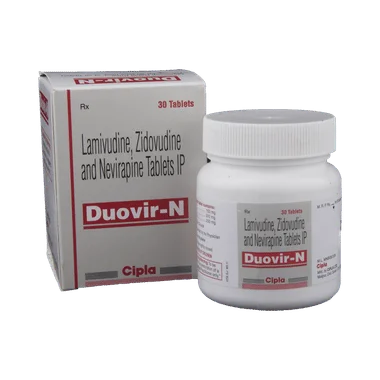
Duovir N Tablet: Complete Guide to Uses, Side Effects, and Safety
When to Call Your Doctor IMMEDIATELY
- Rapid breathing or shortness of breath
- Extreme tiredness or weakness
- Muscle pain with nausea and vomiting
- Yellowing of the skin or eyes (jaundice)
- Dark urine or pale stools
- Severe abdominal pain radiating to the back
- Unusual bleeding or bruising
- Fever with sore throat or chills
- Swelling of the face, lips, or throat
- Numbness or tingling in the hands or feet
If experiencing severe symptoms, call emergency services immediately.
What is duovir n tablet used for?
This medicine is a combination of lamivudine and zidovudine, two antiretroviral drugs used to treat HIV infection. It works by blocking the virus from copying itself, helping to control the infection and improve immune function. It must be used with other HIV medicines and taken exactly as prescribed.
- Generic Name: Lamivudine + Zidovudine
- Manufacturer: Cipla Ltd
- Form: Allopathy
- Pregnancy Category: Consult doctor
- Prescription Required: Yes
🇮🇳 duovir n tablet के बारे में (Hindi Summary)
उपयोग: यह दवा एचआईवी (मानव इम्यूनोडेफिशिएंसी वायरस) संक्रमण के इलाज के लिए इस्तेमाल की जाती है। यह लैमिवुडीन और जिडोवुडीन का संयोजन है, जो वायरस को शरीर में फैलने से रोकती है। यह दवा अकेले नहीं ली जाती, बल्कि अन्य एंटीरेट्रोवायरल दवाओं के साथ मिलकर काम करती है। यह एचआईवी को पूरी तरह खत्म नहीं करती, लेकिन वायरस को नियंत्रित रखती है और प्रतिरक्षा प्रणाली को मजबूत बनाने में मदद करती है। इसे डॉक्टर के बताए अनुसार नियमित रूप से लेना बहुत जरूरी है।
साइड इफेक्ट्स: इस दवा के सामान्य दुष्प्रभावों में सिरदर्द, जी मिचलाना, उल्टी, दस्त, पेट दर्द, थकान, बुखार, दाने और नींद न आना शामिल हैं। गंभीर दुष्प्रभावों में गंभीर एनीमिया, न्यूट्रोपेनिया, लैक्टिक एसिडोसिस, यकृत की समस्या, अग्न्याशय की सूजन और एलर्जी प्रतिक्रियाएं हो सकती हैं। यदि आपको सांस लेने में तकलीफ, अत्यधिक थकान, मांसपेशियों में दर्द, पीलिया या त्वचा पर गंभीर दाने जैसे लक्षण दिखें, तो तुरंत डॉक्टर से संपर्क करें।
सुरक्षा सलाह: इस दवा को डॉक्टर के बताए अनुसार ही लें। अपनी मर्जी से दवा की मात्रा न बदलें और न ही बंद करें। इसे पानी के साथ निगलें, खाने के साथ या बिना खाने के ले सकते हैं। अगर आपको खुराक लेना याद न रहे तो याद आते ही ले लें, लेकिन अगर अगली खुराक का समय हो गया है तो छूटी हुई खुराक न लें। शराब न पिएं क्योंकि इससे जिगर और अग्न्याशय की समस्या का खतरा बढ़ सकता है। नियमित रूप से खून की जांच कराते रहें। डॉक्टर को अपनी सभी दवाओं के बारे में बताएं। इस दवा को किसी और के साथ साझा न करें।
💊 duovir n tablet Uses & Benefits
[{"condition":"Human Immunodeficiency Virus Type 1 Infection","description":"Used as part of combination antiretroviral therapy to suppress viral replication, improve CD4 cell counts, and reduce the risk of disease progression and death.","evidence":"Well-established"},{"condition":"Prevention of Mother-to-Child Transmission of HIV","description":"Used in combination with other antiretroviral medicines to reduce the risk of transmitting HIV from mother to child during pregnancy, labor, and breastfeeding.","evidence":"Well-established"},{"condition":"Post-exposure Prophylaxis","description":"May be used as part of a combination regimen after occupational or non-occupational exposure to HIV, under specialist guidance.","evidence":"Established"}]
Off-label uses: [{"condition":"Hepatitis B Virus Infection","description":"Lamivudine, one component of this medicine, has activity against hepatitis B virus and may be used off-label in certain patients with HIV and hepatitis B co-infection.","evidence":"Limited"}]
Primary treatment for: Human Immunodeficiency Virus Type 1 Infection
Also treats: Hepatitis B Virus Infection (due to lamivudine component)
📋 Drug Information
| Generic Name(s) | Lamivudine + Zidovudine |
| Brand Name | Combivir |
| Manufacturer | Cipla Ltd |
| Packaging / Form | Varies by brand (Allopathy) |
| Therapeutic Class | ANTI INFECTIVES |
| Action Class | Nucleoside Reverse Transcriptase Inhibitors (NRTIs) |
| Route of Administration | Oral |
| Storage | Store at room temperature between 15°C and 30°C (59°F to 86°F). Keep the tablets in their original container, tightly closed, and protect them from moisture and heat. Do not refrigerate. Keep out of reach of children. |
| Shelf Life | The shelf life of this medicine is typically 24 months from the date of manufacture. Check the expiry date on the pack before use. Do not use after the expiry date. |
| WHO Guideline | The World Health Organization recommends combination antiretroviral therapy for all people living with HIV, including regimens containing lamivudine and zidovudine. However, current WHO guidelines preferentially recommend tenofovir-based regimens over zidovudine-based regimens due to better safety and tolerability profiles. This medicine may still be used in certain situations where tenofovir is not available or not suitable. |
| ICMR Guideline | The Indian Council of Medical Research guidelines for HIV management recommend combination antiretroviral therapy. Lamivudine and zidovudine are included in some first-line and alternative regimens. The choice of regimen should be individualized based on patient factors and national program guidelines. |
👨⚕️ Doctor's Practical Tips
Evidence-based practical advice from experienced clinicians
🔍 Is This Medicine Right for Your Symptom?
Educational reference. Always consult a doctor for diagnosis.
🔬 How This Medicine Works (Pharmacology)
Pharmacokinetics
How It Works
This medicine contains two nucleoside reverse transcriptase inhibitors, lamivudine and zidovudine. Both are prodrugs that must be phosphorylated inside cells to their active triphosphate forms. Lamivudine triphosphate and zidovudine triphosphate compete with natural nucleotides for incorporation into viral DNA by reverse transcriptase. Once incorporated, they act as chain terminators because they lack the 3'-hydroxyl group needed to form the next phosphodiester bond. This stops the synthesis of viral DNA and prevents the virus from replicating. Lamivudine also inhibits the reverse transcriptase of hepatitis B virus. The combination of two nucleoside analogues with different resistance profiles helps to reduce the chance of the virus developing resistance.
Mechanism Steps
💡 How to Take duovir n tablet
Strength: Each tablet contains lamivudine 150 mg and zidovudine 300 mg. The tablet is for oral administration and is immediate-release.
Dosage Information
| Adult Dosage | The usual adult dose of this medicine is one tablet taken orally twice daily, approximately every 12 hours. The dose may be adjusted by your doctor based on your kidney function, liver function, and other medications you are taking. This medicine should always be used in combination with other antiretroviral medicines. The dose must be individualized by a qualified clinician based on indication, age, weight, renal and hepatic function. |
| Pediatric Dosage | Pediatric dosing is not established from available information. Consult a pediatrician. |
| Elderly Dosage | Elderly patients may have reduced kidney and liver function, which can affect the elimination of this medicine. Dose adjustment may be necessary based on renal and hepatic function. Elderly patients should be monitored closely for side effects. The dose must be individualized by a qualified clinician. |
| Renal Impairment | In patients with renal impairment, dose adjustment is required. For lamivudine, the dose should be reduced in patients with a creatinine clearance less than 50 mL/min. For zidovudine, dose reduction is recommended when creatinine clearance is less than 15 mL/min. This medicine is not recommended for patients with severe renal impairment (creatinine clearance less than 30 mL/min) unless the dose is appropriately adjusted. Consult a doctor for specific dosing. |
| Hepatic Impairment | In patients with mild to moderate hepatic impairment, no dose adjustment is necessary. However, in patients with severe hepatic impairment, this medicine should be used with caution and the dose may need to be reduced. Regular monitoring of liver function is recommended. The dose must be individualized by a qualified clinician. |
| Maximum Daily Dose | The maximum recommended daily dose is one tablet twice daily, providing a total daily dose of lamivudine 300 mg and zidovudine 600 mg. Do not exceed this dose unless specifically instructed by your doctor. |
Dosage Timeline
🍽️ Food Timing Guide
⏰ What to Do If You Miss a Dose
⚠️ Side Effects of duovir n tablet
✅ Common Side Effects
🚨 Serious Side Effects
⚠️ Rare Side Effects
Consult your doctor if you experience any unusual symptoms.
🔬 Drug Interactions
| Drug | Severity | Effect |
|---|---|---|
| Stavudine | Major | |
| Zalcitabine | Major | |
| Doxorubicin | Major | |
| Ribavirin | Major | |
| Bone marrow suppressants | Major | |
| Atovaquone | Moderate | |
| Clarithromycin | Moderate | |
| Fluconazole | Moderate | |
| Methadone | Moderate | |
| Phenytoin | Moderate |
🚨 Major Interactions
- Stavudine
- Zalcitabine
- Doxorubicin
- Ribavirin
- Bone marrow suppressants (e.g., chemotherapy, ganciclovir)
⚡ Moderate Interactions
- Atovaquone
- Clarithromycin
- Fluconazole
- Methadone
- Phenytoin
- Probenecid
- Valproic acid
🍷 Alcohol Interaction
Alcohol should be avoided while taking this medicine. Both lamivudine and zidovudine can affect the liver, and alcohol increases the risk of liver damage and pancreatitis. Alcohol may also worsen side effects such as nausea, vomiting, and fatigue. If you drink alcohol, discuss it with your doctor.
🔎 Check Your Other Medicines
Educational tool. Always confirm with your doctor or pharmacist.
🛡️ Safety & Warnings
🚫 Contraindications
["Known hypersensitivity to lamivudine, zidovudine, or any component of the formulation","Severe renal impairment (creatinine clearance less than 30 mL/min) without dose adjustment","Severe hepatic impairment","Blood dyscrasias including severe anemia, neutropenia, or thrombocytopenia","Concomitant use with stavudine or zalcitabine","Concomitant use with ribavirin in patients with chronic hepatitis C"]
⚠️ Warnings & Precautions
["Lactic acidosis and severe hepatomegaly with steatosis have been reported with nucleoside analogues, including this medicine, and can be fatal. Discontinue if suspected.","Severe hematologic toxicity, including anemia and neutropenia, may occur. Monitor blood counts regularly, especially in patients with advanced HIV disease.","Hypersensitivity reactions, including anaphylaxis, have been reported. Discontinue and seek immediate medical attention if a reaction occurs.","Pancreatitis has been reported, particularly in patients with advanced HIV disease. Monitor for symptoms and discontinue if suspected.","Peripheral neuropathy and myopathy have been reported with zidovudine. Report symptoms to your doctor.","Patients with hepatitis B virus co-infection may experience severe exacerbation of hepatitis after discontinuation of lamivudine. Monitor liver function closely.","This medicine does not prevent the transmission of HIV to others. Continue safe practices.","Do not use this medicine as monotherapy for HIV infection. It must be used in combination with other antiretroviral agents."]
🤱 Lactation Safety
Both lamivudine and zidovudine are excreted in human breast milk. In resource-limited settings, breastfeeding may be recommended for women with HIV who are on stable antiretroviral therapy, as the benefits of breastfeeding may outweigh the risk of transmission. In resource-rich settings, formula feeding is often recommended to eliminate the risk of postnatal transmission. Women should discuss infant feeding options with their healthcare provider.
💊 Overdose Management
There is no specific antidote for overdose with this medicine. In case of overdose, the patient should be taken to a hospital for supportive care. Hemodialysis may be used to remove lamivudine and zidovudine from the bloodstream, but its effectiveness is limited. Monitor vital signs, blood counts, and liver and kidney function. Treatment is symptomatic and supportive.
⏰ Missed Dose
If you miss a dose of this medicine, take it as soon as you remember. If it is almost time for your next dose, skip the missed dose and continue with your regular dosing schedule. Do not take a double dose to make up for a missed one. If you are unsure what to do, contact your doctor or pharmacist.
Additional Safety Advice
Take this medicine exactly as prescribed by your doctor. Do not change the dose or stop taking it without medical advice, as this can lead to treatment failure and resistance. Swallow the tablet whole with a glass of water, with or without food. If you miss a dose, take it as soon as you remember, but if it is almost time for your next dose, skip the missed dose and continue with your regular schedule. Do not take a double dose. Keep all appointments for blood tests and check-ups. Inform your doctor about all other medicines, supplements, and herbal products you are taking, as many can interact with this medicine. Avoid alcohol while taking this medicine because it can increase the risk of liver problems and pancreatitis. Use effective contraception to prevent pregnancy and discuss family planning with your doctor. Do not share this medicine with anyone else. Store it at room temperature away from moisture and heat. If you experience symptoms like rapid breathing, extreme tiredness, muscle pain, or yellowing of the eyes or skin, seek medical help immediately.
👴 Special Considerations for Elderly
💡 For Patients Above 65
Elderly patients may have reduced kidney and liver function, which can affect the elimination of this medicine. Dose adjustment may be necessary. Elderly patients are also at higher risk of anemia and other blood disorders. Regular monitoring of blood counts, kidney function, and liver function is recommended. Falls and dizziness should be monitored.
🤰 Pregnancy Planning (TTC)
If you are planning to become pregnant, discuss your HIV treatment with your doctor. This medicine is considered safe during pregnancy and is used to prevent mother-to-child transmission of HIV. Effective contraception is recommended if you are not planning a pregnancy. Your doctor may adjust your regimen based on your individual needs.
🏥 Post-Surgery Considerations
After surgery, continue taking this medicine as prescribed. Inform your surgeon and anesthesiologist about all your medicines. This medicine may interact with some anesthetic agents. Your doctor will monitor your blood counts and liver function closely during the postoperative period.
🦷 Dental Procedures
Inform your dentist that you are taking this medicine. This medicine may increase the risk of bleeding due to low platelet counts or anemia. Your dentist may need to take extra precautions during dental procedures. Maintain good oral hygiene to prevent infections.
💚 Lifestyle Tips for Better Results
🏋️ Exercise Considerations
Moderate exercise is generally safe and beneficial while taking this medicine. However, if you experience muscle pain, weakness, or fatigue, reduce the intensity of your workouts and consult your doctor. Avoid high-impact activities if you have anemia or low blood counts. Listen to your body and rest when needed.
🥗 Diet Recommendations
💼 Impact on Daily Work & Life
This medicine may cause dizziness, fatigue, or headache, especially when you first start taking it. Avoid driving or operating heavy machinery until you know how it affects you. Most people are able to continue their normal work and daily activities with proper management of side effects. If side effects interfere with your work, talk to your doctor about adjusting the dose or timing of the medicine.
🛑 When to Stop This Medicine
Do not stop taking this medicine without consulting your doctor. Stopping suddenly can cause the virus to multiply rapidly and become resistant to treatment. If you experience severe side effects, your doctor may adjust the dose or switch you to a different medicine. In some cases, such as severe lactic acidosis or hepatotoxicity, the medicine may need to be stopped immediately under medical supervision.
📅 Long-Term Use Effects
Long-term use of this medicine may lead to persistent hematologic toxicity, including anemia and neutropenia, which may require dose adjustment or discontinuation. Lactic acidosis and hepatic steatosis can occur at any time but are more common with prolonged use. Peripheral neuropathy and myopathy may develop or worsen over time. Lipoatrophy (loss of fat from certain areas of the body) has been associated with zidovudine. Regular monitoring of blood counts, liver function, and kidney function is essential. The medicine should be continued indefinitely to maintain viral suppression.
🌿 Non-Medicine Approaches
These can complement medicine but do not replace prescribed treatment.
Alternative antiretroviral combinations that may have a better safety profile, especially for kidney and bone health.
Evidence: Well-establishedNewer antiretroviral classes that are highly effective and well-tolerated.
Evidence: Well-establishedAlternative nucleoside reverse transcriptase inhibitor combinations for patients who cannot take zidovudine.
Evidence: Well-established💉 Vaccination Considerations
💉 If You're Getting Vaccinated
Patients taking this medicine should receive all recommended vaccinations, including influenza, pneumococcal, hepatitis B, and COVID-19 vaccines. Live vaccines should be avoided if your CD4 count is very low, as they may cause infection. Consult your doctor before receiving any vaccine.
📦 Storage Guide
✅ DO
Store at room temperature (15-30°C)
❌ DON'T
Do not refrigerate
✅ DO
Keep in original container
❌ DON'T
Do not transfer to unmarked containers
✅ DO
Keep away from direct sunlight
❌ DON'T
Do not store in bathroom cabinet
✅ DO
Keep out of reach of children
❌ DON'T
Do not use after expiry date
✈️ Traveling with This Medicine
When traveling, carry this medicine in its original packaging with a copy of your prescription. Keep it in your hand luggage to avoid loss or exposure to extreme temperatures. If crossing time zones, adjust your dosing schedule gradually to maintain approximately 12-hour intervals. Store at room temperature and avoid direct sunlight. Check customs regulations for carrying prescription medicines. Carry enough supply for your entire trip and a little extra in case of delays.
💰 Cost Analysis & Savings
👥 Real Patient Stories
Educational, anonymized scenarios. Individual results may vary.
💬 Questions Patients Often Ask
A: This medicine starts working within hours, but a measurable reduction in viral load is typically seen after several days to weeks. Full benefits on immune function may take several months.
A: Yes, you can take this medicine with or without food. Taking it with food may help reduce nausea.
A: If you miss a dose, take it as soon as you remember. If it is almost time for your next dose, skip the missed dose and continue with your regular schedule. Do not double dose.
A: No, you should never stop taking this medicine without consulting your doctor. Stopping can cause the virus to rebound and become resistant to treatment.
A: This medicine is used during pregnancy to prevent mother-to-child transmission of HIV. The benefits generally outweigh the risks. Consult your doctor for personalized advice.
🤔 Common Patient Concerns
🔄 Substitutes for duovir n tablet
View AllAlternative brands with exact same active ingredient:
-
lazid-e kitEmcure Pharmaceuticals Ltd ₹107.51 84.1% CHEAPER
-
cytocom e 150 mg/300 mg/600 mg tabletAlkem Laboratories Ltd ₹108.00 84.1% CHEAPER
-
virocomb e 150mg/300mg/600mg kitSun Pharmaceutical Industries Ltd ₹110.81 83.6% CHEAPER
-
duovir-e kitCipla Ltd ₹129.47 80.9% CHEAPER
-
cytocom 150 mg/300 mg tabletAlkem Laboratories Ltd ₹190.38 71.9% CHEAPER
Medical Note: Always consult your doctor before switching medications.
🛑 Myths vs. Facts
- Myth: This medicine can cure HIV.
Fact: This medicine does not cure HIV. It controls the virus and helps the immune system recover, but the virus remains in the body. Treatment must be continued lifelong. - Myth: I can stop taking this medicine once my viral load is undetectable.
Fact: Stopping this medicine can cause the virus to rebound and become resistant. You must continue taking it exactly as prescribed. - Myth: This medicine can be taken alone to treat HIV.
Fact: This medicine must be used in combination with other antiretroviral medicines to be effective and to prevent resistance. - Myth: This medicine prevents transmission of HIV to others.
Fact: This medicine reduces the risk of transmission but does not eliminate it. Safe sex practices and other precautions are still necessary.
🔄 Alternative Options
Generic Alternatives
- Lamivudine and Zidovudine Tablets
Brand Alternatives
- Duovir-N