
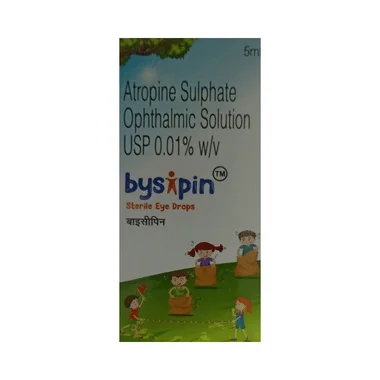
Bysipin Eye Drops

Clinical Background: Balrampur Hospital, Lucknow (Emergency Medicine) & SCPM Hospital | Standards: CDSCO, Indian Pharmacopoeia (IP) & WHO
When to Call Your Doctor IMMEDIATELY
- Severe eye pain or headache
- Sudden vision loss
- Signs of allergic reaction (rash, swelling, difficulty breathing)
- Rapid heartbeat or palpitations
- Confusion or hallucinations
- Nausea or vomiting
If experiencing severe symptoms, call emergency services immediately.
What is bysipin eye drops used for?
This medicine is a low-dose atropine eye drop used to slow myopia progression in children and for eye examinations. It works by relaxing the eye's focusing muscle and dilating the pupil.
- Generic Name: Atropine
- Manufacturer: Neomedix Healthcare India Private Limited
- Form: Allopathy
- Pregnancy Category: Consult doctor
- Prescription Required: Yes
🇮🇳 bysipin eye drops के बारे में (Hindi Summary)
उपयोग: यह दवा एट्रोपिन 0.01% आई ड्रॉप है, जिसका उपयोग बच्चों में निकट दृष्टि दोष (मायोपिया) की प्रगति को धीमा करने और आंखों की जांच के लिए किया जाता है। यह आंख की मांसपेशियों को आराम देकर पुतली को फैलाती है।
साइड इफेक्ट्स: आम दुष्प्रभावों में धुंधली दृष्टि, रोशनी से परेशानी, आंख में जलन और कड़वा स्वाद शामिल हैं। गंभीर दुष्प्रभाव दुर्लभ हैं, लेकिन एलर्जी या आंख में तेज दर्द हो तो तुरंत डॉक्टर से मिलें।
सुरक्षा सलाह: इस दवा का उपयोग केवल आंखों में करें। उपयोग से पहले और बाद में हाथ धोएं। ड्रॉपर की नोक को किसी सतह से न छुएं। धुंधली दृष्टि होने पर वाहन न चलाएं। धूप में बाहर जाते समय धूप का चश्मा पहनें। बच्चों की पहुंच से दूर रखें।
bysipin eye drops Uses & Benefits
This medicine is used to slow the progression of nearsightedness in children by reducing accommodative effort and possibly influencing scleral growth.
It is used to paralyze the ciliary muscle to accurately measure refractive error, especially in children.
It dilates the pupil to allow examination of the retina and optic nerve.
It helps relieve pain and prevent synechiae by paralyzing the ciliary muscle and dilating the pupil.
Off-Label & Investigational Uses:
Sometimes used off-label to penalize the better eye in amblyopia therapy, though other agents are more commonly used.
Occasionally used off-label to maintain pupil dilation after certain eye surgeries.
📋 Drug Information
| Generic Name(s) | Atropine |
| Brand Name | Atropine Sulphate Injection |
| Manufacturer | Neomedix Healthcare India Private Limited |
| Packaging / Form | Varies by brand (Allopathy) |
| Therapeutic Class | OPHTHAL |
| Action Class | Anticholinergics |
| Route of Administration | Ophthalmic |
| Storage | Store at room temperature (15-30°C). Protect from light. Do not freeze. |
| Shelf Life | 24 months from date of manufacture. |
| WHO Guideline | Not established from the available information. |
| ICMR Guideline | Not established from the available information. |
👨⚕️ Doctor's Practical Tips
Evidence-based practical advice from experienced clinicians
🔍 Is This Medicine Right for Your Symptom?
Educational reference. Always consult a doctor for diagnosis.
🔬 How This Medicine Works (Pharmacology)
Pharmacokinetics
How It Works
Atropine is a competitive antagonist of acetylcholine at muscarinic receptors. In the eye, it blocks muscarinic receptors in the sphincter muscle of the iris and the ciliary muscle, leading to pupil dilation (mydriasis) and paralysis of accommodation (cycloplegia). At low concentrations like 0.01%, it may also influence scleral remodeling and reduce eye growth, which is beneficial in myopia control.
Mechanism Steps
💡 How to Take bysipin eye drops
Strength: Ophthalmic solution, 0.01% w/v
Dosage Information
| Adult Dosage | The dosage is individualized by a qualified clinician based on the indication, age, and response. Typically, one drop is instilled into the affected eye(s) as directed by the doctor. For myopia control, often one drop in each eye at bedtime. Dose must be individualized by a qualified clinician based on indication, age, weight, renal and hepatic function. |
| Pediatric Dosage | Pediatric dosing is not established from available information. Consult a pediatrician or ophthalmologist for appropriate dosing. |
| Elderly Dosage | Elderly patients may be more susceptible to systemic anticholinergic effects. Use with caution and monitor closely. |
| Renal Impairment | No specific dosage adjustment provided. Consult doctor. |
| Hepatic Impairment | No specific dosage adjustment provided. Consult doctor. |
| Maximum Daily Dose | Not established from the available information. Use as prescribed by your doctor. |
Dosage Timeline
⏰ What to Do If You Miss a Dose
⚠️ Side Effects of bysipin eye drops
✅ Common Side Effects
🚨 Serious Side Effects
⚠️ Rare Side Effects
Consult your doctor if you experience any unusual symptoms.
🔬 Drug Interactions
| Drug | Severity | Effect |
|---|---|---|
| Tricyclic antidepressants | Major | |
| MAOIs | Major | |
| Beta-blockers | Moderate | |
| Corticosteroids | Moderate | |
| Antihistamines | Moderate |
🚨 Major Interactions
- Other anticholinergic drugs (e.g., tricyclic antidepressants, antihistamines)
- Monoamine oxidase inhibitors (MAOIs)
⚡ Moderate Interactions
- Beta-blockers
- Corticosteroids (systemic)
🍷 Alcohol Interaction
Alcohol may enhance the central nervous system effects of atropine, though systemic absorption from 0.01% eye drops is minimal. Caution is advised.
🔎 Check Your Other Medicines
Educational tool. Always confirm with your doctor or pharmacist.
🛡️ Safety & Warnings
🚫 Contraindications
["Hypersensitivity to atropine or any component","Narrow-angle glaucoma","Adhesions between iris and lens (synechiae)","Children under 3 months of age (unless directed by doctor)"]
⚠️ Warnings & Precautions
["For ophthalmic use only; do not inject or ingest.","May cause blurred vision; avoid driving or operating machinery until vision clears.","May increase sensitivity to light; wear sunglasses.","Use with caution in patients with increased intraocular pressure.","Do not touch dropper tip to eye or any surface.","Keep out of reach of children.","If pregnant or breastfeeding, consult doctor before use."]
🤱 Lactation Safety
Systemic absorption is minimal, but caution is advised. Consult your doctor before use.
💊 Overdose Management
Overdose from ocular use is unlikely. If accidental ingestion occurs, seek immediate medical attention. Symptoms of systemic atropine overdose include dry mouth, flushing, tachycardia, confusion, hallucinations, and seizures. Treatment is supportive and symptomatic.
⏰ Missed Dose
If you miss a dose, apply it as soon as you remember. If it is almost time for your next dose, skip the missed dose and continue with your regular schedule. Do not double the dose.
Additional Safety Advice
For ophthalmic use only. Wash your hands before and after application. Avoid touching the dropper tip to any surface to prevent contamination. If you wear contact lenses, remove them before instilling the drops and wait at least 15 minutes before reinserting. Do not drive or operate machinery immediately after use if your vision is blurred. Use caution in bright light; wear sunglasses until your pupils return to normal. Do not use this medicine if the solution is discolored or contains particles. Keep out of reach of children. Inform your doctor if you are pregnant, planning to become pregnant, or breastfeeding. Do not use this medicine for any condition other than that prescribed.
👴 Special Considerations for Elderly
💡 For Patients Above 65
Elderly patients may be more sensitive to anticholinergic effects. Use with caution and monitor for confusion, tachycardia, or urinary retention.
🤰 Pregnancy Planning (TTC)
Consult your doctor before using this medicine if you are pregnant or planning to become pregnant. Systemic absorption is minimal, but caution is advised.
🏥 Post-Surgery Considerations
Consult your eye surgeon before using this medicine after eye surgery. It may affect healing or intraocular pressure.
🦷 Dental Procedures
Inform your dentist if you are using this medicine, as it may interact with certain medications used in dental procedures.
💚 Lifestyle Tips for Better Results
🏋️ Exercise Considerations
Avoid activities that require clear vision immediately after application. Swimming may increase risk of eye infection; consult your doctor.
🥗 Diet Recommendations
💼 Impact on Daily Work & Life
Blurred vision may affect driving, reading, and operating machinery. Plan activities accordingly until vision clears.
🛑 When to Stop This Medicine
Do not stop using this medicine without consulting your doctor. Abrupt discontinuation may lead to faster progression of myopia in children.
📅 Long-Term Use Effects
Long-term use of this medicine is generally safe when used as prescribed. Regular monitoring by an eye care professional is necessary to assess efficacy and side effects. Some patients may experience persistent photophobia or blurred vision. There is no evidence of serious long-term systemic effects at this low concentration.
🌿 Non-Medicine Approaches
These can complement medicine but do not replace prescribed treatment.
Special contact lenses worn overnight to reshape the cornea and slow myopia progression.
Evidence: Well-establishedLenses that provide different focusing powers to slow myopia progression.
Evidence: EmergingSpending more time outdoors has been shown to reduce the risk of myopia onset and progression.
Evidence: Well-established💉 Vaccination Considerations
💉 If You're Getting Vaccinated
No known interactions with vaccines.
📦 Storage Guide
✅ DO
Store at room temperature (15-30°C)
❌ DON'T
Do not refrigerate unless specified
✅ DO
Keep in original container
❌ DON'T
Do not transfer to unmarked containers
✅ DO
Keep away from direct sunlight
❌ DON'T
Do not store in bathroom cabinet
✈️ Traveling with This Medicine
Carry this medicine in its original packaging with a copy of your prescription. Store at room temperature and protect from light. When traveling across time zones, continue your regular dosing schedule as advised by your doctor. If you need to use it during travel, ensure you have enough supply. Declare it at customs if required.
💰 Cost Analysis & Savings
👥 Real Patient Stories
Educational, anonymized scenarios. Individual results may vary.
💬 Questions Patients Often Ask
A: The effects on the pupil and accommodation begin within 30-40 minutes and can last for several days to weeks.
A: Remove contact lenses before application and wait at least 15 minutes before reinserting them.
A: Yes, when prescribed by a doctor. It is commonly used in children for myopia control.
🤔 Common Patient Concerns
🔄 Substitutes for bysipin eye drops
View AllAlternative brands with exact same active ingredient:
-
atropen p eye dropIndoco Remedies Ltd ₹10.80 94.5% CHEAPER
-
votatrop 0.01% eye dropVotano Pharmaceuticals ₹160.00 18.7% CHEAPER
-
atroped 0.01% eye dropSunways India Pvt Ltd ₹175.00 11.1% CHEAPER
-
mydrat-j eye dropJawa Pharmaceuticals Pvt Ltd ₹190.00 3.5% CHEAPER
-
myostop eye dropAustrak Pvt Ltd ₹199.00 1.1% COSTLIER
Medical Note: Always consult your doctor before switching medications.
🛑 Myths vs. Facts
- Myth: Atropine eye drops can cure myopia.
Fact: Atropine eye drops can slow the progression of myopia but do not cure it. - Myth: Atropine eye drops are only for adults.
Fact: They are commonly used in children for myopia control. - Myth: You can stop using atropine once vision improves.
Fact: Myopia control requires ongoing use as prescribed; stopping may lead to faster progression.
🔄 Alternative Options
Generic Alternatives
- Atropine sulfate ophthalmic solution 0.01%
Brand Alternatives
- Atroped 0.01% Eye Drop