
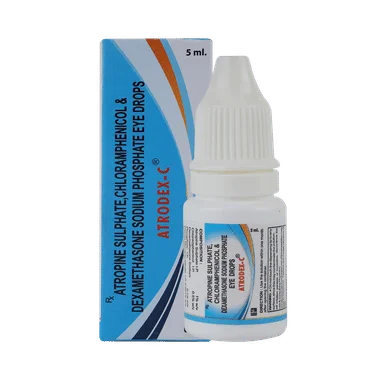
Atrodex-c Eye Drop: Complete Medicine Guide

Clinical Background: Balrampur Hospital, Lucknow (Emergency Medicine) & SCPM Hospital | Standards: CDSCO, Indian Pharmacopoeia (IP) & WHO
When to Call Your Doctor IMMEDIATELY
- Severe eye pain or headache
- Sudden vision loss or changes
- Signs of allergic reaction (swelling of face, lips, throat, difficulty breathing)
- Unusual fatigue, bruising, or bleeding
- Worsening of eye redness or discharge
- Fever or chills
If experiencing severe symptoms, call emergency services immediately.
What is atrodex-c eye drop used for?
This medicine is a combination eye drop containing atropine 1% and chloramphenicol 0.5%. It is used to treat bacterial eye infections while dilating the pupil and relaxing the eye muscles. It is available only by prescription and should be used under medical supervision.
- Generic Name: Atropine + Chloramphenicol
- Manufacturer: Jawa Pharmaceuticals Pvt Ltd
- Form: Allopathy
- Pregnancy Category: Consult doctor
- Prescription Required: Yes
🇮🇳 atrodex-c eye drop के बारे में (Hindi Summary)
उपयोग: यह दवा आंखों के बैक्टीरियल संक्रमण के इलाज के लिए इस्तेमाल की जाती है। इसमें एट्रोपिन और क्लोरैम्फेनिकॉल दोनों होते हैं। एट्रोपिन आंख की पुतली को फैलाता है और आंख की मांसपेशियों को आराम देता है, जबकि क्लोरैम्फेनिकॉल बैक्टीरिया को मारता है। यह दवा आंखों के लाल होने, दर्द, और सूजन में राहत देती है। यह केवल डॉक्टर के पर्चे पर ही मिलती है और डॉक्टर की सलाह के अनुसार ही इस्तेमाल करनी चाहिए।
साइड इफेक्ट्स: आम दुष्प्रभावों में धुंधली दृष्टि, आंखों में जलन, लालिमा और रोशनी के प्रति संवेदनशीलता शामिल हैं। ये आमतौर पर हल्के और अस्थायी होते हैं। गंभीर दुष्प्रभावों में एलर्जी, आंखों में दर्द, और रक्त विकार (बहुत दुर्लभ) हो सकते हैं। यदि आपको गंभीर लक्षण दिखें तो तुरंत डॉक्टर से संपर्क करें।
सुरक्षा सलाह: इस दवा का उपयोग करने से पहले और बाद में अपने हाथ धोएं। ड्रॉपर की नोक को आंख या किसी सतह को न छुएं। सॉफ्ट कॉन्टैक्ट लेंस पहनते समय इस दवा का उपयोग न करें। जब तक आपकी दृष्टि साफ न हो जाए, वाहन न चलाएं। यदि आप गर्भवती हैं या स्तनपान करा रही हैं, तो अपने डॉक्टर को बताएं। दवा को बच्चों की पहुंच से दूर रखें।
atrodex-c eye drop Uses & Benefits
Treats bacterial eye infections while providing pupil dilation and cycloplegia to relieve pain and prevent synechiae.
Used to treat bacterial corneal ulcers and prevent complications by dilating the pupil and reducing ciliary spasm.
Used before and after eye surgery to prevent infection and maintain pupil dilation.
Helps relieve pain and prevent adhesions by paralyzing the ciliary muscle and dilating the pupil.
Off-Label & Investigational Uses:
Atropine eye drops are sometimes used off-label to treat amblyopia (lazy eye) in children by blurring vision in the stronger eye.
📋 Drug Information
| Generic Name(s) | Atropine + Chloramphenicol |
| Brand Name | Atrodex-C Eye Drop |
| Manufacturer | Jawa Pharmaceuticals Pvt Ltd |
| Packaging / Form | Varies by brand (Allopathy) |
| Therapeutic Class | OPHTHAL |
| Action Class | Anticholinergic + Antibiotic |
| Route of Administration | Ophthalmic (topical eye drops) |
| Storage | Store at room temperature (15-30°C). Protect from light and moisture. Keep the bottle tightly closed when not in use. |
| Shelf Life | 24 months from the date of manufacture. |
| WHO Guideline | Not established from the available information. |
| ICMR Guideline | Not established from the available information. |
👨⚕️ Doctor's Practical Tips
Evidence-based practical advice from experienced clinicians
🔍 Is This Medicine Right for Your Symptom?
Educational reference. Always consult a doctor for diagnosis.
🔬 How This Medicine Works (Pharmacology)
Pharmacokinetics
How It Works
This medicine combines two active ingredients with distinct mechanisms. Atropine competitively blocks muscarinic acetylcholine receptors in the eye, leading to pupil dilation (mydriasis) and paralysis of the ciliary muscle (cycloplegia). Chloramphenicol diffuses through the bacterial cell membrane and binds reversibly to the 50S ribosomal subunit, inhibiting peptidyl transferase activity and thereby preventing protein synthesis, which stops bacterial growth.
Mechanism Steps
💡 How to Take atrodex-c eye drop
Strength: Atropine 1% w/v + Chloramphenicol 0.5% w/v eye drops
Dosage Information
| Adult Dosage | The dosage is individualized by a qualified clinician based on the indication, severity of infection, and patient response. Typically, one drop is instilled into the affected eye(s) every 4 to 6 hours, or as directed by the ophthalmologist. For pre-operative use, one drop may be administered 30 to 60 minutes before surgery. Do not exceed the prescribed frequency. Dose must be individualized by a qualified clinician based on indication, age, weight, renal and hepatic function. |
| Pediatric Dosage | Pediatric dosing is not established from available information. Consult a pediatrician. |
| Elderly Dosage | Elderly patients may be more susceptible to systemic anticholinergic effects. Use with caution and monitor for confusion, urinary retention, and falls. |
| Renal Impairment | No specific dosage adjustment for topical ophthalmic use. However, systemic absorption may occur, and caution is advised in severe renal impairment. |
| Hepatic Impairment | No specific dosage adjustment for topical ophthalmic use. However, systemic absorption may occur, and caution is advised in severe hepatic impairment. |
| Maximum Daily Dose | Not established from the available information. Use only as prescribed by your doctor. |
Dosage Timeline
⏰ What to Do If You Miss a Dose
⚠️ Side Effects of atrodex-c eye drop
✅ Common Side Effects
🚨 Serious Side Effects
⚠️ Rare Side Effects
Consult your doctor if you experience any unusual symptoms.
🔬 Drug Interactions
| Drug | Severity | Effect |
|---|---|---|
| Tricyclic antidepressants | Major | |
| Antihistamines | Major | |
| MAOIs | Moderate | |
| Pilocarpine | Moderate | |
| Chemotherapy agents | Major |
🚨 Major Interactions
- Other anticholinergic drugs (e.g., tricyclic antidepressants, antihistamines)
- Bone marrow suppressants (e.g., chemotherapy agents)
⚡ Moderate Interactions
- Monoamine oxidase inhibitors (MAOIs)
- Pilocarpine
🍷 Alcohol Interaction
Alcohol may increase the sedative and anticholinergic effects of atropine. Avoid alcohol while using this medicine.
🔎 Check Your Other Medicines
Educational tool. Always confirm with your doctor or pharmacist.
🛡️ Safety & Warnings
🚫 Contraindications
["Hypersensitivity to atropine or chloramphenicol","Narrow-angle glaucoma","Myasthenia gravis","History of bone marrow suppression","Use in neonates (risk of gray baby syndrome)"]
⚠️ Warnings & Precautions
["Prolonged use may lead to bacterial resistance or fungal superinfection.","Systemic absorption can occur; use with caution in patients with cardiovascular disease.","Avoid in patients with known hypersensitivity to belladonna alkaloids.","Do not use in patients with dry eye syndrome unless directed by a doctor.","May cause drowsiness or confusion in elderly patients."]
🤱 Lactation Safety
Atropine and chloramphenicol are excreted in breast milk. Caution is advised when used during breastfeeding. Consult your doctor.
💊 Overdose Management
Overdose from topical ocular use is unlikely. If accidental ingestion occurs, seek immediate medical attention. Symptoms of atropine overdose include dry mouth, flushing, rapid heartbeat, confusion, and hallucinations. Chloramphenicol overdose may cause bone marrow suppression. Treatment is supportive and symptomatic.
⏰ Missed Dose
If you miss a dose, apply it as soon as you remember. If it is almost time for your next dose, skip the missed dose and continue with your regular schedule. Do not double the dose.
Additional Safety Advice
Wash your hands before and after applying this medicine. Avoid touching the dropper tip to your eye or any surface to prevent contamination. Do not use this medicine while wearing soft contact lenses. If you wear hard lenses, remove them before application and wait at least 15 minutes before reinserting. Do not drive or operate machinery until your vision clears. Inform your doctor if you are pregnant, breastfeeding, or have a history of glaucoma. Do not use this medicine for longer than prescribed, as prolonged use of chloramphenicol can increase the risk of blood disorders. Keep out of reach of children.
👴 Special Considerations for Elderly
💡 For Patients Above 65
Elderly patients are more prone to systemic anticholinergic effects such as confusion, urinary retention, and falls. Use with caution and monitor closely.
🤰 Pregnancy Planning (TTC)
Consult your doctor if you are planning pregnancy or are pregnant. This medicine should be used only if clearly needed.
🏥 Post-Surgery Considerations
This medicine may be prescribed after eye surgery to prevent infection and maintain pupil dilation. Follow your surgeon's instructions carefully.
🦷 Dental Procedures
Inform your dentist if you are using this medicine, as it may interact with certain medications used during dental procedures.
💚 Lifestyle Tips for Better Results
🏋️ Exercise Considerations
Avoid swimming or water sports while using this medicine to prevent contamination and infection. Consult your doctor before resuming strenuous activities.
🥗 Diet Recommendations
💼 Impact on Daily Work & Life
This medicine can cause temporary blurred vision and sensitivity to light, affecting driving and operating machinery. Avoid these activities until your vision is clear.
🛑 When to Stop This Medicine
Stop using this medicine only when your doctor advises. Do not stop prematurely, as it may lead to recurrence of infection. If you experience serious side effects, contact your doctor immediately.
📅 Long-Term Use Effects
Prolonged use of this medicine may lead to bacterial resistance, fungal superinfection, and rare blood disorders due to chloramphenicol. Regular monitoring by an ophthalmologist is recommended for extended use.
🌿 Non-Medicine Approaches
These can complement medicine but do not replace prescribed treatment.
Can help relieve discomfort from eye infections.
Evidence: LimitedMay help with dryness and irritation.
Evidence: Well-established💉 Vaccination Considerations
💉 If You're Getting Vaccinated
No known interactions with vaccines. Consult your doctor before receiving any vaccine while using this medicine.
📦 Storage Guide
✅ DO
Store at room temperature (15-30°C)
❌ DON'T
Do not refrigerate unless specified
✅ DO
Keep in original container
❌ DON'T
Do not transfer to unmarked containers
✅ DO
Keep away from direct sunlight
❌ DON'T
Do not store in bathroom cabinet
✈️ Traveling with This Medicine
Carry this medicine in its original packaging with a copy of your prescription. Store at room temperature and protect from light. If traveling across time zones, continue your regular dosing schedule as prescribed. Check customs regulations for carrying prescription medicines.
💰 Cost Analysis & Savings
👥 Real Patient Stories
Educational, anonymized scenarios. Individual results may vary.
💬 Questions Patients Often Ask
A: Atropine starts dilating the pupil within 30-40 minutes, and cycloplegia occurs in 1-3 hours. Chloramphenicol starts working immediately against bacteria.
A: Only if the pink eye is caused by bacteria. Viral or allergic conjunctivitis will not respond to this medicine.
A: Pediatric dosing is not established. Consult a pediatrician before use.
🤔 Common Patient Concerns
🔄 Substitutes for atrodex-c eye drop
View AllAlternative brands with exact same active ingredient:
-
dexapin c eye dropOptho Remedies Pvt Ltd ₹13.10 92.6% CHEAPER
-
atrochlor d eye dropJawa Pharmaceuticals Pvt Ltd ₹13.74 92.3% CHEAPER
Medical Note: Always consult your doctor before switching medications.
🛑 Myths vs. Facts
- Myth: AtroDex-C eye drop can be used for any eye infection.
Fact: It is specifically for bacterial infections and should not be used for viral or fungal eye infections. - Myth: You can stop using the drops once symptoms improve.
Fact: You must complete the full course as prescribed to prevent recurrence and resistance.
🔄 Alternative Options
Generic Alternatives
- Atropine 1% + Chloramphenicol 0.5% eye drops (generic)
Brand Alternatives
- AtroDex-C