
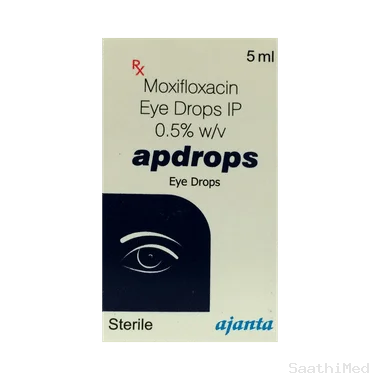
Apdrops Eye Drop: Comprehensive Guide to Uses, Side Effects, and Safety
When to Call Your Doctor IMMEDIATELY
- Severe eye pain or swelling
- Sudden vision loss or severe blurred vision
- Signs of allergic reaction: rash, hives, swelling of face, lips, or throat, difficulty breathing
- Increased sensitivity to light (photophobia)
- Eye discharge that becomes thick, yellow, or green
- No improvement after 7 days of treatment
- Development of new symptoms such as fever or severe headache
If experiencing severe symptoms, call emergency services immediately.
What is apdrops eye drop used for?
This medicine is an antibiotic eye drop containing moxifloxacin 0.5% w/v. It is used to treat bacterial eye infections such as conjunctivitis. It works by killing bacteria that cause infection. Use it exactly as prescribed by your doctor.
- Generic Name: Moxifloxacin
- Manufacturer: Ajanta Pharma Ltd
- Form: Allopathy
- Pregnancy Category: Consult doctor
- Prescription Required: Yes
🇮🇳 apdrops eye drop के बारे में (Hindi Summary)
उपयोग: यह दवा मोक्सीफ्लोक्सासिन 0.5% w/v युक्त आई ड्रॉप है, जिसका उपयोग बैक्टीरियल कंजंक्टिवाइटिस (आंख आना) के इलाज के लिए किया जाता है। यह आंखों में होने वाले बैक्टीरियल संक्रमण को रोकती है और आंखों की लालिमा, सूजन, और दर्द को कम करती है। यह दवा केवल बैक्टीरियल संक्रमण के लिए प्रभावी है, वायरल या एलर्जिक आंखों के लिए नहीं।
साइड इफेक्ट्स: इस दवा के सामान्य दुष्प्रभावों में आंखों में जलन, खुजली, लालिमा, धुंधली दृष्टि, और सूखापन शामिल हैं। ये आमतौर पर हल्के और अस्थायी होते हैं। गंभीर दुष्प्रभाव दुर्लभ हैं, लेकिन यदि आपको तेज दर्द, सूजन, या एलर्जी के लक्षण जैसे चकत्ते, सांस लेने में कठिनाई हो, तो तुरंत डॉक्टर से संपर्क करें।
सुरक्षा सलाह: इस दवा का उपयोग करने से पहले और बाद में अपने हाथ धोएं। ड्रॉपर की नोक को आंख या किसी सतह से न छुएं। कॉन्टैक्ट लेंस पहनने से पहले ड्रॉप डालें और 15 मिनट बाद ही लेंस पहनें। दवा को डॉक्टर के बताए अनुसार ही उपयोग करें, बीच में न छोड़ें। यदि आप गर्भवती हैं या स्तनपान करा रही हैं, तो डॉक्टर से सलाह लें।
💊 apdrops eye drop Uses & Benefits
[{"condition":"Bacterial conjunctivitis","description":"This medicine is used to treat bacterial conjunctivitis caused by susceptible organisms such as Staphylococcus aureus, Streptococcus pneumoniae, Haemophilus influenzae, and others.","evidence":"Well-established"},{"condition":"Bacterial keratitis","description":"This medicine may be used in the treatment of bacterial keratitis, an infection of the cornea, under medical supervision.","evidence":"Well-established"},{"condition":"Blepharitis","description":"This medicine may be prescribed for bacterial blepharitis, an inflammation of the eyelids, when caused by susceptible bacteria.","evidence":"Limited"},{"condition":"Conjunctivitis prophylaxis","description":"This medicine may be used perioperatively to prevent infection after ocular surgery or trauma.","evidence":"Limited"}]
Off-label uses: [{"condition":"Trachoma","description":"This medicine may be used off-label for trachoma, a chlamydial infection of the eye, in certain settings.","evidence":"Limited"},{"condition":"Neonatal conjunctivitis","description":"This medicine may be used off-label for neonatal conjunctivitis under specialist guidance.","evidence":"Limited"}]
Primary treatment for: Bacterial conjunctivitis
Also treats: Bacterial keratitis, Blepharitis, Ocular infection prophylaxis
📋 Drug Information
| Generic Name(s) | Moxifloxacin |
| Brand Name | Apdrops Eye Drop |
| Manufacturer | Ajanta Pharma Ltd |
| Packaging / Form | Varies by brand (Allopathy) |
| Therapeutic Class | OPHTHAL |
| Action Class | Quinolones/ Fluroquinolones |
| Route of Administration | Ophthalmic (topical application to the eye) |
| Storage | Store at room temperature (15-30°C). Protect from light and moisture. Keep the bottle tightly closed when not in use. Do not freeze. |
| Shelf Life | 24 months from the date of manufacture. Discard 4 weeks after opening the bottle. |
| WHO Guideline | Not established from the available information. |
| ICMR Guideline | Not established from the available information. |
👨⚕️ Doctor's Practical Tips
Evidence-based practical advice from experienced clinicians
🔍 Is This Medicine Right for Your Symptom?
Educational reference. Always consult a doctor for diagnosis.
🔬 How This Medicine Works (Pharmacology)
Pharmacokinetics
How It Works
This medicine contains moxifloxacin, a fourth-generation fluoroquinolone antibiotic. It works by inhibiting two key enzymes in bacteria: DNA gyrase (topoisomerase II) and topoisomerase IV. These enzymes are essential for bacterial DNA replication, transcription, repair, and recombination. By binding to these enzymes, this medicine blocks the supercoiling of DNA, leading to the inhibition of bacterial growth and ultimately bacterial cell death. This medicine is bactericidal, meaning it kills bacteria directly. It has broad-spectrum activity against many Gram-positive and Gram-negative bacteria, as well as some atypical pathogens.
Mechanism Steps
💡 How to Take apdrops eye drop
Strength: Ophthalmic solution, 0.5% w/v (5 mg/mL)
Dosage Information
| Adult Dosage | The usual adult dose for bacterial conjunctivitis is 1 drop in the affected eye(s) three times daily for 7 days. For bacterial keratitis, dosing may be more frequent (e.g., 1 drop every 15 minutes for the first 6 hours, then every 30 minutes for the next 18 hours, then every hour for 24 hours, then every 4 hours) as directed by an ophthalmologist. Dose must be individualized by a qualified clinician based on indication, severity of infection, and patient response. |
| Pediatric Dosage | The safety and efficacy of this medicine in children under 1 year of age have not been established. For children 1 year and older, the dose is the same as adults: 1 drop in the affected eye(s) three times daily for 7 days. Consult a pediatrician for appropriate use. |
| Elderly Dosage | No specific dosage adjustments are required for elderly patients. However, elderly patients may be more susceptible to side effects. Use with caution and monitor for adverse reactions. |
| Renal Impairment | No dosage adjustment is required for patients with renal impairment, as systemic absorption is minimal. |
| Hepatic Impairment | No dosage adjustment is required for patients with hepatic impairment, as systemic absorption is minimal. |
| Maximum Daily Dose | The maximum recommended daily dose is 1 drop in the affected eye(s) up to 4 times daily, or as directed by a physician for severe infections. |
Dosage Timeline
⏰ What to Do If You Miss a Dose
⚠️ Side Effects of apdrops eye drop
✅ Common Side Effects
🚨 Serious Side Effects
⚠️ Rare Side Effects
Consult your doctor if you experience any unusual symptoms.
🛡️ Safety & Warnings
🚫 Contraindications
["Hypersensitivity to moxifloxacin or any other quinolone antibiotic","Hypersensitivity to any component of the formulation","Viral, fungal, or mycobacterial eye infections","Use in children under 1 year of age (safety not established)"]
⚠️ Warnings & Precautions
["For ophthalmic use only. Do not inject or ingest.","Do not touch the dropper tip to any surface to avoid contamination.","Remove contact lenses before use and wait 15 minutes before reinserting.","Prolonged use may result in overgrowth of non-susceptible organisms, including fungi.","If allergic reaction occurs, discontinue use and consult a doctor.","Avoid driving or operating machinery if vision is blurred after application.","Use with caution in patients with a history of seizures or CNS disorders.","Consult a doctor if symptoms do not improve within 7 days."]
🤱 Lactation Safety
It is not known whether this medicine is excreted in human milk. Because many drugs are excreted in human milk, caution should be exercised when this medicine is administered to a nursing woman. Consult your doctor before use.
💊 Overdose Management
Overdose with this medicine is unlikely due to its topical ophthalmic route. If accidental ingestion occurs, drink plenty of water and seek medical attention. In case of excessive eye application, rinse the eye with lukewarm water and consult a doctor if irritation persists.
⏰ Missed Dose
If you miss a dose, apply it as soon as you remember. If it is almost time for your next dose, skip the missed dose and continue with your regular schedule. Do not double the dose to catch up.
Additional Safety Advice
Wash your hands before and after using this medicine. Do not touch the dropper tip to your eye, eyelid, or any surface to avoid contamination. Remove contact lenses before applying the drops and wait at least 15 minutes before reinserting them. Do not use this medicine if the solution changes color or contains particles. Avoid driving or operating machinery if your vision is temporarily blurred after application. Use this medicine exactly as prescribed; do not skip doses or stop early, as this can lead to antibiotic resistance. Inform your doctor if you are pregnant, planning to become pregnant, or breastfeeding. Keep this medicine out of reach of children. Do not share this medicine with others.
👴 Special Considerations for Elderly
💡 For Patients Above 65
Elderly patients may be more susceptible to the side effects of this medicine, such as eye irritation and blurred vision. Use with caution and monitor for any adverse reactions. No dosage adjustment is required, but regular follow-up with an ophthalmologist is recommended.
🤰 Pregnancy Planning (TTC)
If you are planning to become pregnant, consult your doctor before using this medicine. This medicine is classified as Pregnancy Category C, meaning risk to the fetus cannot be ruled out. Use only if clearly needed and under medical supervision.
🏥 Post-Surgery Considerations
This medicine may be prescribed after eye surgery to prevent infection. Follow your surgeon's instructions carefully regarding dosing and duration. Do not use it without a prescription after surgery, as the type of antibiotic and duration may vary.
🦷 Dental Procedures
There are no specific considerations for dental procedures while using this medicine. However, inform your dentist about all medications you are taking, including eye drops.
💚 Lifestyle Tips for Better Results
🏋️ Exercise Considerations
There are no specific exercise restrictions while using this medicine. However, if you experience blurred vision after application, avoid activities that require clear vision, such as swimming or contact sports, until your vision returns to normal. Also, avoid swimming pools to prevent contamination and spreading infection.
🥗 Diet Recommendations
💼 Impact on Daily Work & Life
This medicine may cause temporary blurred vision immediately after application. It is advisable to wait until your vision clears before driving or operating heavy machinery. Otherwise, it should not significantly impact your daily work or activities. If you work in a dusty environment, wear protective eyewear to prevent further irritation.
🛑 When to Stop This Medicine
Stop using this medicine only after completing the full prescribed course, even if symptoms have improved. If you experience a severe allergic reaction or serious side effects, stop immediately and seek medical attention. Do not stop prematurely, as this can lead to recurrence of infection and antibiotic resistance. Consult your doctor before stopping if you have any concerns.
📅 Long-Term Use Effects
Long-term use of this medicine is not recommended unless under specialist supervision. Prolonged use may lead to antibiotic resistance and secondary infections. If you require long-term therapy, your doctor will monitor you for side effects and adjust treatment as needed. Always complete the prescribed course and do not use leftover medicine for future infections.
🌿 Non-Medicine Approaches
These can complement medicine but do not replace prescribed treatment.
Applying a warm, clean compress to the affected eye can help relieve discomfort and loosen discharge.
Evidence: Well-establishedLubricating eye drops can help soothe irritation and dryness, but should be used only if recommended by your doctor.
Evidence: Well-establishedFrequent hand washing and avoiding touching the eyes can prevent the spread of infection.
Evidence: Well-established💉 Vaccination Considerations
💉 If You're Getting Vaccinated
There are no known interactions between this medicine and vaccines. You can receive vaccinations while using this medicine, but consult your doctor if you have any concerns.
📦 Storage Guide
✅ DO
Store at room temperature (15-30°C)
❌ DON'T
Do not refrigerate unless specified
✅ DO
Keep in original container
❌ DON'T
Do not transfer to unmarked containers
✅ DO
Keep away from direct sunlight
❌ DON'T
Do not store in bathroom cabinet
✅ DO
Discard 4 weeks after opening
❌ DON'T
Do not use if solution is cloudy or discolored
✈️ Traveling with This Medicine
When traveling with this medicine, carry it in your hand luggage in its original packaging. Bring a copy of your prescription to show at customs if needed. Store it at room temperature and protect it from extreme heat or cold. If you are crossing time zones, continue your regular dosing schedule; you may need to adjust the timing gradually. Do not leave the bottle in a hot car or in direct sunlight. If you are flying, the drops are allowed in carry-on bags as they are medically necessary. Always check the airline's regulations for liquid medicines.
💰 Cost Analysis & Savings
👥 Real Patient Stories
Educational, anonymized scenarios. Individual results may vary.
💬 Questions Patients Often Ask
A: You may start to feel relief within 1-2 days, but it may take up to 7 days for the infection to fully clear. Complete the full course as prescribed.
A: No, you should remove contact lenses before applying the drops and wait at least 15 minutes before reinserting them. It is best to avoid contact lenses until the infection has resolved.
A: This medicine is not recommended for children under 1 year of age. For children 1 year and older, it can be used under a doctor's supervision.
A: If you miss a dose, apply it as soon as you remember. If it is almost time for your next dose, skip the missed dose and continue with your regular schedule. Do not double the dose.
A: No, this medicine is only effective against bacterial infections. Viral conjunctivitis will not respond to antibiotics.
A: No specific food restrictions are known. However, maintain a healthy diet and stay hydrated.
A: This medicine may cause temporary blurred vision. Wait until your vision is clear before driving or operating machinery.
A: Store at room temperature (15-30°C), protect from light and moisture, and keep the bottle tightly closed. Discard 4 weeks after opening.
🤔 Common Patient Concerns
🔄 Substitutes for apdrops eye drop
View AllAlternative brands with exact same active ingredient:
-
ap h 0.5% eye dropAjanta Pharma Ltd ₹12.64 91.3% CHEAPER
-
moxicip singules ophthalmic solutionCipla Ltd ₹16.88 88.4% CHEAPER
-
davaindia moxifloxacin 0.5% eye dropDavaindia Generic Pharmacy ₹22.00 84.9% CHEAPER
-
moxidex eye dropParenteral Drugs India Ltd ₹33.68 76.8% CHEAPER
-
moximac eye dropMacleods Pharmaceuticals Pvt Ltd ₹35.18 75.8% CHEAPER
Medical Note: Always consult your doctor before switching medications.
🛑 Myths vs. Facts
- Myth: This medicine can cure all types of pink eye.
Fact: This medicine is only effective against bacterial conjunctivitis. It does not treat viral or allergic conjunctivitis. - Myth: You can stop using this medicine as soon as symptoms improve.
Fact: You must complete the full course as prescribed to prevent recurrence and antibiotic resistance. - Myth: This medicine is safe to use for any eye infection.
Fact: This medicine should only be used for bacterial infections as diagnosed by a doctor. Misuse can lead to resistance.
🔄 Alternative Options
Generic Alternatives
- Moxifloxacin ophthalmic solution 0.5%
Brand Alternatives
- Vigamox
- Moxeza
- Avelox ophthalmic