
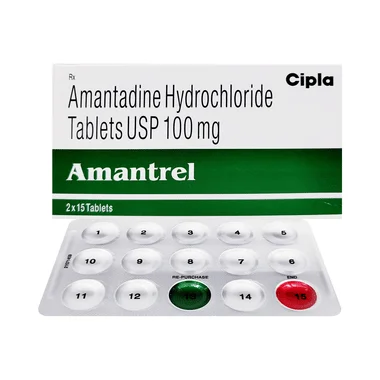
Amantrel Tablet (Amantadine 100 mg): Complete Medicine Guide
When to Call Your Doctor IMMEDIATELY
- Sudden high fever with stiff muscles, confusion, or altered consciousness.
- Hallucinations, severe confusion, or agitation.
- Seizures or loss of consciousness.
- Fast, irregular, or pounding heartbeat, or fainting.
- Severe swelling of the face, lips, tongue, or throat, or difficulty breathing.
- Sudden worsening of Parkinson's symptoms after stopping the medicine.
- Severe ankle or leg swelling, or new onset of difficulty passing urine.
If experiencing severe symptoms, call emergency services immediately.
What is amantrel tablet used for?
This medicine contains amantadine 100 mg, an antiviral and anti-Parkinson's medicine. It is used to treat and prevent influenza A and to reduce tremor, rigidity, and slowness in Parkinson's disease. It works by blocking the influenza A M2 ion channel and by increasing dopamine activity in the brain. It must be taken exactly as prescribed, and the dose is adjusted based on kidney function.
- Generic Name: Amantadine
- Manufacturer: Cipla Ltd
- Form: Allopathy
- Pregnancy Category: Consult doctor
- Prescription Required: Yes
🇮🇳 amantrel tablet के बारे में (Hindi Summary)
उपयोग: यह दवा अमांटाडीन 100 मिलीग्राम की गोली है, जिसका उपयोग इन्फ्लूएंजा ए वायरस के इलाज और रोकथाम में तथा पार्किंसन रोग में कंपन, अकड़न और धीमी गति को कम करने के लिए किया जाता है। यह वायरस के M2 चैनल को ब्लॉक करके वायरस को शरीर में फैलने से रोकती है और मस्तिष्क में डोपामाइन की मात्रा बढ़ाकर पार्किंसन के लक्षणों को कम करती है। यह दवा डॉक्टर की सलाह के बिना शुरू या बंद नहीं करनी चाहिए, क्योंकि अचानक बंद करने से गंभीर समस्याएं हो सकती हैं। गुर्दे की बीमारी वाले मरीजों में इसकी खुराक कम करनी पड़ सकती है, इसलिए डॉक्टर से सलाह लेना जरूरी है।
साइड इफेक्ट्स: इस दवा के आम दुष्प्रभावों में चक्कर आना, जी मिचलाना, मुंह सूखना, कब्ज, नींद न आना और पैरों की त्वचा पर हल्के बैंगनी-लाल धब्बे दिख सकते हैं। कुछ लोगों को भ्रम, मतिभ्रम, बेचैनी, दौरे, पैरों में सूजन या दिल की धड़कन में गड़बड़ी भी हो सकती है। अगर आपको मतिभ्रम, भ्रम, तेज या अनियमित धड़कन, बेहोशी या पैरों में अचानक सूजन महसूस हो, तो तुरंत डॉक्टर से संपर्क करें। इस दवा को अचानक बंद न करें, क्योंकि इससे पार्किंसन संकट हो सकता है।
सुरक्षा सलाह: इस दवा को डॉक्टर के बताए अनुसार ही लें और खुराक में कोई बदलाव खुद न करें। गुर्दे की कार्यप्रणाली की जांच समय-समय पर कराते रहें, खासकर बुजुर्गों और गुर्दे की बीमारी वालों में। जब तक आपको पता न चले कि यह दवा आप पर कैसा असर करती है, तब तक वाहन चलाने या मशीनरी चलाने से बचें। शराब न पिएं, क्योंकि इससे चक्कर और नींद बढ़ सकती है। गर्भावस्था या स्तनपान के दौरान डॉक्टर से सलाह लें। इस दवा को अचानक बंद न करें; डॉक्टर धीरे-धीरे खुराक कम करेंगे।
💊 amantrel tablet Uses & Benefits
[{"condition":"Influenza A virus infection (treatment)","description":"This medicine can shorten the duration of fever and respiratory symptoms when started within 24 to 48 hours of the first symptoms of influenza A, but it is not effective against influenza B.","evidence":"Well-established for susceptible influenza A strains, though resistance can develop quickly."},{"condition":"Influenza A prophylaxis","description":"It may be used to prevent influenza A in high-risk individuals during outbreaks or when vaccination is not possible, but it is not a substitute for vaccination.","evidence":"Established, but use is limited by resistance and side effects."},{"condition":"Parkinson's disease","description":"This medicine can reduce tremor, rigidity, and bradykinesia in Parkinson's disease, and it is often used as add-on therapy to levodopa or dopamine agonists.","evidence":"Well-established for short-term and moderate-term symptom control."},{"condition":"Drug-induced parkinsonism","description":"It may help control movement symptoms caused by antipsychotic or other dopamine-blocking medicines, but it should only be used under specialist supervision.","evidence":"Moderate evidence; use is individualized."}]
Off-label uses: [{"condition":"Fatigue in multiple sclerosis","description":"Sometimes prescribed off-label to reduce fatigue in multiple sclerosis, though benefits are variable and it is not a first-line treatment.","evidence":"Limited"},{"condition":"Neuroleptic malignant syndrome","description":"Rarely used off-label in some cases of neuroleptic malignant syndrome, but this is not a standard or well-established use.","evidence":"Limited"}]
Primary treatment for: Parkinson's disease and influenza A virus infection.
Also treats: Drug-induced parkinsonism, Fatigue in multiple sclerosis (off-label)
📋 Drug Information
| Generic Name(s) | Amantadine |
| Brand Name | Amantrel |
| Manufacturer | Cipla Ltd |
| Packaging / Form | Varies by brand (Allopathy) |
| Therapeutic Class | ANTI INFECTIVES |
| Action Class | Dopamine facilitator |
| Route of Administration | Oral |
| Storage | Store at room temperature between 15°C and 30°C, away from direct sunlight and moisture. Keep in the original container. |
| Shelf Life | 24 months from the date of manufacture, or as printed on the pack. |
| WHO Guideline | Not established from the available information. Amantadine is not currently recommended as a first-line treatment for influenza by many health authorities due to widespread resistance, but it may be used in specific situations as advised by a clinician. |
| ICMR Guideline | Not established from the available information. Consult local guidelines and your doctor for appropriate use. |
👨⚕️ Doctor's Practical Tips
Evidence-based practical advice from experienced clinicians
🔍 Is This Medicine Right for Your Symptom?
Educational reference. Always consult a doctor for diagnosis.
🔬 How This Medicine Works (Pharmacology)
Pharmacokinetics
How It Works
This medicine has two main mechanisms. In influenza A virus, it blocks the M2 ion channel protein, which prevents the virus from uncoating and releasing its RNA into the host cell, thereby stopping viral replication. In the central nervous system, it increases dopamine release, reduces dopamine reuptake, and has weak NMDA-receptor antagonist activity, which helps improve motor symptoms in Parkinson's disease.
Mechanism Steps
💡 How to Take amantrel tablet
Strength: Amantadine 100 mg immediate-release tablet.
Dosage Information
| Adult Dosage | The dose of this medicine depends on the condition being treated and your kidney function. For influenza treatment or prevention in adults with normal kidney function, a common dose is 100 mg twice daily for a limited period, but this must be confirmed by your doctor. For Parkinson's disease, the starting dose is often 100 mg once daily, which may be increased gradually to 100 mg twice daily or sometimes three times daily based on response and tolerability. Dose must be individualized by a qualified clinician based on indication, age, weight, renal and hepatic function. |
| Pediatric Dosage | Pediatric dosing is not established from available information. Consult a pediatrician. |
| Elderly Dosage | Elderly patients are more sensitive to the side effects of this medicine, especially confusion, hallucinations, and dizziness. The dose is usually reduced, and kidney function should be checked before starting treatment. Dose must be individualized by a qualified clinician based on renal function and tolerability. |
| Renal Impairment | This medicine is excreted by the kidneys, so the dose must be reduced in patients with kidney impairment. For mild impairment, the dose may be reduced or the interval extended. For moderate to severe impairment, further reductions are needed, and in severe cases the medicine may be avoided. Dose must be individualized by a qualified clinician based on creatinine clearance. |
| Hepatic Impairment | This medicine is not significantly metabolized by the liver, so dose adjustment is generally not required for liver impairment alone. However, if liver disease is accompanied by kidney impairment, dose adjustment may be needed. Consult your doctor for personalized advice. |
| Maximum Daily Dose | The maximum daily dose is usually 400 mg, but this should never be exceeded and must be determined by your doctor based on your condition and kidney function. |
Dosage Timeline
🍽️ Food Timing Guide
⏰ What to Do If You Miss a Dose
⚠️ Side Effects of amantrel tablet
✅ Common Side Effects
🚨 Serious Side Effects
⚠️ Rare Side Effects
Consult your doctor if you experience any unusual symptoms.
🔬 Drug Interactions
| Drug | Severity | Effect |
|---|---|---|
| Thiazide diuretics | Major | |
| Trimethoprim-sulfamethoxazole | Major | |
| Memantine | Major | |
| Anticholinergics | Moderate | |
| Levodopa | Moderate | |
| Alcohol | Moderate | |
| Antacids | Minor | |
| Caffeine | Minor |
🚨 Major Interactions
- Thiazide diuretics (e.g., hydrochlorothiazide)
- Trimethoprim-sulfamethoxazole
- Other NMDA antagonists (e.g., memantine, dextromethorphan)
⚡ Moderate Interactions
- Anticholinergic drugs (e.g., trihexyphenidyl, benztropine)
- Levodopa and dopamine agonists
- Alcohol
🍷 Alcohol Interaction
Alcohol can increase the risk of dizziness, drowsiness, confusion, and low blood pressure while taking this medicine. It is best to avoid alcohol completely during treatment.
🔎 Check Your Other Medicines
Educational tool. Always confirm with your doctor or pharmacist.
🛡️ Safety & Warnings
🚫 Contraindications
["Known hypersensitivity or allergy to amantadine or any component of this medicine.","Severe kidney disease or end-stage renal disease without appropriate dose adjustment.","Untreated narrow-angle glaucoma.","History of seizures or epilepsy, unless the benefit clearly outweighs the risk.","Severe heart rhythm disorders, including uncorrected QT prolongation.","Use in children under 1 year of age for influenza treatment, unless directed by a specialist."]
⚠️ Warnings & Precautions
["Do not stop this medicine suddenly, as abrupt withdrawal can cause a Parkinson's crisis or neuroleptic malignant syndrome.","Use with caution in elderly patients, who are more sensitive to central nervous system side effects.","Avoid driving or operating machinery until you know how this medicine affects you.","Inform your doctor if you have kidney disease, heart disease, liver disease, or a history of seizures.","This medicine is not effective against influenza B and should not be used as a substitute for influenza vaccination.","Resistance to amantadine can develop rapidly during influenza treatment, so it may not always be effective.","Use with caution in patients with psychiatric disorders, as it can worsen hallucinations or confusion."]
🤱 Lactation Safety
This medicine passes into breast milk. Breastfeeding is not recommended while taking this medicine unless your doctor advises otherwise after weighing the benefits and risks.
💊 Overdose Management
Overdose of this medicine can cause serious effects such as agitation, hallucinations, seizures, irregular heartbeat, difficulty breathing, and coma. If you suspect an overdose, seek emergency medical care immediately. Treatment is supportive and may include activated charcoal if taken recently, intravenous fluids, and management of seizures and heart rhythm problems. There is no specific antidote, and hemodialysis may be considered in severe cases.
⏰ Missed Dose
If you miss a dose, take it as soon as you remember, unless it is almost time for your next dose. If it is almost time for your next dose, skip the missed dose and continue with your regular schedule. Do not take a double dose to make up for a missed one.
Additional Safety Advice
Take this medicine exactly as your doctor prescribes, and never change the dose without medical advice. Because amantadine is removed mainly by the kidneys, your doctor may need to check your kidney function before and during treatment, especially if you are older or have kidney problems. Avoid driving, operating heavy machinery, or doing activities that need full alertness until you know how this medicine affects you, because it can cause dizziness and blurred vision. Do not drink alcohol while taking this medicine, as it can worsen dizziness, confusion, and drowsiness. Tell your doctor about all other medicines you take, especially diuretics, blood pressure medicines, anticholinergics, and other Parkinson's medicines, because interactions can increase side effects. If you are pregnant, planning pregnancy, or breastfeeding, speak to your doctor before using this medicine. Do not stop this medicine suddenly; your doctor will reduce the dose gradually if it needs to be stopped. Keep all follow-up appointments so your doctor can monitor your response and adjust the dose safely.
👴 Special Considerations for Elderly
💡 For Patients Above 65
Elderly patients are more likely to experience confusion, hallucinations, dizziness, and falls. The dose is often reduced, and kidney function should be checked before and during treatment. Close monitoring is advised.
🤰 Pregnancy Planning (TTC)
If you are planning pregnancy, discuss this medicine with your doctor before conception. It should only be used during pregnancy if clearly needed, after weighing the benefits and risks.
🏥 Post-Surgery Considerations
Inform your surgeon and anesthesiologist that you are taking this medicine before any surgery. It may interact with anesthetic agents and affect blood pressure and heart rhythm. Do not stop the medicine without your doctor's advice.
🦷 Dental Procedures
Tell your dentist that you are taking this medicine before any dental procedure. It can cause dry mouth, which may increase the risk of dental problems. Maintain good oral hygiene and stay hydrated.
💚 Lifestyle Tips for Better Results
🏋️ Exercise Considerations
This medicine can cause dizziness and low blood pressure, so avoid sudden changes in position during exercise. Start with gentle activities and use support if needed. If you feel dizzy or faint, stop exercising and sit down. Consult your doctor before starting a new exercise program.
🥗 Diet Recommendations
💼 Impact on Daily Work & Life
This medicine can cause dizziness, blurred vision, and difficulty concentrating, which may affect your ability to drive or operate machinery. Avoid these activities until you know how the medicine affects you. It may also cause insomnia, so take it earlier in the day if your doctor agrees. Discuss any work-related concerns with your doctor.
🛑 When to Stop This Medicine
Do not stop this medicine without consulting your doctor. If you experience serious side effects such as hallucinations, seizures, or severe allergic reactions, seek immediate medical attention. Your doctor will decide whether to stop the medicine and will reduce the dose gradually if needed.
📅 Long-Term Use Effects
Long-term use of this medicine may lead to tolerance of its effects, livedo reticularis, and peripheral edema. Regular monitoring of kidney function, mental status, and heart rhythm is advised. Periodic review with your doctor is important to assess whether the medicine is still providing benefit and to adjust the dose as needed.
🌿 Non-Medicine Approaches
These can complement medicine but do not replace prescribed treatment.
Can help improve mobility, balance, and strength in Parkinson's disease.
Evidence: Well-establishedA surgical option for advanced Parkinson's disease when medicines are not enough.
Evidence: Well-established for selected patientsThe best way to prevent influenza and its complications.
Evidence: Well-established💉 Vaccination Considerations
💉 If You're Getting Vaccinated
This medicine does not interact with vaccines, but it is not a substitute for influenza vaccination. Annual influenza vaccination is recommended for eligible individuals.
📦 Storage Guide
✅ DO
Store at room temperature (15-30°C)
❌ DON'T
Do not refrigerate unless specified
✅ DO
Keep in original container
❌ DON'T
Do not transfer to unmarked containers
✅ DO
Keep away from direct sunlight
❌ DON'T
Do not store in bathroom cabinet
✈️ Traveling with This Medicine
Carry this medicine in its original packaging with a copy of your prescription. If you are traveling across time zones, keep your dosing schedule as close to every 12 hours as possible, and consult your doctor for specific advice. Store it at room temperature and protect it from extreme heat or moisture. Check customs regulations for carrying prescription medicines to your destination.
💰 Cost Analysis & Savings
👥 Real Patient Stories
Educational, anonymized scenarios. Individual results may vary.
💬 Questions Patients Often Ask
A: For influenza, improvement may begin within 24 to 48 hours. For Parkinson's disease, some benefit may be noticed within a few days, but full effects can take several weeks.
A: No, you should never stop this medicine suddenly. Your doctor will reduce the dose gradually to avoid serious withdrawal effects.
A: This medicine is removed by the kidneys, so the dose may need to be reduced if you have kidney problems. Your doctor will check your kidney function and adjust the dose accordingly.
A: Yes, you can take it with or without food. Taking it with food may help reduce stomach upset.
A: Yes, alcohol can increase dizziness, drowsiness, and confusion. It is best to avoid alcohol while taking this medicine.
🤔 Common Patient Concerns
🔄 Substitutes for amantrel tablet
View AllAlternative brands with exact same active ingredient:
-
Neaman 100mg CapsuleNestor Pharmaceuticals ₹37.50 86.5% CHEAPER
-
comantrel-t tabletConsern Pharma Limited ₹89.06 67.9% CHEAPER
-
manotrel 100mg tabletCmg Biotech Pvt Ltd ₹104.06 62.5% CHEAPER
-
comantrel 100 capsuleConsern Pharma Limited ₹110.00 60.3% CHEAPER
-
parkitidin tabletSun Pharmaceutical Industries Ltd ₹180.00 35.1% CHEAPER
Medical Note: Always consult your doctor before switching medications.
🛑 Myths vs. Facts
- Myth: This medicine can cure Parkinson's disease.
Fact: This medicine only helps control symptoms; it does not cure or slow the progression of Parkinson's disease. - Myth: This medicine works for all types of flu.
Fact: This medicine is only effective against influenza A virus and is not effective against influenza B or other viruses. - Myth: You can stop this medicine whenever you feel better.
Fact: Stopping suddenly can cause serious withdrawal effects, including a Parkinson's crisis. Always consult your doctor before stopping. - Myth: This medicine is safe for everyone with kidney disease.
Fact: The dose must be adjusted in kidney disease, and it may be unsafe in severe kidney impairment without proper dose reduction.
🔄 Alternative Options
Generic Alternatives
- Amantadine 100 mg tablet
Brand Alternatives
- Amantrel Tablet